

Milling Cutters

Pay in 3 interest-free payments on purchases from £20-£3000 with  . Learn more.
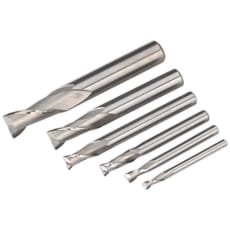
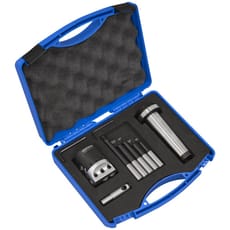

 Loading...
End of content
Error - No more pages to load
About Milling Cutters
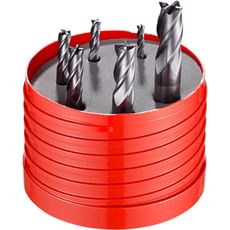
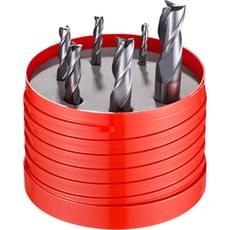
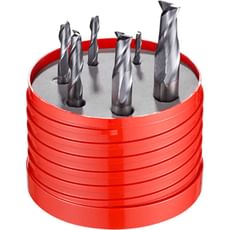
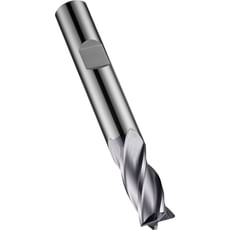
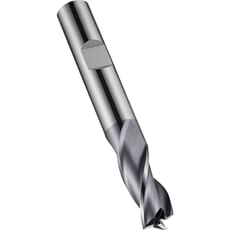
Milling cutters are precision cutting tools designed to remove material from a workpiece through rotary motion in a milling machine or machining centre. These essential tools feature multiple cutting edges arranged around a central axis, allowing them to shape, slot, profile, and finish metal, plastic, and composite materials with exceptional accuracy. From solid carbide end mills with advanced TiAlN coatings to versatile HSS slot drills, milling cutters are indispensable for creating complex geometries, keyways, pockets, and flat surfaces across engineering and manufacturing applications.
The selection at Tooled-Up.com encompasses both professional-grade carbide milling cutters and high-speed steel (HSS) variants suitable for different machining requirements. Modern milling cutters are available in various flute configurations—from 2-flute designs optimised for chip evacuation in slotting operations to 4-flute end mills that deliver superior surface finishes. Premium solid carbide cutters with flatted shanks provide enhanced grip and torque transmission, whilst TiAlN coatings extend tool life by reducing friction and heat generation during high-speed cutting operations.
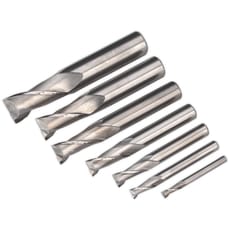
Whether you're working with manual mills, CNC machining centres, or benchtop milling machines, selecting the appropriate cutter geometry and material specification ensures optimal cutting performance, extended tool longevity, and dimensional accuracy. Tooled-Up stocks comprehensive sets from trusted manufacturers including Dormer, Sealey, and Draper, providing complete solutions for both precision engineering workshops and general metalworking tasks.
Jargon Buster
- Flute: The helical grooves machined into the body of the cutter that form the cutting edges and provide channels for chip evacuation. More flutes generally produce finer finishes but reduce chip clearance capacity.
- TiAlN Coating: Titanium Aluminium Nitride coating applied to cutting tools to increase surface hardness, reduce friction, and improve heat resistance, enabling faster cutting speeds and extended tool life compared to uncoated cutters.
- End Mill: A type of milling cutter with cutting edges on both the end face and peripheral sides, used for profiling, slotting, contouring, and plunging operations in a wide range of materials.
- Slot Drill: A milling cutter similar to an end mill but specifically designed for plunging and slotting operations, featuring cutting edges that extend across the centre of the end face for vertical penetration into solid material.
- Solid Carbide: Cutting tools manufactured entirely from tungsten carbide, offering exceptional hardness, wear resistance, and heat tolerance for demanding high-speed machining applications and extended production runs.
- Flatted Shank: A shank design featuring flat surfaces machined onto the cylindrical shank diameter, providing positive anti-rotation grip when clamped in collets or tool holders for improved torque transmission.
Who Uses Milling Cutters?
- CNC Machinists – operating computer-controlled milling centres for precision component manufacture
- Tool and Die Makers – creating moulds, dies, and precision tooling components
- General Engineers – fabricating brackets, fixtures, and mechanical components
- Maintenance Fitters – modifying and repairing machinery parts on-site
- Model Engineers – crafting precision scale models and miniature engines
- Prototype Developers – producing one-off components and product samples
- Agricultural Engineers – manufacturing and repairing farm machinery components
- Automotive Workshops – modifying engine components and custom fabrication work
- Educational Institutions – teaching machining skills in colleges and training centres
- Hobbyist Machinists – operating benchtop mills for home workshop projects
How to Choose the Right Milling Cutters
Material Composition: Solid carbide cutters offer superior hardness and heat resistance for demanding applications, high production volumes, and harder workpiece materials. HSS (High-Speed Steel) end mills provide a cost-effective solution for general-purpose machining, softer materials, and lower-speed operations where extreme hardness isn't essential.
Flute Configuration: Select 2-flute slot drills for maximum chip clearance when cutting deep slots or working with softer materials like aluminium. Choose 3-flute cutters for balanced performance across various materials, or specify 4-flute end mills when surface finish quality takes priority over material removal rate, particularly in finishing operations.
Coating Technology: TiAlN-coated cutters significantly extend tool life and enable higher cutting speeds through improved heat resistance and reduced friction. Uncoated HSS cutters remain suitable for lower-speed operations and cost-sensitive applications where tool replacement frequency is acceptable.
Shank Design: Flatted shanks provide enhanced grip and prevent tool slippage under heavy cutting loads, making them essential for demanding machining operations. Standard cylindrical shanks work adequately for lighter-duty applications and may offer broader compatibility with existing collet collections.
Set or Individual Cutters: Multi-piece sets provide comprehensive diameter coverage for workshop versatility and represent better value when establishing new tooling inventories. Individual cutters allow precise specification matching and enable replacement of specific sizes as they wear.
Machine Compatibility: Verify cutter shank diameter matches your machine's collet or chuck capacity. Consider maximum spindle speed capabilities—carbide cutters perform optimally at higher RPMs whilst HSS variants suit slower-speed manual mills and benchtop machines.
Popular Accessories
- Collet Sets: Precision collets in ER or R8 configurations for secure cutter retention
- Cutting Fluid: Specialised coolants and lubricants to reduce heat and extend tool life
- Parallel Sets: For accurate workpiece setup and levelling on mill tables
- Edge Finders: Precision tools for locating workpiece edges and establishing datums
- Tool Holders: Drill chucks, end mill holders, and arbors for various cutter mounting
- Measuring Equipment: Digital callipers, micrometers, and depth gauges for dimensional verification
- Workholding Clamps: Machine vices, clamp sets, and step blocks for secure component fixturing
- Deburring Tools: For removing sharp edges following milling operations
Safety Information
Milling operations present significant hazards requiring strict adherence to safety protocols. Always wear approved safety glasses or face shields to protect against flying chips and workpiece fragments. Remove jewellery, secure loose clothing, and tie back long hair to prevent entanglement with rotating spindles and cutters.
Ensure milling cutters are securely mounted with appropriate tightening torque—loose cutters can eject at high velocity causing serious injury. Never attempt to measure workpieces, adjust clamps, or remove chips whilst the spindle is rotating. Utilise proper guarding where fitted and maintain safe distances from rotating components.
Consult HSE guidance on machinery safety and COSHH regulations regarding cutting fluid handling. Select appropriate cutting speeds and feed rates to prevent cutter breakage—carbide tools are particularly prone to catastrophic failure if subjected to excessive shock loads or vibration. Inspect cutters regularly for wear, chipping, or damage, replacing them before failure occurs during operation.
Frequently Asked Questions
What's the difference between an end mill and a slot drill?
Whilst both tools appear similar, slot drills feature cutting edges that extend across the entire end face, allowing them to plunge vertically into solid material like a drill bit. End mills may have a small centre clearance and are primarily designed for side cutting operations, requiring a pre-drilled hole or ramping entry into the workpiece.
Can I use carbide cutters in a manual milling machine?
Yes, but carbide cutters perform optimally at higher spindle speeds than many manual mills can achieve. HSS cutters are often better suited to slower-speed manual machines. If using carbide on manual equipment, select conservative cutting parameters and ensure rigid setup to minimise vibration that can cause premature carbide failure through chipping.
How do I know when a milling cutter needs replacing?
Replace cutters when you notice deteriorating surface finish quality, increased cutting forces, excessive heat generation, visible edge wear or chipping, or when dimensional accuracy begins to suffer. Regular inspection under magnification reveals edge condition before performance degradation becomes apparent in the finished workpiece.
What spindle speed should I use for different cutter materials?
HSS cutters typically operate between 1,500-3,000 RPM depending on diameter and workpiece material. Solid carbide cutters perform best at 3,000-8,000 RPM or higher where machine capability allows. Always consult manufacturer recommendations and adjust based on material hardness, depth of cut, and observed cutting performance.
Are complete sets better value than buying individual cutters?
Sets typically offer significant cost savings per cutter and provide comprehensive diameter coverage for general workshop use. However, if you consistently use only specific sizes, purchasing individual cutters in those diameters may prove more economical long-term, particularly with premium solid carbide tooling where unused sizes represent wasted investment.