

Mitre Blocks

Pay in 3 interest-free payments on purchases from £20-£3000 with  . Learn more.
Loading...
End of content
Error - No more pages to load
About Mitre Blocks
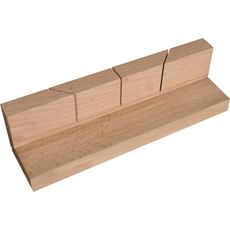
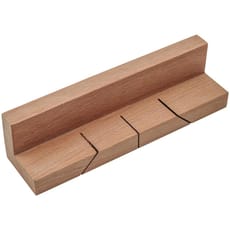
A mitre block is an essential hand tool guide used by woodworkers and joiners to achieve precise angled cuts, most commonly at 45° and 90°. These simple yet effective tools consist of a solid wooden block with pre-cut slots that guide a tenon saw or backsaw through the workpiece at exact angles. Unlike powered mitre saws, mitre blocks offer a manual, affordable solution for cutting accurate mitres when working on smaller projects such as picture frames, skirting boards, architraves, and decorative mouldings.
Traditional mitre blocks are crafted from hardwoods such as European beech, chosen for its stability, durability, and resistance to wear from repeated saw cuts. The construction typically features glued and screwed joints between the base and sides, ensuring the block maintains its structural integrity and accuracy over years of use. The precision-machined slots are factory-cut to exacting tolerances, providing reliable angle guidance that won't degrade with normal use. For carpenters and joiners who value traditional hand tool techniques, a quality mitre block represents excellent value and requires no power source or complex setup.
Tooled-Up.com stocks mitre blocks suitable for both professional tradespeople and DIY enthusiasts, with products from trusted brands like Faithfull. These tools remain popular despite the availability of powered alternatives, offering portability, quiet operation, and the tactile control that experienced craftspeople prefer for delicate joinery work.
Jargon Buster
- Mitre Joint: An angled joint where two pieces of material meet, typically cut at 45° to form a 90° corner, commonly seen in picture frames and door architraves.
- Tenon Saw: A hand saw with a reinforced back (also called a backsaw) that provides the rigidity needed for accurate straight cuts, making it ideal for use with mitre blocks.
- Beech Construction: European beech hardwood is the traditional material for mitre blocks due to its fine, uniform grain structure, hardness, and dimensional stability.
- Fixed Angle Slots: Pre-cut grooves machined into the mitre block at precise angles (typically 45° and 90°) that guide the saw blade through the workpiece.
- Kerf: The width of material removed by the saw blade as it cuts through wood; mitre block slots accommodate the kerf of standard tenon saws.
- Moulding: Decorative strips of wood with profiled surfaces, such as architrave, dado rail, or picture rail, that frequently require mitred corners for professional-looking installations.
Who Uses Mitre Blocks?
- Joiners and Carpenters: For on-site cutting of architraves, skirtings, and decorative mouldings during first and second fix carpentry.
- Picture Framers: Essential for creating precise 45° mitres on frame mouldings for professional framing work.
- Furniture Makers: Used when constructing traditional furniture pieces requiring accurate mitred joints in decorative trim and edging.
- DIY Enthusiasts: Ideal for home improvement projects involving skirting boards, picture frames, and general woodworking tasks.
- Heritage and Restoration Specialists: Preferred when working on period properties where traditional hand tool methods are appropriate.
- Model Makers and Hobbyists: Perfect for small-scale projects requiring precise angled cuts without powered equipment.
- Site Carpenters: Useful for quick cuts when access to power tools is impractical or when working in occupied premises where noise must be minimised.
How to Choose the Right Mitre Blocks
Size and Capacity: Consider the maximum width of material you'll be cutting. Standard mitre blocks typically accommodate workpieces up to 64mm wide, which suits most architrave, skirting, and picture frame mouldings. The block length (commonly 300mm) should provide adequate support for your typical workpiece lengths.
Construction Quality: Look for blocks made from solid hardwood rather than composite materials. European beech is the gold standard, offering durability and accuracy. Check that sides are both glued and screwed to the base rather than simply nailed, as this construction method provides superior longevity and maintains accuracy over time.
Angle Options: Most mitre blocks feature slots for 45° and 90° cuts, which cover the vast majority of carpentry applications. Consider whether you need additional angles – some specialist blocks offer 22.5° or other angles for specific joinery tasks.
Slot Accuracy: The precision of the factory-cut slots determines the quality of your finished joints. Brands available at Tooled-Up, such as Faithfull, manufacture their blocks to exacting tolerances, ensuring reliable accuracy that won't require adjustment or correction.
Base Stability: A flat, stable base is crucial for safe operation and accurate cuts. The base should be wide enough to provide resistance to tipping and should sit firmly on your workbench without rocking.
Popular Accessories
- Tenon Saws and Backsaws: Essential cutting tools designed specifically for use with mitre blocks, available in various tooth configurations from brands like Bahco and Irwin.
- Bench Hooks: Provide additional work support and stability when using a mitre block on a workbench.
- Woodworking Clamps: G-clamps or quick-release clamps secure the workpiece and mitre block to your bench for safer, more accurate cutting.
- Marking and Measuring Tools: Stanley tape measures, combination squares, and marking knives ensure accurate measurement before cutting.
- Wood Glue and Adhesives: Essential for assembling mitred joints once cut to the correct angle.
- Mitre Clamps: Specialised clamps that hold mitred corners at precise 90° angles while glue sets.
- Sandpaper and Finishing Supplies: For smoothing cut edges before assembly and finishing.
Frequently Asked Questions
What's the difference between a mitre block and a mitre box?
A mitre block is open at the top, allowing you to cut wider materials and providing better visibility of your cut line. A mitre box has sides that extend higher and sometimes includes a top, offering more guidance for the saw blade but limiting the width of material you can cut. Blocks are generally preferred by experienced tradespeople who value the flexibility and visibility they provide.
Can I use a mitre block with any hand saw?
Mitre blocks are designed for use with tenon saws or backsaws, which have a reinforced spine that keeps the blade rigid and straight. Standard hand saws with flexible blades won't work effectively with a mitre block and may produce inaccurate cuts or damage the guide slots.
How do I maintain the accuracy of my mitre block?
Keep the guide slots clean of sawdust and resin buildup. Store the block flat on a stable surface to prevent warping. Avoid dropping or striking the block, as this can damage the precision-cut slots. With proper care, a quality hardwood mitre block will maintain its accuracy for decades of regular use.
Will the slots in my mitre block wear out over time?
High-quality beech mitre blocks are remarkably durable. The hardwood construction resists wear from saw blades, and the slots will maintain their accuracy through thousands of cuts. Eventually, the slots may widen slightly with heavy professional use, but this typically takes many years. When this occurs, the block can often still be used for less critical work or it's simply time to invest in a replacement.
Can a mitre block cut angles other than 45° and 90°?
Standard mitre blocks are limited to the angles of their pre-cut slots, typically 45° and 90°. For other angles, you would need either a mitre box with additional angle options or an adjustable mitre saw. However, these two angles cover the vast majority of carpentry and joinery applications, making a simple mitre block sufficient for most tradespeople and DIY users.