
Mitre Saws (Hand)

Pay in 3 interest-free payments on purchases from £20-£3000 with  . Learn more.
Loading...
End of content
Error - No more pages to load
About Mitre Saws (Hand)
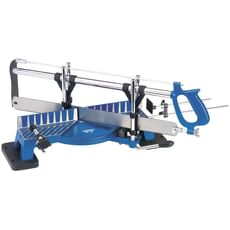
Hand mitre saws are precision cutting tools designed for making accurate angled cuts in wood, particularly for picture frames, architraves, skirting boards, and decorative mouldings. Unlike their powered counterparts, these manual tools offer exceptional control and quiet operation, making them ideal for detailed work in workshops or on-site where precision matters more than speed. The typical hand mitre saw consists of a fine-toothed blade mounted in a robust frame that guides the cutting action through a solid aluminium or steel mitre box, with adjustable angles typically ranging from 45 to 90 degrees.
The hand mitre saw remains an essential tool for finish carpenters, picture framers, and craftspeople who value accuracy over cutting speed. These saws excel at creating clean, splinter-free cuts without the noise, dust, or power requirements of electric mitre saws. Tooled-Up.com stocks hand mitre saws that feature solid diecast aluminium construction, chrome-plated guide rods, adjustable length stops, and material vice clamps for securing workpieces during cutting. Many models include additional features such as cutting depth regulators and angle scales marked directly on the base for quick, repeatable cuts.
Hand mitre saws are particularly valued for their portability and precision on intricate projects. They require no electricity, produce minimal waste, and allow the user complete tactile feedback throughout the cutting process. The fine-toothed blades typically feature 14 to 20 teeth per inch (TPI), delivering smooth cuts that often require little to no sanding afterwards. For professionals working on high-end joinery or restoration projects, a quality hand mitre saw is an indispensable addition to the toolkit.
Jargon Buster
- TPI (Teeth Per Inch): The number of saw teeth per inch of blade length. Higher TPI (14-20) produces finer, smoother cuts ideal for finish work, whilst lower TPI cuts faster but leaves a rougher edge.
- Mitre Box: The rigid guide structure, typically made from diecast aluminium or steel, that holds the workpiece and guides the saw blade through predetermined angles for accurate cuts.
- Guide Rods: Chrome-plated or stainless steel rods that support and guide the saw frame during cutting, ensuring the blade remains perpendicular to the workpiece for clean, square cuts.
- Length Stop: An adjustable fence attachment that allows you to make multiple cuts of identical length without measuring each piece individually, essential for production work and matching components.
- Vice Clamp: A built-in clamping mechanism that secures the workpiece firmly to the mitre box base, preventing movement during cutting and ensuring safer, more accurate results.
- Cutting Depth Regulator: An adjustable stop that limits how far the blade can travel downwards, useful for cutting grooves or dados without sawing completely through the material.
Who Uses Mitre Saws (Hand)?
- Picture Framers: For creating precise 45-degree mitres on frame mouldings with splinter-free edges
- Finish Carpenters: Installing architraves, skirting boards, and decorative trim work requiring accurate angles
- Joiners and Cabinetmakers: Cutting small trim pieces and detail work in workshop settings
- Furniture Restorers: Repairing and replacing delicate mouldings on antique pieces
- Model Makers: Cutting precise angles in various materials for scale models and prototypes
- DIY Enthusiasts: Home renovation projects involving skirting boards, picture rails, and decorative trim
- Set Builders: Theatre and television production requiring quick, accurate cuts on location
- Shopfitters: Installing trim and finishing details in retail environments
How to Choose the Right Mitre Saws (Hand)
Construction Quality: Look for saws with solid one-piece diecast aluminium or steel mitre boxes rather than plastic alternatives. The range at Tooled-Up features robust construction that maintains accuracy over years of use. Chrome-plated guide rods provide smooth operation and resist corrosion, whilst precision-machined angle slots ensure repeatable accuracy.
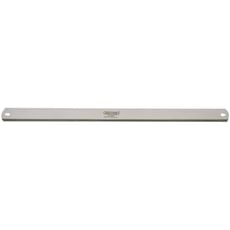
Blade Quality and TPI: Consider the blade tooth count for your typical applications. A 14 TPI blade suits general purpose work on softwoods and hardwoods, whilst 18-20 TPI delivers ultra-smooth cuts for fine mouldings and picture frames. Check whether replacement blades are readily available and affordable.
Capacity and Size: Assess the maximum width and thickness of material the saw can accommodate. Most hand mitre saws handle stock up to 100-150mm wide, but verify this matches your typical workpiece dimensions. Consider both the cutting capacity and the overall footprint if workshop space is limited.
Angle Adjustment Range: Whilst most hand mitre saws offer common angles like 22.5°, 45°, and 90°, some models provide additional preset angles or even infinite adjustment within a range. Determine which angles you'll use most frequently in your work.
Clamping System: A reliable vice clamp is essential for safety and accuracy. Better models include both standard and short-material clamps, allowing you to work safely with pieces of varying lengths. Test that the clamping mechanism operates smoothly and holds securely.
Additional Features: Consider extras like adjustable length stops for repetitive cutting, cutting depth regulators for dado work, and clearly marked angle scales. These features significantly improve productivity and accuracy on professional projects.
Popular Accessories
- Replacement Saw Blades: Keep spare blades for different materials and applications; fine-tooth blades for hardwoods and coarse-tooth for softwoods
- Measuring and Marking Tools: Combination squares, sliding bevels, and marking knives for accurate layout work
- Workbenches and Saw Horses: Stable work surfaces for supporting the mitre saw and longer workpieces
- Clamps and Vices: Additional workholding for securing awkward or oversized pieces
- Sharpening Equipment: Files and saw sets for maintaining blade sharpness and extending service life
- Safety Equipment: Dust masks, safety glasses, and hearing protection (though hand saws are considerably quieter than power tools)
- Storage Solutions: Tool chests and wall-mounted brackets for protecting your saw when not in use
Safety Information
Whilst hand mitre saws are generally safer than powered alternatives, proper safety practices remain essential. Always secure the workpiece firmly in the vice clamp before cutting to prevent movement or kickback. Keep fingers well clear of the blade path and use push sticks for short pieces. Ensure the saw is placed on a stable, level surface before use, and never force the blade through difficult cuts—let the sharp teeth do the work.
Maintain your saw blade in good condition; dull teeth require excessive force and increase the risk of the saw jumping or binding. Wear appropriate eye protection to guard against sawdust, and consider a dust mask when cutting treated timber or materials that produce fine particles. Store the saw with the blade protected or retracted to prevent accidental contact, and keep it away from moisture to prevent rust on the blade and guide rods.
Follow HSE guidelines for manual handling when positioning larger workpieces, and ensure adequate lighting in your work area for precise cutting. Never leave the saw unattended with the blade exposed, particularly in environments where children or inexperienced persons might be present.
Frequently Asked Questions
Can hand mitre saws cut materials other than wood?
Hand mitre saws are primarily designed for wood, including softwoods, hardwoods, and wood-based composites like MDF. With the appropriate fine-toothed blade, they can also cut soft plastics and non-ferrous metals like aluminium, though cutting speed will be slower. Avoid using them on ferrous metals, ceramics, or very hard materials that will quickly dull the blade.
How do I maintain accuracy on my hand mitre saw?
Regular maintenance is key to sustained accuracy. Keep the guide rods clean and lightly oiled, check that the blade remains perpendicular to the base using a square, and ensure all fixing screws remain tight. Store the saw in a dry environment to prevent rust, and replace or sharpen the blade when you notice increased effort required for cutting or rougher cut quality.
What's the advantage of a hand mitre saw over a powered one?
Hand mitre saws offer superior control for delicate work, operate silently, require no electricity, and produce minimal dust. They're more portable than powered saws, need virtually no maintenance beyond blade sharpening, and allow you to feel exactly what's happening during the cut. For fine finish work, picture framing, or situations where precision matters more than speed, a hand mitre saw is often the better choice.
Can I sharpen the blade on a hand mitre saw?
Yes, hand mitre saw blades can be sharpened using a triangular saw file matched to the tooth size. File each tooth at the correct angle (typically 60 degrees for crosscut teeth), working systematically along the blade. However, many modern blades feature hardened teeth that are difficult to sharpen effectively, making replacement more practical. Check with the manufacturer's specifications before attempting to sharpen.
What cutting capacity do I need for typical carpentry work?
For most domestic carpentry and trim work, a saw capable of cutting stock up to 100mm wide and 50mm thick will handle skirting boards, architraves, and picture frame mouldings. Professional joiners working with larger crown mouldings or wider trim may require capacity up to 150mm. Consider the largest material you typically work with and choose a saw with at least 20mm extra capacity for flexibility.