

Mobile Tool Boxes
Pay in 3 interest-free payments on purchases from £30-2000 with  . Learn more.
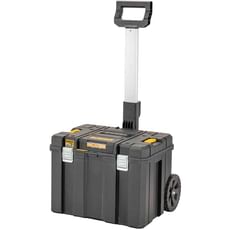
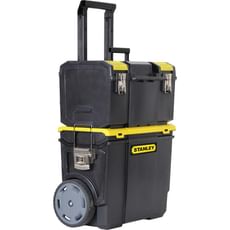
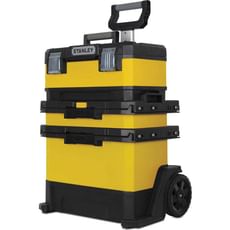
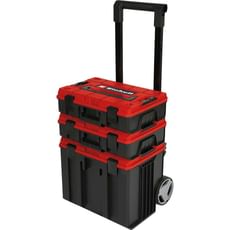
 Loading...
End of content
Error - No more pages to load
About Mobile Tool Boxes
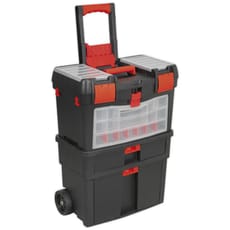
Mobile tool boxes are essential storage solutions designed to keep tools organised, protected and easily transportable from van to site or between different work locations. Unlike static tool storage, mobile tool boxes feature integrated wheels and telescopic handles, allowing tradespeople to move heavy tool collections effortlessly across job sites, workshops and uneven terrain. These wheeled systems eliminate the need for multiple trips or heavy lifting, significantly improving productivity and reducing physical strain throughout the working day.
The mobile tool box category encompasses a diverse range of solutions, from compact wheeled cases suited to individual tradespeople, through to professional modular systems like DeWalt TSTAK, Makita MakPac, and Festool Systainer that stack and connect together. Many designs incorporate stackable components, enabling users to customise their storage configuration based on specific tool requirements. Heavy-duty options feature reinforced construction with metal hinges, padlock eyes for security, and weather-resistant seals to protect valuable tools from the elements during transport and outdoor work.
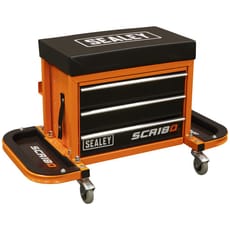
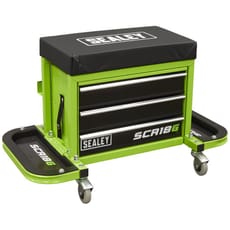
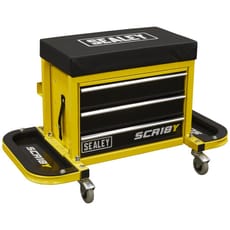
Tooled-Up.com stocks mobile tool boxes from leading manufacturers including Stanley, Sealey, DeWalt, Makita, Festool, Keter and Einhell. These range from budget-friendly mobile chests perfect for DIY enthusiasts to professional-grade wheeled tool systems built to withstand daily jobsite use. Specialist variants include mechanics' rolling seats with integrated storage, tower systems on wheeled trolleys, and professional multi-drawer mobile workstations that function as portable workshops.
Jargon Buster
- Modular Stacking System: Interlocking tool boxes designed to stack securely on top of each other, allowing users to build customised storage solutions. Popular systems include DeWalt TSTAK, Milwaukee PACKOUT, and Makita MakPac, which use proprietary latching mechanisms.
- Telescopic Handle: Extendable handle that pulls out to a comfortable height for wheeling the tool box, then retracts flush for compact storage in vehicles or tight spaces. Quality handles feature ergonomic grips and locking positions.
- Load Rating: The maximum weight capacity a mobile tool box can safely carry, typically ranging from 30kg for lighter units to over 100kg for professional wheeled chests. Always check this specification before loading heavy power tools.
- IP Rating: Ingress Protection rating indicating resistance to dust and water. Higher ratings (such as IP54 or IP65) offer better protection for tools during outdoor work or in dusty workshop environments.
- Ball-Bearing Wheels: Heavy-duty wheel assemblies using ball bearings for smooth rolling even under heavy loads. Superior to basic plastic wheels, particularly important for uneven surfaces or site work across rough ground.
- Padlock Eye: Reinforced metal loop or hasp allowing security padlocks to be fitted, essential for protecting tools when left in vehicles overnight or on building sites where theft risks are higher.
Who Uses Mobile Tool Boxes?
- Mobile Mechanics: Automotive technicians who work at multiple locations or provide mobile repair services, requiring comprehensive tool collections that travel between customers.
- Electricians: Sparkies working across multiple properties or large sites benefit from wheeled storage that transports cable reels, power tools, testing equipment and hand tools efficiently.
- Plumbers and Heating Engineers: Professionals who need to carry pipe cutters, wrenches, soldering equipment and specialist tools between different jobs throughout the day.
- Carpenters and Joiners: Chippies working on construction sites who require easy transport of hand tools, power tools, fixings and measuring equipment across different floors or buildings.
- Maintenance Engineers: Facilities management professionals covering large buildings or multiple sites who need portable access to diverse tool sets for repairs and installations.
- Building Contractors: Site managers and general builders who oversee multiple trades and require flexible, secure tool storage that moves easily around active construction sites.
- Keen DIY Enthusiasts: Home improvers with extensive tool collections who appreciate organised, portable storage for projects in different rooms, the garden or when helping friends and family.
How to Choose the Right Mobile Tool Boxes
Capacity Requirements: Assess your typical tool collection size and weight. Compact mobile boxes suit individual tradespeople with focused tool sets, whilst larger tower systems or multi-drawer wheeled chests accommodate comprehensive workshop equipment. Consider future expansion – modular stacking systems allow gradual capacity increases.
Wheel Quality and Terrain: Heavy-duty ball-bearing wheels with rubberised treads handle rough terrain, gravel and uneven site conditions far better than basic plastic castors. For primarily indoor workshop use, standard wheels suffice, but outdoor site work demands robust, large-diameter wheels. Check if wheels are replaceable for long-term serviceability.
Construction and Durability: Professional daily use requires impact-resistant polypropylene or reinforced ABS construction with metal-reinforced stress points, corner protectors and heavy-duty hinges. Budget options work adequately for occasional DIY use, but tradespeople should invest in professional-grade units from the Tooled-Up range to withstand constant transportation and jobsite knocks.
Handle Design: Telescopic handles should extend to comfortable heights without excessive wobble and lock securely at multiple positions. Some premium systems feature detachable handles for easier vehicle storage. Test the grip comfort and ensure the handle positioning allows balanced pulling without arm strain.
Security Features: Metal-reinforced padlock eyes or integrated locking mechanisms protect valuable tool investments. For van-based tradespeople or site workers, security should be a primary consideration. Some models include name panels for clear identification when multiple boxes are present on larger sites.
Organisation Options: Internal organisation varies significantly – removable trays, adjustable dividers, small parts organisers and tool holders maximise efficiency. Consider your specific tools: power tool users need deep compartments, whilst mechanics might prefer shallow trays with multiple small divisions for sockets and spanners.
System Compatibility: If you already own tool storage from manufacturers like DeWalt, Makita or Milwaukee, choosing mobile bases compatible with existing cases creates an integrated system. Conversely, starting fresh allows selection based purely on features rather than brand loyalty.
Popular Accessories
- Additional Stacking Cases: Expand modular systems with extra shallow organisers, deep tool boxes or specialist cases designed for specific equipment types.
- Replacement Wheels: Upgrade basic wheels to heavy-duty options or keep spares for units experiencing regular rough terrain use.
- Tool Organiser Inserts: Customisable foam inserts, plastic dividers and small parts organisers that maximise internal space efficiency and prevent tool damage during transport.
- Padlocks and Security Cables: High-quality padlocks with weatherproof covers and security cables for attaching mobile tool boxes to fixed points in vehicles or on sites.
- Shoulder Straps: Convertible carrying options for situations where wheeling isn't practical, such as stairs or very uneven ground.
- Weatherproof Covers: Protective covers for tool boxes regularly exposed to outdoor elements, providing additional protection against rain and dust.
- Mounting Brackets: Vehicle mounting systems that secure mobile tool boxes safely during transit, preventing movement and potential damage.
Frequently Asked Questions
What's the difference between mobile tool boxes and standard tool boxes?
Mobile tool boxes incorporate wheels and telescopic or fixed handles specifically designed for easy transportation across distances. Standard tool boxes rely on carry handles and require lifting, making them suitable for stationary storage or short carries. Mobile versions typically feature heavier-duty construction to withstand the additional stresses of rolling transport and often include larger capacities since weight is less of a concern when wheeling rather than carrying.
Can I stack different brands of mobile tool boxes together?
Generally, stacking systems are proprietary – DeWalt TSTAK only connects with other TSTAK units, Makita MakPac with MakPac, and so forth. The latching mechanisms and box dimensions differ between manufacturers, preventing secure cross-brand stacking. However, you can physically place different brands on top of each other without connection, though this offers no security during transport. For integrated systems, stick with one manufacturer's ecosystem.
Are mobile tool boxes suitable for air travel?
Many professional mobile tool boxes meet airline carry-on or checked baggage size restrictions, though weight limits often prove problematic when fully loaded with tools. Check specific airline policies regarding tools – sharp items and certain equipment must go in checked luggage. Heavy-duty mobile tool boxes with robust latches and padlock eyes provide excellent protection for valuable tools during baggage handling, but remove batteries from cordless power tools as these face restrictions.
How much weight can I safely load into a mobile tool box?
Load capacity varies significantly by model, from around 30kg for compact units to over 100kg for professional wheeled chests. Always check the manufacturer's specified load rating – exceeding this risks wheel failure, handle breakage or structural damage. Remember that whilst wheels make transport easier, you may still need to lift the box into vehicles or over obstacles, so consider practical lifting weight as well as the rated capacity.
Will mobile tool boxes protect my tools from the weather?
Most mobile tool boxes offer weather-resistant rather than fully waterproof protection. Quality units feature rubber seals around lids that prevent rain and dust ingress during typical outdoor work, but aren't designed for submersion or prolonged heavy rain exposure. For maximum protection, choose models with IP ratings – IP54 provides good dust and splash protection for most site conditions, whilst IP65 offers superior defence for particularly harsh environments or marine applications.