

Moss Rakes

Pay in 3 interest-free payments on purchases from £20-£3000 with  . Learn more.
Loading...
End of content
Error - No more pages to load
About Moss Rakes
Moss rakes are specialist garden maintenance tools designed to remove moss, dead grass, and thatch from lawns, helping to promote healthy turf growth and improved drainage. Unlike standard garden rakes, moss rakes feature sharp, closely-spaced tines or rotating blades that penetrate the lawn surface to extract accumulated organic debris without damaging the living grass. Regular use of a moss rake, particularly in spring and autumn, prevents the build-up of thatch layers that can suffocate grass roots and create ideal conditions for moss colonisation in damp, shaded areas common across British gardens.
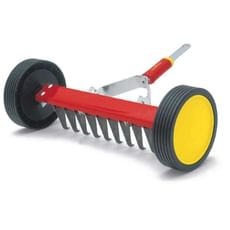
The selection available from Tooled-Up.com includes both traditional fixed-head moss rakes and innovative roller-style designs that feature a swinging head mechanism. This clever engineering allows the rake to glide smoothly over the lawn when pushed forward, then bite into the surface when pulled back, making the work less physically demanding whilst achieving thorough moss removal. Multi-change systems offer particular versatility, allowing the rake head to be fitted to compatible handles of varying lengths to suit different users and garden sizes.
Professional groundskeepers, landscape gardeners, and dedicated homeowners rely on quality moss rakes to maintain pristine lawns throughout the year. When combined with appropriate lawn treatment products and regular scarification, moss rakes form an essential part of any comprehensive lawn care programme, helping to restore tired, moss-infested turf to lush, healthy condition.
Jargon Buster
- Scarification: The process of vigorously raking or mechanically removing moss, thatch, and organic debris from a lawn to improve air circulation, water penetration, and overall grass health.
- Thatch: A layer of dead and living organic matter that accumulates between the green grass blades and the soil surface. Excessive thatch (over 12mm) restricts water and nutrient absorption and encourages moss growth.
- Multi-Change System: A modular tool design where different implement heads can be attached to compatible handles, reducing storage requirements and allowing users to build a comprehensive tool collection economically.
- Roller Rake: A moss rake design featuring a cylindrical head with spring-loaded tines that rotates as it moves across the lawn, with a pivoting action that adjusts to ground contours.
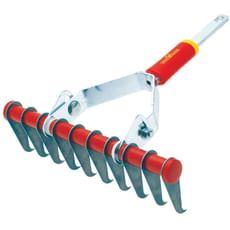
- Wire Tines: The sharp, sprung metal prongs on a moss rake that penetrate the lawn surface to hook out moss and thatch. Wire tines are typically made from tempered steel for durability.
- Working Width: The measurement across the rake head, typically between 20cm and 40cm for hand-operated moss rakes. Wider heads cover more ground but require greater physical effort on dense moss growth.
Who Uses Moss Rakes?
- Landscape Gardeners: Professional contractors maintaining domestic and commercial green spaces requiring moss-free, healthy lawns
- Groundskeepers: Staff responsible for sports pitches, golf courses, parks, and recreational grounds where turf quality is paramount
- Garden Maintenance Contractors: Businesses offering seasonal lawn care services including moss removal and scarification
- Estate Managers: Personnel maintaining large private grounds, country estates, and heritage properties with extensive lawned areas
- Allotment Holders: Gardeners maintaining grass paths and communal areas within allotment sites
- Homeowners and DIY Enthusiasts: Property owners committed to maintaining healthy, attractive lawns throughout the year
- Garden Centre Staff: Employees performing lawn care demonstrations and seasonal maintenance services
- Cemetery Maintenance Teams: Workers responsible for keeping memorial grounds well-presented and accessible
How to Choose the Right Moss Rakes
Selecting the appropriate moss rake depends primarily on the size of the lawn area and the severity of moss infestation. For smaller domestic lawns up to 50 square metres, a standard hand-operated moss rake with a working width of approximately 30cm provides excellent results without excessive physical strain. Larger properties may benefit from wider rake heads or mechanised alternatives, though hand tools offer superior control around flower beds, trees, and lawn edges.
The rake head design significantly affects performance and user comfort. Roller-style rakes with pivoting heads reduce the physical effort required and adapt better to undulating ground, making them particularly suitable for older users or those with mobility considerations. Traditional fixed-head designs with closely-spaced wire tines offer aggressive moss removal for heavily infested lawns but demand greater upper body strength during prolonged use.
Consider multi-change compatible systems if you're building a comprehensive garden tool collection. Tooled-Up stocks Wolf Garten multi-change moss rake heads that attach to a range of compatible handles, from compact 100cm lengths for working in confined spaces to extended 180cm handles that eliminate stooping. This modular approach proves more economical and space-efficient than purchasing multiple complete tools, whilst the quick-release mechanism allows swift tool changes during garden maintenance sessions.
Build quality determines longevity, particularly for the tine construction. Look for tempered spring steel tines that maintain their shape and sharpness through repeated use against compacted soil and stubborn moss growth. Galvanised or powder-coated finishes resist corrosion when tools are stored in damp shed environments typical of British gardens. Reinforced head-to-handle connections prevent the frustrating loosening that occurs with cheaper designs during vigorous raking action.
Popular Accessories
- Multi-Change Handles: Compatible extension handles in various lengths (100cm to 180cm) for use with interchangeable rake heads
- Lawn Treatment Products: Moss killer solutions, lawn sand, and ferrous sulphate treatments to be applied before and after scarification
- Garden Waste Bags: Heavy-duty collection sacks for containing removed moss and thatch during disposal
- Grass Seed: Quality lawn seed mixtures for overseeding bare patches revealed after moss removal
- Spring Tine Rakes: Complementary tools for lighter raking and lawn grooming between intensive scarification sessions
- Lawn Aerators: Hollow-tine or spike aerators to improve drainage and reduce conditions favouring moss growth
- Garden Gloves: Durable work gloves providing grip and hand protection during extended raking sessions
- Wheelbarrows: For transporting removed moss and thatch to compost heaps or disposal points
Safety Information
Whilst moss rakes are relatively low-risk garden tools, proper technique prevents unnecessary strain and injury. Always warm up with gentle stretching before beginning intensive scarification work, as the repetitive pulling motion can strain shoulder, back, and arm muscles. Maintain an upright posture with knees slightly bent, using leg muscles rather than relying solely on upper body strength. Take regular breaks during extended sessions, particularly when working on larger lawned areas.
Wear sturdy footwear with good grip and ankle support when working on damp grass, which becomes slippery when disturbed. Safety glasses protect eyes from flying debris when vigorously raking heavily thatched areas. Check the lawn for hidden obstacles such as stones, wire, or buried debris before beginning work, as striking solid objects can damage rake tines and cause the handle to kick back unexpectedly.
Store moss rakes with tines facing downward or covered to prevent accidental injury, particularly in family gardens where children play. Clean tines thoroughly after use to remove soil and organic matter that accelerates corrosion. Inspect wire tines regularly for fatigue damage or deformation, replacing worn rake heads before compromised tines break during use.
Frequently Asked Questions
When is the best time to use a moss rake on my lawn?
The optimal periods for moss removal are early spring (March-April) and early autumn (September-October) when grass is actively growing and can recover quickly from the scarification process. Avoid raking during hot, dry summer weather or frozen winter conditions. Apply moss killer two to three weeks before raking to ensure the moss is dead and easier to remove, then overseed and fertilise immediately after scarification to promote rapid grass recovery.
How often should I scarify my lawn with a moss rake?
Most domestic lawns benefit from thorough scarification once annually, typically in autumn. Lawns suffering persistent moss problems may require twice-yearly treatment in spring and autumn until the underlying drainage or pH issues are resolved. Light raking with a spring tine rake can be performed more frequently throughout the growing season without damaging the turf.
What's the difference between a moss rake and a regular garden rake?
Moss rakes feature sharp, closely-spaced spring steel tines designed to penetrate the lawn surface and hook out moss and thatch without removing healthy grass. Regular garden rakes have wider-spaced, rigid tines suited to collecting leaves and debris from hard surfaces or soil. Using a standard rake on a lawn proves ineffective for moss removal and may damage the grass.
Can moss rakes damage my lawn?
When used correctly at appropriate times of year, moss rakes improve rather than damage lawn health. However, overly aggressive raking, scarifying during drought conditions, or repeatedly raking the same area can thin the grass excessively. The lawn will appear worse immediately after scarification, with bare patches and disturbed soil visible, but should recover within three to four weeks with proper aftercare including overseeding and feeding.
Do I need different tools for moss removal on large lawns?
Properties with extensive lawned areas exceeding 200 square metres may benefit from powered scarifiers or lawn aerators that reduce physical effort and complete the work more quickly. However, hand-operated moss rakes provide superior precision around edges, obstacles, and ornamental areas. Many professional groundskeepers use powered equipment for open expanses whilst relying on quality hand rakes from Tooled-Up for detailed work.