

Motorcycle Disc Brake Locks

Pay in 3 interest-free payments on purchases from £20-£3000 with  . Learn more.
 Loading...
End of content
Error - No more pages to load
About Motorcycle Disc Brake Locks
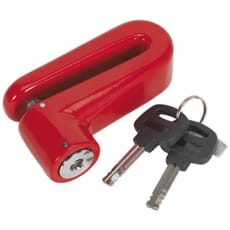
Motorcycle disc brake locks are essential security devices designed to prevent theft by immobilising a motorcycle's front or rear wheel. These compact yet robust locks work by inserting a hardened steel pin through the holes in a motorcycle's brake disc rotor, physically preventing the wheel from rotating. When fitted correctly, they make it virtually impossible to wheel a motorcycle away, acting as a highly visible deterrent to opportunistic thieves. The bright colours commonly used in their construction serve a dual purpose – making them easy to spot as a theft deterrent whilst also reminding riders to remove the lock before attempting to ride.
Most motorcycle disc brake locks feature a die-cast or hardened steel body housing a locking mechanism, with a thick hardened pin that passes through the brake disc. The throat depth – the distance from the centre of the pin to the body of the lock – must be sufficient to accommodate the brake disc and calliper assembly. Quality locks incorporate pick-resistant cylinder mechanisms and come supplied with multiple keys, often including a spare for emergency situations. Many models also include a storage pouch or mounting bracket for convenient transportation when not in use.
Tooled-Up.com stocks reliable motorcycle disc brake locks suitable for securing various motorcycle types, from small scooters to large touring bikes. These security devices represent an affordable first line of defence against motorcycle theft, with their highly visible presence often enough to send thieves looking for easier targets. When combined with other security measures such as chains, ground anchors, or alarmed systems, disc brake locks form part of a comprehensive motorcycle security strategy recommended by insurance companies and police forces across the UK.
Jargon Buster
- Hardened Pin: The cylindrical locking component made from hardened steel that passes through the brake disc holes. Hardening processes make the pin resistant to cutting, sawing, and bolt cropper attacks.
- Throat Depth: The measurement from the centre of the locking pin to the inside edge of the lock body. This determines which brake disc thicknesses and calliper configurations the lock can accommodate – typically ranging from 50mm to 70mm.
- Die-Cast Body: The main housing of the lock, manufactured using die-casting processes to create a durable, impact-resistant structure. These bodies withstand hammer attacks and provide weather resistance.
- Pin Diameter: The thickness of the locking pin, typically ranging from 5mm to 14mm. Thicker pins (10mm+) offer greater resistance to drilling and cutting attacks.
- Sold Secure Rating: An independent testing and certification scheme that rates security products. Ratings include Bronze, Silver, and Gold, with higher ratings indicating greater resistance to attack methods.
- Pick-Resistant Cylinder: A lock mechanism designed with security pins and anti-pick features that make it difficult for thieves to manipulate the lock without the correct key.
Who Uses Motorcycle Disc Brake Locks?
- Motorcycle Commuters: Daily riders who park in public spaces, car parks, or on-street locations where theft risk is elevated
- Motorcycle Couriers and Delivery Riders: Professional riders making multiple stops throughout the day who need quick, portable security
- Touring Motorcyclists: Riders travelling long distances who need lightweight, packable security for overnight stops and service station breaks
- Classic and Vintage Motorcycle Owners: Enthusiasts protecting valuable or irreplaceable motorcycles at shows, rallies, and events
- Sports Bike Owners: Riders of high-performance motorcycles that are frequently targeted by thieves due to their value and desirability
- Scooter Riders: Urban commuters using smaller capacity machines that are vulnerable to being lifted into vans
- Motorcycle Dealerships and Showrooms: Businesses securing stock motorcycles displayed outside or in accessible areas
- Motorcycle Training Schools: Organisations protecting training fleet bikes left at test centres and training grounds
How to Choose the Right Motorcycle Disc Brake Locks
Pin Diameter and Strength: Look for locks with pins of at least 10mm diameter manufactured from hardened steel. Thicker pins provide greater resistance to cutting tools and bolt croppers. The hardening process should extend throughout the pin, not just surface treatment, to prevent drilling attacks.
Throat Depth Compatibility: Measure the distance from the brake disc holes to the calliper body on your specific motorcycle. The lock's throat depth must accommodate this measurement comfortably. Most locks suit standard configurations with 60-70mm throat depths, but always verify compatibility before purchase.
Body Construction: Die-cast metal or hardened steel bodies offer the best protection against hammer attacks and leverage attempts. Avoid locks with predominantly plastic construction, as these can be shattered with impact. Weather-resistant coatings prevent corrosion in typical UK conditions.
Locking Mechanism Quality: Choose locks with pick-resistant cylinders featuring security pins. The selection available from Tooled-Up includes models with proven cylinder designs that resist common attack methods. Multiple keys should be supplied as standard – keeping a spare key separately prevents being stranded if the primary key is lost.
Visual Deterrent Value: Bright colours such as yellow, orange, or red make the lock highly visible to both potential thieves and to you as a reminder. This visibility factor is as important as the physical security, as thieves often avoid motorcycles with obvious security measures.
Portability and Storage: Consider how you'll carry the lock when riding. Models supplied with storage pouches fit easily in panniers or under-seat storage. Compact designs that don't add excessive weight are preferable for daily commuting use.
Insurance Recognition: Some insurance companies offer premium discounts for motorcycles secured with approved locks. Check whether locks carry Sold Secure ratings or similar certifications that your insurer recognises.
Popular Accessories
- Motorcycle Security Chains: Heavy-duty chains used alongside disc locks for securing the motorcycle to ground anchors or fixed objects
- Ground Anchors: Permanent or portable anchoring points installed in garages or parking spaces for attaching chains
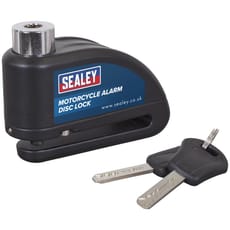
- Disc Lock Alarms: Battery-powered alarm units that attach to disc locks, triggering a loud siren when movement is detected
- Motorcycle Covers: Weather-resistant covers that conceal the motorcycle from view whilst protecting against the elements
- Lock Reminder Cables: Brightly coloured cables that attach from the disc lock to the handlebar, preventing accidental riding with the lock engaged
- Carrying Cases and Pouches: Protective storage solutions for transporting locks without scratching bodywork or other items
- Additional Padlocks: Supplementary locks for securing luggage, helmets, or creating multi-point security systems
- Brake Disc Covers: Additional visual deterrents that cover the entire brake assembly
Frequently Asked Questions
Can a disc brake lock damage my motorcycle's brake system?
When used correctly, disc brake locks will not damage your brakes. The pin passes through the ventilation holes designed into the brake disc and doesn't contact the braking surfaces. However, attempting to ride with the lock engaged can cause significant damage to the brake calliper, disc, and potentially the front fork or swingarm. Always perform a visual check before starting your motorcycle, and consider using a reminder cable that attaches to the handlebars.
Which wheel should I fit the disc brake lock to?
Most riders fit disc locks to the front wheel as it's easier to access and usually features larger brake discs with more holes for pin placement. The front position also makes the lock highly visible as a deterrent. However, if your motorcycle only has a rear disc brake, or if you're using multiple security devices, the rear wheel is equally effective. Some security-conscious riders use two locks simultaneously on both wheels for maximum protection.
Are disc brake locks sufficient on their own for motorcycle security?
Whilst disc brake locks provide excellent protection against opportunistic theft and wheeling the motorcycle away, security experts recommend a layered approach. Combine your disc lock with at least one other security measure such as a heavy-duty chain attached to a ground anchor, an alarmed system, or secure garage storage. Insurance companies often require multiple security devices for comprehensive coverage, particularly for high-value motorcycles. The visibility of a disc lock serves as an initial deterrent, but additional measures prevent lifting the entire motorcycle into a vehicle.
What should I do if I lose the keys to my disc brake lock?
Contact the lock manufacturer immediately – many keep key code records and can supply replacement keys. Keep a note of the key code number (usually stamped on the keys or included in documentation) in a secure location separate from the keys themselves. If replacement keys aren't available, you'll need to use cutting tools to remove the lock, which will destroy it. This highlights the importance of storing the spare key separately and considering registering your lock with the manufacturer when first purchased.
How do I prevent forgetting to remove the disc lock before riding?
The bright colours used in quality disc lock construction provide a primary visual reminder, but additional measures help prevent this common mistake. Use a brightly coloured reminder cable that loops from the lock to your handlebars or throttle grip – you cannot ride without noticing it. Develop a consistent routine of checking both sides of the motorcycle before mounting. Some riders place their ignition key in their jacket pocket rather than immediately in the ignition, forcing themselves to walk around the motorcycle to retrieve it. Modern alarmed disc locks also incorporate motion sensors that sound when the motorcycle is moved with the lock engaged.