

Number Punches

Pay in 3 interest-free payments on purchases from £20-£3000 with  . Learn more.
 Loading...
End of content
Error - No more pages to load
About Number Punches
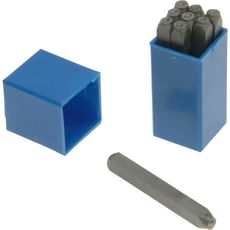
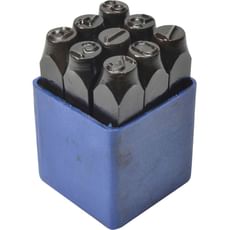
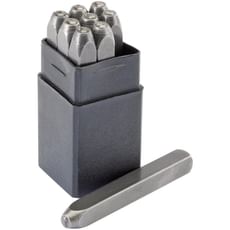
Number punches are precision hand tools designed for permanently marking numerals into metal, plastic, wood and other hard materials. These essential marking tools consist of hardened steel punches, each featuring a raised number (typically 0-9) on the striking end that creates a clear, lasting impression when struck with a hammer. Ideal for identification purposes, quality control, inventory management and security marking, number punches provide a simple yet effective method for stamping serial numbers, batch codes, dates and personal identification marks onto tools, equipment and components.
The number punch sets available from Tooled-Up.com are manufactured from alloy tool steel that has been hardened and tempered to withstand repeated impact whilst maintaining sharp, clear impressions. Most sets feature a black oxide finish that provides corrosion resistance and reduces glare during use. Number punches are typically supplied in complete sets containing digits 0 through 9, housed in protective storage cases or pouches for organised storage and transportation. Various sizes are available, with common heights ranging from 3mm to 12mm, allowing tradespeople to select the appropriate scale for their specific marking requirements.
These manual marking tools remain indispensable across manufacturing, engineering and maintenance environments where permanent identification is required without electricity or complex equipment. Police forces and insurance companies frequently recommend number punches for post code marking of valuable tools and equipment as an effective theft deterrent, making them equally valuable for both professional workshops and home DIY enthusiasts looking to protect their investments.
Jargon Buster
- Hardened and Tempered - A heat treatment process that increases the steel's hardness and wear resistance whilst maintaining toughness, preventing the punch from mushrooming or shattering during repeated striking.
- Alloy Tool Steel - High-carbon steel containing additional elements such as chromium, vanadium or molybdenum that enhance hardness, durability and resistance to wear and deformation.
- Character Height - The measurement of the actual numeral impression created on the workpiece, typically ranging from 3mm to 12mm, determining the visibility and scale of the marked number.
- Striking Face - The flat top surface of the punch that receives hammer blows, designed to withstand repeated impact without deforming or creating dangerous metal splinters.
- Black Oxide Finish - A conversion coating applied to steel tools that provides mild corrosion protection whilst reducing surface glare and giving the characteristic black appearance.
- Centre Punch Starter - A preliminary indentation made with a centre punch before stamping numbers, helping to position the number punch accurately and prevent it from skidding across the workpiece surface.
Who Uses Number Punches?
- Engineers and Machinists - For marking part numbers, batch codes and quality control identifiers on manufactured components
- Manufacturing and Production Staff - Recording production dates, serial numbers and traceability information on products and assemblies
- Maintenance Technicians - Identifying equipment, recording inspection dates and tracking maintenance schedules on machinery and plant equipment
- Automotive Mechanics - Marking engine components, chassis numbers and stamping identification on repaired or modified parts
- Fabricators and Welders - Recording weld numbers, material specifications and job numbers on steel fabrications and metalwork
- Electricians and Plumbers - Marking cable identification numbers, pipe specifications and equipment labels on installations
- Tool Hire Companies - Stamping inventory numbers and tracking codes on hire equipment and tools
- Construction Site Managers - Recording delivery dates, batch numbers and compliance information on building materials
- DIY Enthusiasts and Homeowners - Security marking tools, bicycles, garden equipment and valuables with post codes as recommended by police crime prevention schemes
How to Choose the Right Number Punches
Character Size: Select the numeral height based on the available marking space and required visibility. Smaller 3-4mm punches suit delicate components and confined spaces, whilst 6-8mm sizes work well for general tool marking. Larger 10-12mm punches provide highly visible marks on substantial equipment and outdoor items where long-distance identification is beneficial.
Material Quality: Look for number punches manufactured from hardened alloy tool steel rather than mild steel. Quality punches from established brands like Faithfull, Draper and Priory will maintain sharp impressions over thousands of strikes, whereas inferior materials quickly deform and produce unclear marks.
Set Configuration: Complete 0-9 sets provide maximum versatility for stamping any numerical sequence. Consider whether you need single-digit sets or multiple sets for high-volume marking operations. Sets typically include a storage case or wallet that keeps punches organised and protects the striking faces from damage.
Finish and Coating: Black oxide finishes offer corrosion protection and professional appearance, though chrome-plated versions provide enhanced rust resistance in damp workshop environments. The finish should be smooth and even without rough edges that could cause hand discomfort during extended use.
Striking Face Design: Check that the top striking surface is adequately sized and flat to accept hammer blows safely. Well-designed punches feature chamfered edges that reduce the risk of mushrooming and sharp metal fragments that can cause injury during repeated striking.
Application Requirements: Consider the materials you'll be marking most frequently. Standard number punches work excellently on mild steel, aluminium and softer metals, but harder materials like stainless steel or hardened tool steel may require specialist high-hardness punches to achieve clear impressions without damaging the tool.
Popular Accessories
- Ball Pein Hammers - Essential striking tools with hardened steel heads designed specifically for punch work, available in various weights from 4oz to 2lb
- Letter Punch Sets - Complementary alphabet punches allowing complete alphanumeric marking capability alongside number stamps
- Centre Punches - Used to create starter indentations that accurately position number punches and prevent slipping during stamping
- Automatic Punches - Spring-loaded marking tools for creating location dots and alignment marks before number stamping
- Engineer's Blue or Marking Fluid - Applied to polished metal surfaces to improve visibility of stamped impressions and aid accurate positioning
- Metal Stamps and Dies - Additional marking tools including symbols, special characters and custom stamps for comprehensive identification systems
- Steel Rule and Scriber - Precision measuring and layout tools for accurately positioning number stamps on workpieces
- Punch and Chisel Wallets - Protective storage solutions that organise multiple punch sets whilst preventing damage to striking faces and character ends
- Safety Glasses - Essential eye protection when striking punches to guard against metal fragments and debris
Safety Information
Personal Protective Equipment: Always wear approved safety glasses or goggles when using number punches to protect eyes from metal fragments that can be ejected during striking. Steel-toe-cap boots provide protection if punches or workpieces fall, whilst work gloves can reduce hand fatigue during extended marking sessions, though some users prefer bare hands for improved punch positioning accuracy.
Tool Inspection: Examine number punches before each use for signs of mushrooming on the striking face, which creates sharp metal edges that can cause injury. Worn or damaged punches should be removed from service immediately. Check that character ends remain sharp and undamaged to ensure clear impressions and prevent the punch from slipping during use.
Workpiece Security: Always secure the item being marked in a vice or suitable holding device. Never attempt to hold small components by hand whilst stamping, as the hammer blow can cause serious injury if the punch slips or the workpiece moves unexpectedly. Position work at a comfortable height that allows controlled, accurate hammer strikes.
Striking Technique: Use controlled hammer blows of appropriate force rather than excessive striking that can damage both the punch and workpiece. Ensure the punch is held perpendicular to the work surface to create even impressions and prevent the tool from bending or slipping. Maintain awareness of the HSE guidance on hand-arm vibration if undertaking high-volume repetitive marking operations.
Workshop Environment: Work in well-lit conditions that allow accurate positioning of punches and clear visibility of the marking area. Keep the work surface clear of clutter and ensure adequate space around the workpiece. Be aware that metal fragments can travel several metres when striking punches on hard materials.
Frequently Asked Questions
What size number punches do I need for security marking tools with my postcode?
For security marking tools, cycles and equipment as recommended by police crime prevention schemes, 4mm or 6mm number punches provide clearly visible postcodes without compromising the tool's structural integrity. These sizes create permanent marks that remain legible even on frequently used equipment whilst being small enough for discreet placement. Tooled-Up stocks complete number and letter punch sets from brands including Faithfull, Draper and Priory that are ideal for domestic security marking applications.
Can number punches be used on stainless steel and hardened materials?
Standard number punches work effectively on mild steel, aluminium, brass, copper and similar materials with moderate hardness. However, stainless steel and hardened tool steels require significantly more striking force and may cause premature wear to standard punches. For regular marking of harder materials, consider specialist high-hardness punches or alternative marking methods such as electric engraving tools. Always ensure the material being marked is softer than the punch itself to achieve clear impressions without tool damage.
How do I prevent number punches from slipping when marking curved or polished surfaces?
First create a small centre punch indentation at the desired marking location, which provides a positive location for the number punch and prevents skidding across smooth surfaces. On curved items, ensure the punch is positioned perpendicular to the surface at the contact point. Engineer's blue or permanent marker applied to polished surfaces improves visibility and helps position stamps accurately. Work with controlled, firm strikes rather than tentative taps that are more likely to cause the punch to slip.
What's the difference between chrome-plated and black oxide finish number punches?
Black oxide finishes provide a durable, corrosion-resistant surface with reduced glare, making them comfortable for extended use and suitable for most workshop environments. Chrome-plated punches offer enhanced rust protection in particularly damp conditions and are easier to clean when contaminated with oil or cutting fluids. Both finishes perform equally well in terms of marking quality, with the choice primarily depending on working environment and personal preference. The hardened alloy tool steel construction beneath either finish determines the actual performance and longevity.
Do I need a complete 0-9 set or can I buy individual number punches?
Complete sets containing all digits 0-9 provide the best value and versatility for general marking applications, allowing you to stamp any numerical sequence including dates, serial numbers and postcodes. Individual punches are occasionally available but typically cost disproportionately more than purchasing a complete set. Sets also include protective storage cases that keep punches organised and prevent damage, making them the practical choice whether you're marking occasionally for security purposes or undertaking professional production work requiring frequent numerical identification.