
Nut Spinners

Pay in 3 interest-free payments on purchases from £20-£3000 with  . Learn more.
Loading...
End of content
Error - No more pages to load
About Nut Spinners
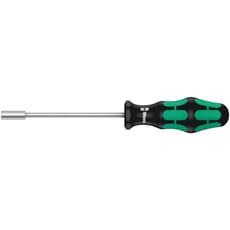
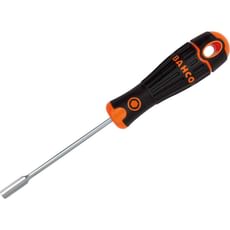
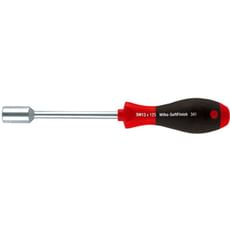
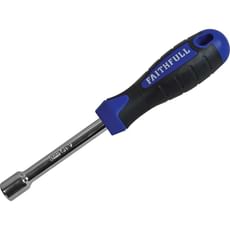
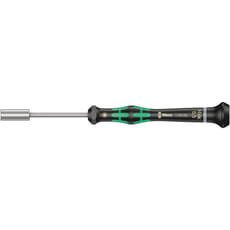
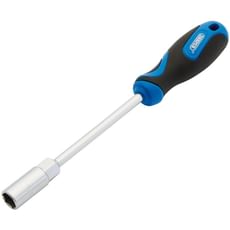
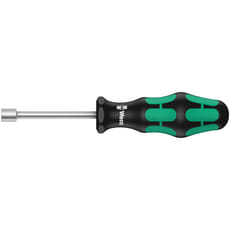
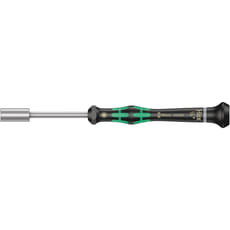
Nut spinners, also known as nut drivers, are essential hand tools designed for quickly fastening and loosening hex nuts and bolts. Combining the best features of spanners and screwdrivers, these tools feature a hollow shaft that allows them to slide over long threaded bolts, making them particularly useful for applications where standard spanners cannot reach. The cylindrical socket end fits snugly over hex nuts whilst the handle provides the leverage and control needed for efficient installation and removal.
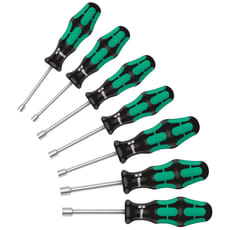
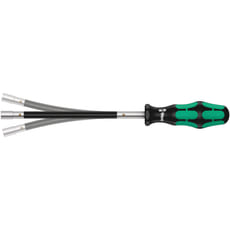
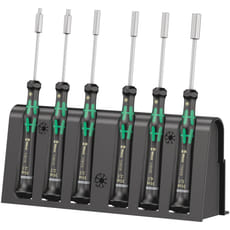
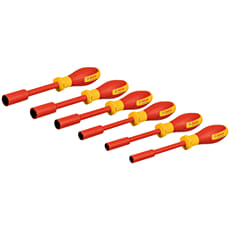
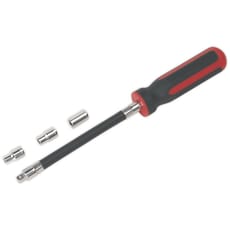
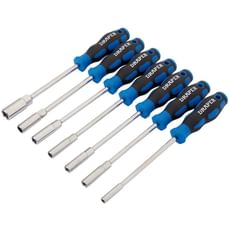
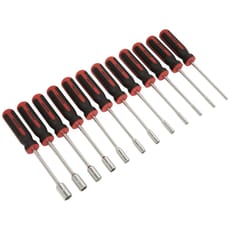
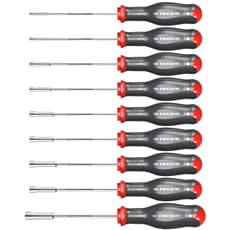
The selection at Tooled-Up.com includes everything from individual nut spinners to comprehensive sets, featuring both standard fixed-shaft designs and flexible shaft variants for accessing awkward angles. Professional-grade options from brands such as Wera, Bahco, Wiha, and Draper provide tradespeople with durable tools built to withstand daily site work, whilst insulated versions offer essential protection when working near live electrical components. Specialist nut spinners are also available for specific applications, including toilet seat installation sets and flexible hose clip drivers designed for automotive and plumbing tasks.
Available in both metric and imperial sizes, nut spinners typically range from 4mm to 13mm, covering the most commonly encountered fastener dimensions across construction, electrical, mechanical, and assembly work. Many feature ergonomic soft-grip handles with two-component construction for improved comfort during extended use, whilst colour-coded or laser-marked sizing ensures quick identification in busy toolboxes.
Jargon Buster
- Hex Socket: The six-sided opening at the tool's tip that fits over hex nuts and bolt heads. Precision-machined for a secure grip that minimises rounding of fastener corners.
- Hollow Shaft: The cylindrical design that allows the nut spinner to slide over long threaded bolts and studs, making it ideal for applications where the fastener protrudes through the nut.
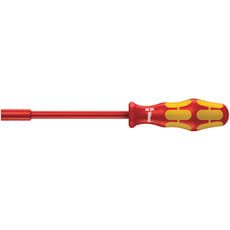
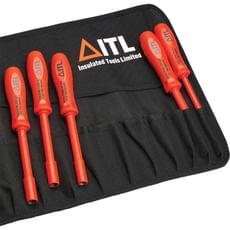
- VDE Insulated: Tools certified to VDE standards (typically VDE 0680) providing electrical insulation rated to 1000V AC for safe work on or near live electrical installations.
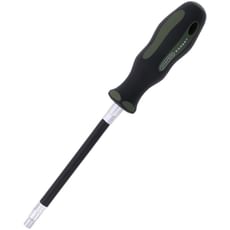
- Flexible Shaft: A bendable section between handle and socket that allows the tool to reach fasteners at awkward angles or in confined spaces where straight-line access is impossible.
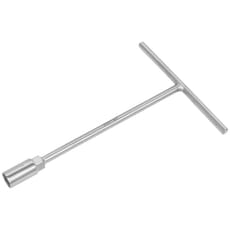
- T-Handle Design: A handle configuration shaped like the letter 'T', providing increased leverage and allowing rotation using both hands for stubborn or high-torque applications.
- Spinner Handle: A free-spinning top section on the handle that allows rapid rotation using the palm whilst maintaining downward pressure, ideal for running nuts down long threads quickly.
Who Uses Nut Spinners?
Nut spinners are versatile tools used across numerous trades and industries:
- Electricians and Sparkies: For electrical enclosure assembly, terminal connections, and mounting components within consumer units and distribution boards, with insulated versions essential for live work
- Plumbers and Heating Engineers: Tightening compression fittings, securing radiator valves, installing sanitaryware, and working with pipe clips and jubilee clamps
- Automotive Mechanics: Engine work, dashboard assembly, trim fastening, and accessing recessed nuts in tight engine bays where spanners cannot fit
- HVAC Technicians: Assembly and installation of ventilation systems, air conditioning units, and ductwork where hex fasteners are standard
- Shopfitters and Joiners: Furniture assembly, kitchen installation, shopfitting projects, and any work involving flat-pack or modular construction
- Electronics and Control Panel Assemblers: Securing components to mounting plates, assembling electronic enclosures, and installing rack-mounted equipment
- Maintenance Engineers: General plant maintenance, machinery servicing, and facilities management across industrial and commercial settings
- DIY Enthusiasts: Home improvement projects, furniture assembly, appliance installation, and general household repairs
How to Choose the Right Nut Spinners
Selecting appropriate nut spinners depends on several practical considerations:
Size Range: Identify the fastener sizes most common in your work. Electricians typically need 5mm to 10mm metric sizes, whilst automotive work may require a broader range. Multi-piece sets from brands like Draper and Sealey offer comprehensive coverage, whilst individual spinners suit those with specific repeated tasks.
Shaft Type: Standard fixed-shaft nut spinners provide maximum strength and precision for general applications. Flexible shaft variants, available from Wera and Draper, are invaluable when working around obstructions or at angles, though they sacrifice some torque transmission. Consider owning both types for maximum versatility.
Electrical Safety: When working on electrical installations, VDE-insulated nut spinners are not just recommended but essential for compliance with UK electrical safety regulations. Tooled-Up stocks certified insulated sets from Bosch Professional and ITL that meet stringent safety standards for work up to 1000V AC.
Handle Design: Soft-grip ergonomic handles reduce hand fatigue during extended use, particularly important for professional tradespeople. T-handle designs provide additional leverage for stubborn fasteners, whilst spinner handles enable rapid installation when running nuts down long threaded sections.
Build Quality: Professional-grade tools from manufacturers like Wera, Bahco, and Wiha feature hardened alloy steel construction with precise tolerances that resist wear and prevent fastener damage. Chrome vanadium steel offers excellent durability, whilst the best examples include lifetime warranties reflecting their quality.
Application-Specific Tools: Specialist nut spinners serve particular purposes—toilet seat installation sets include the specific sizes and extra-long shafts needed for sanitaryware, whilst flexible hose clip drivers simplify automotive and plumbing tasks involving jubilee clamps in confined spaces.
Popular Accessories
- Ratchet Handles: Convert standard nut spinners into ratcheting drivers for faster operation in restricted spaces
- Extension Bars: Increase reach for deeply recessed fasteners or applications requiring additional clearance from surrounding components
- Socket Sets: Complementary hex sockets for use with ratchet handles and power tools, providing alternative fastening solutions
- Magnetic Bit Holders: Keep nuts secure on the tool tip when working overhead or in difficult positions
- Tool Rolls and Storage Cases: Organised storage solutions that protect tools and keep sets complete
- Torque Limiting Drivers: Prevent over-tightening of critical fasteners where specific torque values must be maintained
- Electrical Tape and Cable Ties: Essential consumables for electricians using insulated nut spinners on electrical installations
Safety Information
When using nut spinners, observe these important safety guidelines:
Electrical Work: Always use properly certified VDE-insulated nut spinners when working on or near live electrical installations. Standard nut spinners provide no electrical protection and must never be used for electrical work where contact with live conductors is possible. Ensure tools display valid VDE certification markings and inspect insulation regularly for damage.
Tool Condition: Inspect nut spinners before use for worn sockets, damaged handles, or compromised insulation. Worn sockets that no longer grip fasteners securely can slip and cause injury or damage components. Replace damaged tools immediately rather than risk unsafe operation.
Correct Size Selection: Always use the correct size nut spinner for the fastener. Forcing an incorrect size risks rounding fastener corners, slipping that may cause hand injuries, and damaging both tool and workpiece. Laser-marked or colour-coded sizing helps prevent mistakes.
Torque Awareness: Nut spinners have limitations on the torque they can safely transmit. Avoid using excessive force or extension methods that may break the tool or strip fasteners. For high-torque applications, use appropriate spanners or torque wrenches instead.
Frequently Asked Questions
What's the difference between a nut spinner and a socket set?
Nut spinners feature an integrated handle and hollow shaft designed for hand operation on protruding bolts, whilst socket sets require separate ratchet handles or power tools. Nut spinners excel at electrical work, assembly tasks, and situations requiring direct hand control, whereas socket sets provide greater versatility with interchangeable drive sizes and access to ratcheting mechanisms for faster operation.
Can I use nut spinners with a power drill?
Standard nut spinners are designed exclusively for hand operation and lack the hex shanks needed for drill chucks. Using them with power tools risks breakage and injury. For powered fastening, use proper hex-shank nut drivers or socket adapters specifically designed for drill or impact driver use.
How do I know which size nut spinner I need?
Measure the distance across the flats of the hex nut or bolt head using digital callipers or a ruler. Common UK electrical work typically requires 5mm, 7mm, 8mm, and 10mm sizes, whilst general mechanical work might need 6mm through 13mm. Many tradespeople find that purchasing a comprehensive set initially proves more economical than buying individual sizes as needed.
Why would I choose a flexible shaft nut spinner?
Flexible shaft designs allow access to fasteners located around obstructions, at angles, or in confined spaces where straight-line access proves impossible. They're particularly valuable for automotive work in crowded engine bays, installing components behind panels, and plumbing work involving pipe runs with limited clearance. The trade-off is slightly reduced torque transmission compared to rigid shaft tools.
Are insulated nut spinners necessary for all electrical work?
UK Health and Safety Executive (HSE) guidance requires that work on live electrical installations only be undertaken using properly insulated tools certified to appropriate standards. Even when isolation procedures are followed, insulated tools provide essential additional protection against accidental contact with live conductors. For professional electricians, VDE-insulated nut spinners are a regulatory requirement, not an optional upgrade.