

Nuts, Bolts & Fingerwheels

Pay in 3 interest-free payments on purchases from £20-£3000 with  . Learn more.
 Loading...
End of content
Error - No more pages to load
About Nuts, Bolts & Fingerwheels
Nuts, bolts and fingerwheels are essential fastening components used across countless applications in construction, manufacturing, automotive work, and equipment maintenance. These threaded fasteners provide secure, adjustable connections that can be tightened, loosened or removed as needed, making them indispensable for both permanent installations and assemblies requiring regular access or adjustment. From securing machinery housings to assembling garden equipment handles, these components form the backbone of mechanical fixings in professional and domestic settings alike.
The range available from Tooled-Up.com includes various fastening solutions designed for specific applications, from standard hexagonal nuts and bolts to specialised fingerwheels that allow tool-free adjustment. Fingerwheels, also known as thumb screws or knurled nuts, feature enlarged heads with ridged surfaces that can be tightened by hand without requiring spanners or wrenches. This makes them particularly valuable for equipment that requires frequent assembly and disassembly, such as lawnmower handles, furniture components, and access panels on machinery.
Quality fasteners are manufactured from materials suited to their intended environment, including zinc-plated steel for general purpose use, stainless steel for corrosion resistance, and brass for electrical applications. Thread standards in the UK typically follow metric sizing (M3, M4, M5, M6, M8, M10, etc.), though imperial threads remain common on older equipment and certain imported machinery. Proper selection of thread type, diameter, length and material ensures secure, long-lasting connections that withstand vibration, weathering and mechanical stress.
Jargon Buster
- Fingerwheel: A fastener with an enlarged, knurled head designed for hand-tightening without tools. Also called thumb screws or wing nuts, these allow quick assembly and adjustment of equipment.
- Thread Pitch: The distance between adjacent threads, measured in millimetres for metric fasteners. Coarse threads provide quicker assembly, while fine threads offer greater holding strength and precision adjustment.
- Nylock Nut: A self-locking nut featuring a nylon insert that creates friction against the bolt thread, preventing loosening due to vibration. Commonly used in automotive and machinery applications.
- Hex Head: A six-sided bolt or nut head designed to be turned with spanners, socket wrenches or adjustable wrenches. The standard configuration for most general-purpose fasteners.
- Zinc Plating: A protective coating applied to steel fasteners to prevent corrosion. Provides adequate weather resistance for most outdoor applications in the UK climate.
- Thread Gauge: The measurement system defining thread diameter and pitch. Metric threads (M6 x 1.0) and imperial threads (1/4"-20) use different standards and are not interchangeable.
Who Uses Nuts, Bolts & Fingerwheels?
- Maintenance Engineers: For machinery repairs, equipment servicing and component replacement across industrial settings
- Automotive Mechanics: Essential for vehicle repairs, engine work, exhaust systems and chassis modifications
- Garden Equipment Owners: For assembling and maintaining lawnmowers, trimmers, and outdoor power equipment
- Furniture Makers & Joiners: Used in flat-pack assembly, bespoke furniture construction and cabinet fittings
- DIY Enthusiasts: For home repairs, shed construction, equipment assembly and general household maintenance
- Agricultural Workers: Securing machinery components, repairing farm equipment and maintaining implements
- HVAC Engineers: Fixing heating systems, ventilation units and air conditioning equipment housings
- Shop Fitters & Installers: For retail displays, shelving systems and commercial equipment installation
How to Choose the Right Nuts, Bolts & Fingerwheels
Identify the Thread Type: Determine whether you need metric or imperial threads by checking existing fasteners or equipment specifications. Metric threads are standard on modern European equipment, whilst imperial threads appear on older machinery and American imports.
Measure Diameter and Length: Use callipers or a thread gauge to measure the bolt diameter accurately. Length requirements depend on the thickness of materials being joined, plus sufficient thread engagement (typically 1.5 times the diameter for steel).
Consider Material Requirements: Zinc-plated steel suits most general applications, whilst stainless steel (A2 or A4 grade) provides superior corrosion resistance for outdoor or marine environments. Brass fasteners prevent galvanic corrosion with certain metals and offer electrical conductivity.
Select the Appropriate Head Style: Standard hex bolts work for most applications requiring tool tightening, whilst fingerwheels and thumb screws allow tool-free adjustment for frequently accessed components like equipment handles and access panels.
Account for Load and Stress: Higher grade fasteners (8.8, 10.9, 12.9) offer greater tensile strength for structural applications and high-stress environments. Standard grade 4.6 or 5.8 fasteners suffice for light-duty applications.
Check for Locking Features: Applications subject to vibration benefit from nylock nuts, spring washers or thread-locking compound to prevent fasteners working loose over time.
Popular Accessories
- Washers: Flat, spring and penny washers distribute load and prevent damage to surfaces
- Thread-Locking Compound: Liquid adhesives that cure to prevent vibration-induced loosening
- Spanners & Socket Sets: Essential tools for tightening hex nuts and bolts to correct torque specifications
- Thread Taps & Dies: For repairing damaged threads or creating custom threaded holes
- Thread Gauges: Measuring tools for identifying thread pitch and diameter accurately
- Torque Wrenches: Ensure fasteners are tightened to manufacturer specifications without over-tightening
- Anti-Seize Compound: Prevents fasteners from seizing in place, particularly in high-temperature or corrosive environments
Frequently Asked Questions
What's the difference between a bolt and a screw?
Bolts typically pass through unthreaded holes and fasten with a nut on the opposite side, whilst screws thread directly into the material or into a threaded hole. Bolts generally have uniform shank diameter, whereas screws often taper towards the point.
Can I reuse fingerwheels and nuts multiple times?
Standard nuts and fingerwheels can generally be reused if threads remain undamaged. However, nylock nuts and other locking fasteners lose effectiveness after initial use and should be replaced, particularly in critical applications.
How do I remove a seized or rusted bolt?
Apply penetrating oil and allow time to soak (ideally overnight). Use a correctly fitting spanner or socket to avoid rounding the head. Heat from a propane torch can help break corrosion bonds, though care is needed near flammable materials or plastic components.
What thread size do I need for Flymo lawnmower handles?
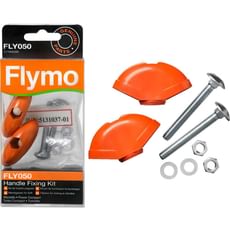
Flymo handle fixing kits typically use M6 or M8 metric threads with fingerwheels for tool-free assembly. Tooled-Up stocks genuine Flymo replacement fixings that match original equipment specifications perfectly.
Are stainless steel fasteners worth the extra cost?
For outdoor equipment, marine applications or areas with high moisture exposure, stainless steel fasteners provide significantly longer service life and eliminate rust staining. For indoor or protected applications, zinc-plated steel offers adequate protection at lower cost.