

Nylon Nuts
Pay in 3 interest-free payments on purchases from £30-2000 with  . Learn more.
 Loading...
End of content
Error - No more pages to load
About Nylon Nuts
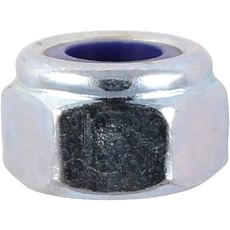
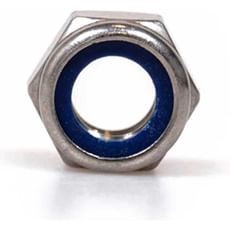
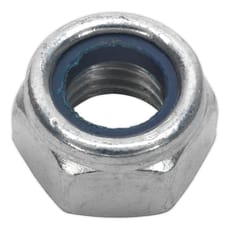
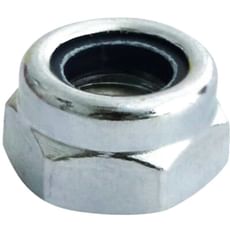
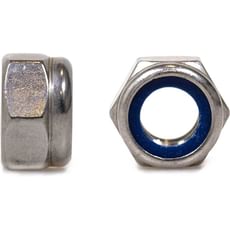
Nylon nuts, also known as nyloc nuts or locking nuts, are essential fastening components designed to prevent loosening under vibration and movement. Unlike standard hex nuts, these feature an integrated nylon insert that creates friction against the bolt thread, providing a secure locking action without requiring additional washers or locking compounds. This self-locking mechanism makes them indispensable for applications where reliability and safety are paramount, from automotive assembly to construction projects and mechanical installations.
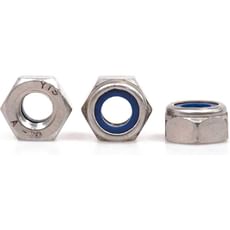
The range available from Tooled-Up.com includes various finishes and materials to suit different environments and specifications. Bright zinc plated nylon nuts offer excellent corrosion resistance for general purpose applications, while A2 304 stainless steel variants provide superior protection in damp or coastal conditions. For marine environments and chemical processing applications, A4 316 stainless steel nyloc nuts deliver exceptional corrosion resistance. Both Type P (standard height) and Type T (thin) hexagonal nylon nuts are available, with the latter being ideal for applications with limited clearance or where reduced weight is beneficial.
Manufactured to DIN 982 and ISO standards, these fasteners comply with metric threading conventions and feature Trivalent Chromium (Cr3) zinc plating where applicable. Tooled-Up stocks trusted brands including Sirius, Timco, and Sealey, ensuring professional-grade quality for demanding bolting and fastening applications across industrial, commercial, and domestic projects.
Jargon Buster
- Nyloc / Nylon Insert: A collar of nylon material embedded in the upper portion of the nut that deforms around the bolt thread, creating resistance to prevent the nut from loosening due to vibration or rotation.
- Type P vs Type T: Type P refers to standard height hexagonal nylon nuts, while Type T denotes thin nylon lock nuts with reduced height, used where space is limited or weight reduction is important.
- DIN 982: The German industrial standard specification for hexagon nuts with non-metallic inserts, ensuring dimensional accuracy and performance characteristics across manufacturers.
- A2 304 and A4 316 Stainless Steel: Austenitic stainless steel grades; A2 304 offers good general corrosion resistance suitable for most applications, while A4 316 provides superior resistance to chlorides and is preferred for marine or chemical environments.
- Bright Zinc Plated: A protective coating process using trivalent chromium (Cr3) that provides corrosion resistance whilst maintaining a bright silver appearance, commonly used for indoor and general outdoor applications.
- Metric Thread: Threading system based on metric measurements (measured in millimetres) that defines the diameter and pitch of the bolt and corresponding nut, standard throughout the UK and Europe.
Who Uses Nylon Nuts?
- Automotive Technicians: For securing components subject to constant vibration such as exhaust systems, suspension parts, and engine mountings
- Mechanical Engineers: Assembly and maintenance of machinery, plant equipment, and industrial installations requiring secure fastening
- Construction Workers: Structural steelwork, scaffolding, temporary works, and building projects where bolted connections must remain tight
- Electricians: Securing electrical enclosures, cable management systems, and mounting brackets where loosening could pose safety risks
- HVAC Engineers: Installation of ductwork, ventilation systems, and air conditioning units exposed to vibration and temperature fluctuation
- Agricultural Engineers: Repair and maintenance of farm machinery, trailers, and equipment subject to harsh working conditions
- Marine Engineers: Boat building and repair requiring stainless steel fixings that resist corrosion whilst maintaining secure connections
- DIY Enthusiasts: Home improvement projects, furniture assembly, and automotive repairs where reliable fastening is essential
How to Choose the Right Nylon Nuts
Material Selection: Consider the operating environment carefully. Bright zinc plated steel nylon nuts are cost-effective for indoor applications and light outdoor use. A2 304 stainless steel provides better corrosion resistance for general outdoor exposure, whilst A4 316 stainless steel is essential for marine environments, coastal locations, or chemical exposure.
Thread Size and Pitch: Always match the nut to your bolt specification. Measure the bolt diameter accurately (typically ranging from M3 to M24) and ensure you select the correct metric thread pitch. Fine pitch threads are available for specific applications requiring tighter tolerance.
Height Requirements: Standard Type P nylon nuts suit most applications, but Type T thin variants are necessary where clearance is restricted, such as behind panels or in confined assembly spaces. The reduced height also decreases overall weight in weight-sensitive applications.
Temperature Considerations: Nylon inserts typically function reliably up to approximately 120°C. For higher temperature applications, consider all-metal locking nuts or alternative locking methods. Always verify the manufacturer's temperature rating for your specific application.
Reusability: Nylon lock nuts are generally designed for single use, as the nylon insert deforms during initial installation. Whilst they may be reused occasionally, locking effectiveness diminishes with each use. For critical applications, always use new nylon nuts.
Popular Accessories
- Bolts and Screws: High tensile steel bolts, stainless steel machine screws, and socket cap screws to pair with your nylon nuts
- Washers: Flat washers, spring washers, and penny washers to distribute load and protect surface finishes
- Socket Sets: Metric socket sets, ratchets, and spanners for proper installation and torque application
- Torque Wrenches: Essential for achieving correct tightening specifications without over-stressing the nylon insert
- Thread Cutting Taps: For creating or repairing threads in materials to accept metric bolts and nylon nuts
- Thread Gauges: Measuring tools to verify bolt thread size and pitch before ordering fasteners
- Storage Solutions: Compartmented organiser boxes and storage cabinets from brands like Stanley to keep fixings organised on site
Frequently Asked Questions
Can nylon lock nuts be reused safely?
Whilst nylon lock nuts can sometimes be reused, their locking effectiveness diminishes significantly after initial use as the nylon insert becomes deformed. For critical applications involving safety, structural integrity, or machinery, always fit a new nylon nut. For non-critical applications, inspect the nylon insert carefully – if it appears damaged or flattened, replace the nut immediately.
What's the difference between A2 and A4 stainless steel nylon nuts?
A2 304 stainless steel offers good general corrosion resistance suitable for most indoor and outdoor applications. A4 316 stainless steel contains molybdenum, providing superior resistance to chlorides, acids, and marine environments. Choose A4 316 for coastal locations, marine applications, chemical processing, or anywhere exposed to salt water or aggressive chemicals.
At what temperature do nylon inserts fail?
Most standard nylon inserts maintain their locking effectiveness up to approximately 120°C, though this varies by manufacturer and specific nylon compound used. Beyond this temperature, the nylon can soften and lose its locking capability. For high-temperature applications, consult the manufacturer's specifications or consider all-metal locking nuts designed for elevated temperatures.
Do I need to use a washer with a nylon lock nut?
Washers aren't always necessary with nylon lock nuts, but they're recommended when fastening soft materials (timber, plastic, composite) to distribute load and prevent surface damage. Washers also help when the bearing surface is uneven or when additional surface protection is required. For metal-to-metal applications with flat surfaces, washers are typically optional.
How tight should I torque a nylon lock nut?
Follow the manufacturer's torque specifications for your bolt size and grade. Nylon lock nuts typically require the same torque values as standard nuts of equivalent size. Use a calibrated torque wrench to avoid over-tightening, which can damage the nylon insert and reduce locking effectiveness. You should feel increased resistance as the nylon insert engages with the bolt thread during installation.