

Other Clamps

Pay in 3 interest-free payments on purchases from £20-£3000 with  . Learn more.
 Loading...
End of content
Error - No more pages to load
About Other Clamps
Beyond the standard G-clamps, sash clamps, and quick-release clamps found in most workshops, there exists a diverse range of specialist clamping solutions designed for specific trades and applications. This category encompasses the more unusual and task-specific clamps that don't fit neatly into conventional groupings—from bricklaying profile clamps and welding table clamping elements to bonnet strut clamps and seaming clamps. These are the problem-solving tools that professional tradespeople reach for when standard clamps simply won't work for the job at hand.
The selection at Tooled-Up.com includes specialist products from industry-leading manufacturers such as Bessey, known for their precision engineering, alongside practical solutions from Sealey, Faithfull, Stanley, and Blue Spot. Whether you're working with woodworking benches and need attachment clamps, positioning components for welding, setting out brickwork profiles, or holding laser levels in precise positions, there's likely a purpose-designed clamp that makes the task significantly easier and more accurate than improvising with general-purpose alternatives.
Many of these specialist clamps represent years of development for specific industries—from automotive repair work to precision woodworking and construction site applications. They're often designed to work in conjunction with other equipment, such as multifunction work tables, K Body clamp systems, or welding benches, expanding the versatility of existing workshop setups and enabling techniques that would be difficult or impossible with standard clamping equipment alone.
Jargon Buster
- K Body Clamp System: A professional parallel clamping system with a distinctive K-shaped rail design that provides exceptional rigidity and precise parallel clamping force. Many specialist adaptors are designed specifically for K Body clamps.
- Seaming Clamp: A specialist clamp designed to hold two sheets of metal together while creating a seam join, commonly used in roofing, metalwork, and automotive bodywork applications.
- Tilting Jaw Adaptor: An attachment that allows clamp jaws to tilt at an angle (typically -15° to +15°), enabling secure clamping of angled or sloped surfaces without the workpiece slipping.
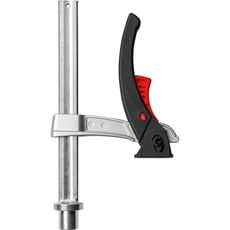
- Clamping Element: A modular component that attaches to specialised work surfaces (such as welding tables) to provide flexible clamping points that can be positioned precisely where needed.
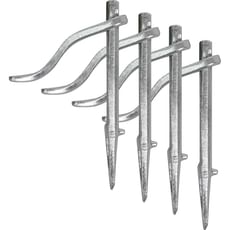
- Dutch Pins: Traditional bench holdfast pins used in woodworking to secure workpieces to bench tops through pre-drilled dog holes, offering quick and secure temporary fixing.
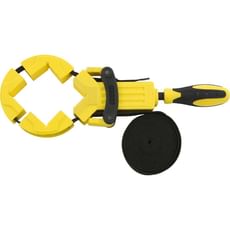
- Band Clamp: A flexible strap-style clamp that wraps around irregular shapes, frames, or assemblies, tightening with a ratchet mechanism to provide even pressure around the entire perimeter.
Who Uses Other Clamps?
Specialist clamps serve a wide range of trades and applications:
- Bricklayers and stonemasons using profile clamps to set out accurate wall lines and courses
- Welders and fabricators requiring precision positioning of components on welding benches
- Cabinet makers and furniture makers needing attachment systems for multifunction work tables
- Motor mechanics working with bonnet struts, exhaust systems, and automotive assemblies
- Metal roofers and sheet metal workers creating seamed joints in flashings and cladding
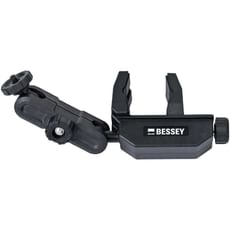
- Surveyors and setting-out engineers positioning laser levels and measuring equipment
- Picture framers using band clamps for mitred corner assemblies
- Shop fitters and joiners adapting standard clamps for site-specific applications
- Model makers and hobbyists requiring precision holding for small-scale detailed work
How to Choose the Right Other Clamps
Selecting the appropriate specialist clamp requires consideration of your specific application:
Identify Your Specific Need: Specialist clamps are designed for particular tasks, so clearly define the problem you're solving. Are you working with angled surfaces, irregular shapes, specific equipment, or particular materials? Understanding the exact application helps narrow down the options considerably.
System Compatibility: Many specialist clamps are designed to work with existing systems—such as K Body clamps, multifunction tables, or welding benches. Tooled-Up stocks adaptors and accessories that expand the capability of equipment you may already own, which can be more cost-effective than purchasing entirely separate tools.
Material and Build Quality: For professional daily use, investing in brands like Bessey typically provides superior durability and precision. The engineering tolerances in quality clamps ensure consistent performance over thousands of uses. For occasional DIY applications, mid-range options from Faithfull or Stanley may provide adequate functionality at lower cost.
Clamping Force and Capacity: Consider the size of workpieces and the holding force required. Check maximum opening capacities and whether the clamp provides sufficient pressure for your materials—some specialist applications require only positioning (laser holders), whilst others demand significant force (seaming clamps).
Adjustability Features: Tilting adaptors, telescopic extensions, and angle adjustments add versatility. If your work involves varied angles or positions, these features may justify higher initial investment through increased flexibility across multiple applications.
Popular Accessories
- Clamp pads and protective caps to prevent marking delicate surfaces
- Extension bars for K Body and similar clamp systems
- Additional clamping heads and jaw attachments for modular systems
- Bench dog hole drilling guides for creating custom clamping points
- Anti-slip mats and workbench liners to complement clamping setups
- Magnetic squares and angle gauges for positioning work before clamping
- Quick-release toggle clamps for repetitive production work
- Clamp storage racks to organise specialist tools efficiently
Frequently Asked Questions
Can I use standard clamps instead of specialist clamps for my application?
Whilst it's sometimes possible to improvise, specialist clamps are engineered for specific tasks and typically provide better results with less frustration. They often incorporate features like angled jaws, specific pressure distribution, or compatibility with other equipment that standard clamps cannot replicate. For professional work where accuracy and efficiency matter, the right specialist clamp usually pays for itself quickly.
Are Bessey clamps worth the premium over budget alternatives?
Bessey represents the professional standard in clamping equipment, offering superior engineering tolerances, durability, and consistent performance. For tradespeople using clamps daily, the investment typically proves worthwhile through longevity and reliability. However, for occasional DIY use or non-critical applications, mid-range brands stocked at Tooled-Up like Faithfull or Stanley provide good value.
How do I know which adaptor fits my existing clamps?
Check the manufacturer and model of your current clamps—most adaptors are system-specific. Bessey adaptors, for example, are designed for their K Body range and won't fit other manufacturers' clamps. Product specifications on Tooled-Up.com indicate compatibility, but if you're unsure, contact customer service with details of your existing equipment before purchasing.
Can specialist clamps be used outdoors on construction sites?
Most quality clamps are suitable for site work, though prolonged exposure to wet conditions can cause rust on unprotected steel components. Wipe clamps dry after use and apply light oil to threads and moving parts periodically. Some specialist clamps designed for indoor workshop use may not be robust enough for harsh site conditions—check product descriptions for guidance on intended environments.
What's the advantage of modular clamping systems over individual clamps?
Modular systems allow you to build a customised clamping setup tailored to your specific work. By investing in a base system (like K Body clamps) and adding specialist adaptors as needed, you gain versatility without purchasing multiple complete clamp sets. This approach is particularly cost-effective for workshops handling diverse projects where different clamping configurations are frequently required.