

Paint Roller Kits
Pay in 3 interest-free payments on purchases from £30-2000 with  . Learn more.
 Loading...
End of content
Error - No more pages to load
About Paint Roller Kits
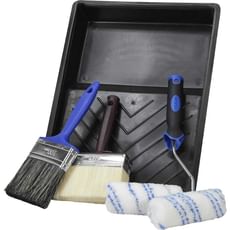
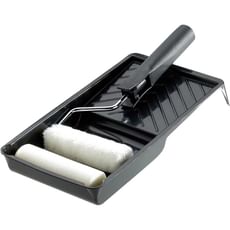
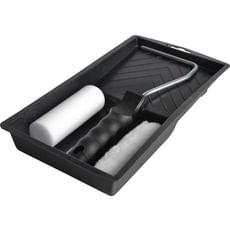
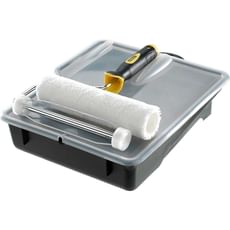
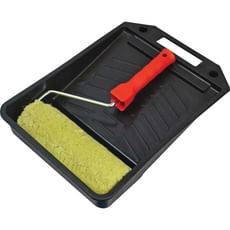
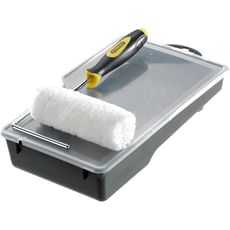
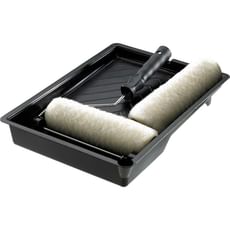
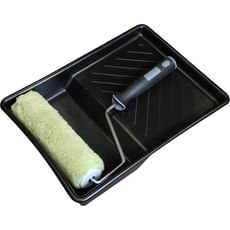
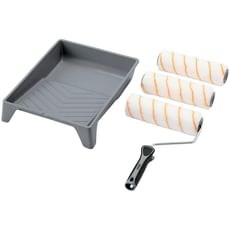
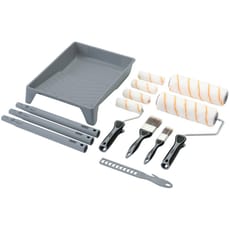
Paint roller kits provide everything needed to achieve professional-quality finishes on walls, ceilings, and other large surfaces. These comprehensive sets typically include a roller frame, one or more roller sleeves, a paint tray, and often additional accessories such as extension poles, brushes, or disposable tray liners. Whether tackling a complete home renovation or maintaining commercial properties, a well-equipped paint roller kit eliminates the need to purchase components separately and ensures all elements work together seamlessly.
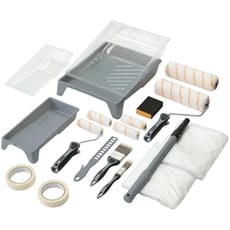
Tooled-Up.com stocks paint roller kits from leading manufacturers including Faithfull, Stanley, Draper, and Purdy, catering to both professional decorators and DIY enthusiasts. Available kits range from compact mini roller sets perfect for furniture painting and tight spaces, to comprehensive 25-piece decorating tool collections that include everything from masking tape to filler knives. Specialist options include masonry roller kits designed for rough textured surfaces, disposable tray systems for quick cleanup, and premium polyester sleeve sets that deliver exceptional coverage with all emulsion paints.
The variety of configurations means there's a suitable kit for every project scale and surface type. Budget-conscious options provide essential tools for occasional use, whilst professional-grade sets feature durable components built to withstand daily site work and repeated cleaning. Many kits include multiple sleeve options, allowing decorators to switch between different paint types and surface textures without purchasing separate components.
Jargon Buster
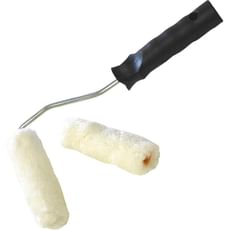
- Roller Sleeve (or Refill): The cylindrical fabric cover that fits over the roller frame and applies paint to surfaces. Available in various pile depths and materials to suit different paint types and surface textures.
- Pile Depth: The thickness of the roller sleeve's fabric surface, typically measured in millimetres. Short pile (6-10mm) suits smooth surfaces like plasterboard, medium pile (12-18mm) works for lightly textured walls, and long pile (20mm+) is designed for rough masonry and exterior rendering.
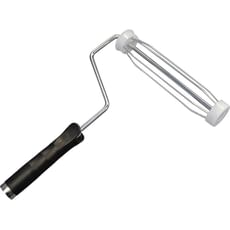
- Cage Frame: A wire cage-style roller frame that provides excellent paint distribution and prevents sleeve slippage during use. Particularly popular for masonry work where heavy paint loads are required.
- Polyester Sleeve: Synthetic roller fabric that provides superior paint pickup and release compared to foam alternatives. Woven polyester ensures even coverage and works effectively with water-based emulsions.
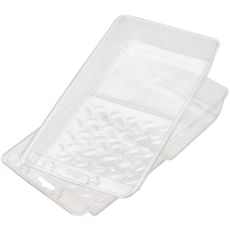
- Tray Liner: Disposable plastic inserts that fit inside reusable paint trays, eliminating cleanup time between colours or at project completion. Particularly useful for professionals working across multiple sites.
- Extension Pole Compatibility: The threaded socket on a roller frame that accepts standard extension poles, enabling painters to reach high ceilings and walls without ladders or scaffolding.
Who Uses Paint Roller Kits?
- Professional Decorators and Painters: Tradespeople who require reliable, efficient tools for daily client work across residential and commercial projects
- Property Maintenance Teams: Facilities managers and maintenance personnel responsible for keeping commercial buildings, schools, and public spaces well-presented
- Landlords and Letting Agents: Property owners preparing rental accommodations between tenancies
- DIY Enthusiasts: Homeowners undertaking renovation projects, redecorating rooms, or maintaining their properties
- Construction Contractors: Builders completing finishing work on new builds or extensions
- Interior Designers: Design professionals overseeing property transformations and colour scheme implementations
- Furniture Upcyclers: Crafters and restorers using mini roller kits for painting furniture, cabinets, and smaller decorative items
How to Choose the Right Paint Roller Kits
Surface Type Considerations: Match the roller sleeve specification to your intended surface. Smooth plasterboard and previously painted walls require short pile sleeves (6-10mm), whilst textured artex or woodchip wallpaper demands medium pile (12-18mm). For exterior masonry, rough render, or brickwork, choose specialist masonry kits with long pile sleeves (20mm+) that can work paint into uneven surfaces.
Kit Completeness: Assess what's included versus what you already own. Basic kits provide just a frame, sleeve, and tray—ideal if you have extension poles and brushes. Comprehensive sets available at Tooled-Up include cutting-in brushes, dust sheets, filler knives, and masking tape, offering better value for complete decorating projects or those building a tool collection from scratch.
Paint Compatibility: Verify the roller sleeves suit your chosen paint type. Polyester sleeves work excellently with water-based emulsions and most modern paints. Foam rollers suit gloss and satinwood but can leave air bubbles with emulsions. For specialist coatings like masonry paint or textured finishes, select kits specifically designed for heavy-bodied paints.
Durability Requirements: Professional decorators should prioritise kits with metal frames, reinforced sleeve cores, and sturdy trays that withstand repeated cleaning and daily use. DIY users completing occasional projects can opt for lighter-duty kits that balance cost with adequate performance. Consider whether disposable tray liners might suit your workflow—they eliminate cleanup but create ongoing costs.
Roller Width: Standard 9-inch rollers suit most walls and ceilings, providing good coverage speed whilst remaining manoeuvrable. Mini roller kits (typically 4-5 inches) excel for furniture, doors, radiators, and confined spaces. Jumbo rollers accelerate coverage on large commercial spaces but require more physical effort and larger paint quantities per load.
Brand Reputation: Established names like Faithfull, Stanley, Draper, and Purdy offer proven reliability and widely available replacement sleeves. Premium brands typically feature better paint release, reduced splatter, and longer-lasting components that justify higher initial costs through extended service life.
Popular Accessories
- Extension Poles: Telescopic or fixed-length poles that attach to roller frames, enabling ceiling work and high walls without ladders
- Additional Roller Sleeves: Spare refills in various pile depths for different surfaces and paint types
- Paint Brushes: Cutting-in brushes for edges, corners, and detailed work where rollers cannot reach
- Masking Tape: Low-tack decorator's tape for protecting skirting boards, door frames, and creating clean paint lines
- Dust Sheets: Protective coverings for flooring and furniture during painting projects
- Paint Kettles: Handheld containers for working with brushes away from the main paint tin
- Tray Liners: Disposable inserts that eliminate tray cleaning between colours or at project completion
- Roller Cleaner Tools: Curved scrapers that remove excess paint from sleeves before washing, reducing water usage and cleaning time
- White Spirit or Brush Cleaner: Solvents for cleaning oil-based paints from tools (water suffices for emulsions)
- Filling Knives: For preparing surfaces by filling cracks and holes before painting
Frequently Asked Questions
What's the difference between a basic roller kit and a complete decorating set?
Basic paint roller kits typically contain just the essentials—a roller frame, one or two sleeves, and a paint tray. Complete decorating sets include additional tools such as brushes for cutting in, masking tape, dust sheets, filler knives, sandpaper, and sometimes extension poles. For isolated touch-up jobs, a basic kit suffices, but complete sets offer better value when undertaking whole-room decorating projects or building a comprehensive tool collection.
How do I clean and maintain paint roller sleeves for reuse?
For water-based emulsions, scrape excess paint back into the tin using a roller cleaner tool or the tray edge, then rinse thoroughly under running water until it runs clear. Squeeze the sleeve repeatedly during rinsing to remove paint from deep within the fibres. For oil-based paints, use white spirit or appropriate solvent before washing with detergent. Spin the roller vigorously to remove excess water, then allow to dry completely standing on end. Properly cleaned polyester sleeves can be reused multiple times, though they gradually lose effectiveness as fibres become compacted.
Can I use the same roller sleeve for different paint colours?
Yes, provided you clean the sleeve thoroughly between colours. However, when switching from dark to light colours, traces of the previous shade may tint subsequent coats. For critical colour matching or when moving from bold to pale shades, using a fresh sleeve ensures perfect results. Many decorators keep separate sleeves for whites and magnolia versus stronger colours. Disposable foam rollers offer an economical alternative when frequently changing colours across multiple rooms.
What pile depth should I choose for standard interior walls?
For typical plastered interior walls with smooth or lightly textured finishes, a medium pile sleeve of 12-15mm provides optimal results with emulsion paint. This depth holds sufficient paint for efficient coverage whilst achieving a smooth finish without excessive texture. Short pile (6-10mm) suits completely smooth surfaces like new plasterboard or previously glossed woodwork being overpainted with emulsion. Only use long pile (20mm+) for deliberately textured finishes or exterior masonry—these create an overly stippled appearance on standard interior walls.
Are paint roller kits suitable for woodwork and furniture?
Mini roller kits work excellently for furniture, cabinet doors, and flat woodwork panels, delivering faster coverage than brushes with a smooth, brush-mark-free finish. Choose short pile or foam sleeves for the smoothest results on wood. However, traditional brushes remain essential for detailed mouldings, spindles, and edges where rollers cannot reach. Many furniture painters use rollers for flat surfaces and immediately "tip off" with a dry brush to achieve an ultra-smooth finish that mimics spray application.