

Parallel Punches

Pay in 3 interest-free payments on purchases from £20-£3000 with  . Learn more.
 Loading...
End of content
Error - No more pages to load
About Parallel Punches
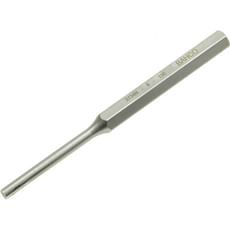
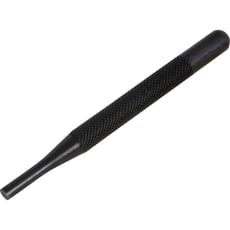
Parallel punches, also known as pin punches or drift punches, are precision hand tools designed for driving out pins, keys, and small fasteners without damaging the surrounding material. Unlike tapered punches that narrow to a point, parallel punches feature a uniform diameter shaft that maintains consistent contact with the pin throughout the driving process. This parallel design prevents the punch from wedging into holes or deforming pins, making them essential tools for mechanical work, assembly tasks, and disassembly operations where accuracy and control are paramount.
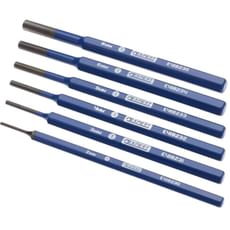
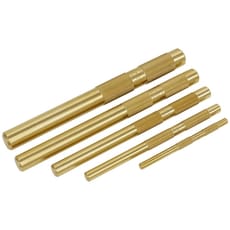
The selection at Tooled-Up.com includes parallel punches in various diameters and materials, from individual precision punches to complete sets. These tools are typically manufactured from hardened chrome vanadium steel or vanadium extra steel, with hardness ratings between 48-58 HRC depending on diameter. Quality parallel punches feature hexagonal shanks to prevent rolling on work surfaces, fully polished finishes for smooth operation, and precisely ground tips that maintain their shape under repeated impact. Specialist versions include brass drift punches for working with softer metals where spark prevention or non-marring contact is required.
Available from trusted brands including Bahco, Faithfull, Sealey, and Expert by Facom, these punches are manufactured to professional standards with one-piece construction for maximum strength and durability. Standard lengths typically measure 150mm (6 inches), providing sufficient reach for most applications whilst maintaining rigidity under hammer strikes. The parallel design ensures the punch can be driven completely through a hole without binding, making them indispensable for removing roll pins, drive pins, and similar fasteners in automotive, engineering, and maintenance environments.
Jargon Buster
- Parallel Punch: A punch with a uniform diameter shaft from tip to shoulder, designed to drive pins completely through holes without wedging or binding. The parallel design distinguishes it from tapered punches used for alignment work.
- Drift Punch: Another term for parallel punch, commonly used in engineering and automotive trades. The name derives from "drifting" pins through their holes during disassembly operations.
- Pin Punch: A type of parallel punch specifically sized for removing roll pins, spring pins, and similar cylindrical fasteners. The term is often used interchangeably with parallel punch.
- HRC (Rockwell Hardness Scale): A measurement of steel hardness that indicates the punch's resistance to deformation. Parallel punches typically range from 48-58 HRC, with smaller diameter punches using slightly lower hardness to prevent brittleness.
- Vanadium Steel: An alloy steel containing vanadium for increased strength, toughness, and wear resistance. This material choice ensures parallel punches maintain their shape under repeated hammer impacts.
- Brass Drift: A parallel punch made from brass rather than steel, used when working with softer materials or in environments where spark generation must be avoided. Brass drifts are softer than steel and won't mar finished surfaces.
Who Uses Parallel Punches?
- Motor Mechanics and Automotive Technicians: For removing roll pins in steering assemblies, suspension components, and gearbox linkages
- Plant Engineers and Maintenance Fitters: Essential for disassembly and repair of industrial machinery, conveyor systems, and production equipment
- Agricultural Engineers: Required for servicing farm machinery, tractors, and harvesting equipment where pinned assemblies are common
- Bicycle Mechanics: Used for removing pins in chain assemblies, derailleur mechanisms, and brake components
- Fabricators and Sheet Metal Workers: For assembly and disassembly work involving pinned connections and mechanical fasteners
- General Engineering Workshops: Standard equipment for any facility performing mechanical repairs, refurbishment, or prototype assembly
- DIY Enthusiasts and Home Mechanics: Useful for household repairs, furniture assembly, and maintaining garden machinery
- Gunsmith and Armourer Trades: For precision work on firearms where brass drifts prevent damage to components
How to Choose the Right Parallel Punches
Diameter Range: Consider the pin sizes you'll encounter most frequently. Sets typically range from 2mm to 8mm or larger, covering most common applications. Metric sizes are standard in UK workshops, though imperial sizes remain relevant for older machinery and imported equipment.
Material Construction: Chrome vanadium steel offers the best all-round performance for general engineering work. Brass drifts are essential when working with aluminium, copper, or finished surfaces where marking must be avoided, or in potentially explosive atmospheres where spark-free tools are required.
Individual Punches or Sets: Tooled-Up stocks both options. Sets like the Sealey 5 Piece Brass Drift Punch Set provide comprehensive coverage and better value for regular users, whilst individual punches allow targeted purchases for specific applications or replacement of worn tools.
Shank Design: Hexagonal shanks prevent rolling on benches and provide positive grip when held with pliers. This design feature is standard on quality punches and significantly improves workshop efficiency.
Length Considerations: Standard 150mm length suits most applications, providing adequate reach whilst maintaining rigidity. Longer punches are available for specialist applications requiring extended reach into recessed areas.
Hardness Specification: Check the HRC rating matches the intended use. Smaller diameter punches (2-4mm) typically feature 48-56 HRC to balance hardness with flexibility, preventing brittle failure. Larger diameters (5-8mm) use 50-58 HRC for maximum durability under heavier impacts.
Surface Finish: Fully polished or chrome-plated finishes reduce friction during use and provide corrosion resistance. These finishes also make it easier to clean punches after use in dirty or oily environments.
Popular Accessories
- Engineer's Hammers: Ball pein hammers in 8oz to 16oz weights provide appropriate striking force without excessive impact that could damage punch tips
- Soft-Face Hammers: Copper or nylon-faced hammers for use with brass drifts, preventing damage to the punch head
- Centre Punches: For marking starting points and creating pilot indentations before using parallel punches
- Tapered Pin Punches: Complementary tools for starting pins before switching to parallel punches for complete removal
- Pin Punch Holders: Magnetic or spring-loaded holders that position punches safely and keep hands clear of the impact zone
- Tool Rolls and Storage Cases: Organised storage that protects punch tips and keeps sets complete
- Machine Vice or Anvil: Provides solid support when driving out pins, preventing workpiece movement
- Safety Glasses: Essential PPE to protect against metal fragments and pin debris during punch operations
- Penetrating Oil: WD-40 or specialist releasing fluids to loosen corroded pins before removal attempts
Safety Information
Personal Protective Equipment: Always wear safety glasses or a face shield when using parallel punches, as struck pins can fragment or eject at high velocity. Hand protection should be considered, though heavy gloves can reduce control and accuracy.
Proper Striking Technique: Use appropriate hammer weight for the punch size and material being worked. Strike squarely on the punch head to prevent glancing blows that could cause the punch to slip or bend. Ensure the punch remains perpendicular to the workpiece throughout the operation.
Tool Inspection: Examine punch tips before each use for mushrooming, cracks, or deformation. Mushroomed heads should be dressed on a bench grinder to prevent metal fragments breaking free under impact. Replace any punches showing cracks or significant wear to prevent brittle failure during use.
Workpiece Security: Always secure the workpiece firmly in a vice or against a solid backing surface. Unsupported work can move during striking, causing missed blows and potential injury. Use appropriate backing material that won't damage the opposite side as pins break through.
Environmental Hazards: Be aware of pinch points and trapped energy in assemblies being disassembled. Pins may be under spring tension or holding components that could fall when released. In potentially explosive atmospheres, use only brass or other non-sparking drift materials as required by HSE guidelines.
Frequently Asked Questions
What's the difference between a parallel punch and a tapered punch?
A parallel punch maintains a uniform diameter throughout its length and is designed to drive pins completely through holes without binding. Tapered punches narrow to a point and are primarily used for aligning holes during assembly or starting stubborn pins before switching to a parallel punch for complete removal. Using the correct type prevents damage to both the punch and the workpiece.
Why do I need brass drift punches when steel punches are harder?
Brass drifts are essential when working with softer metals like aluminium, copper, or bronze, where steel punches would leave marks or cause damage. They're also required in environments where spark generation poses an explosion risk, such as when working with flammable vapours or dusts. The softer brass material sacrifices some durability but protects valuable components and enhances workplace safety in specific applications.
Can I sharpen or reshape a worn parallel punch?
The tip of a parallel punch should not be sharpened or reshaped, as this would alter the parallel diameter and compromise its function. However, the striking head should be dressed on a bench grinder if it becomes mushroomed from repeated hammer impacts. Remove any splayed metal carefully to maintain a flat striking surface whilst preserving as much of the punch length as possible. If the tip becomes damaged or worn undersize, the punch should be replaced.
What size parallel punch set do I need for general automotive work?
A metric set covering 2mm to 8mm diameters handles most common automotive applications, including roll pins in steering components, suspension bushings, and gearbox linkages. Many vehicle manufacturers use 3mm, 4mm, and 5mm pins extensively, making these sizes particularly important. Browse the selection at Tooled-Up.com to find sets that balance comprehensive coverage with practical value for your specific requirements.
How do I prevent parallel punches from getting stuck in holes?
Proper punch selection is crucial—the punch diameter should closely match the pin being removed without being oversized, which could cause binding in the hole. Apply penetrating oil to corroded pins and allow time for it to work before attempting removal. Strike firmly but not excessively, and ensure the punch enters straight rather than at an angle. If a punch does become stuck, carefully tap it back and forth whilst applying releasing fluid until it can be withdrawn.