

Pedestal Fans
Pay in 3 interest-free payments on purchases from £30-2000 with  . Learn more.
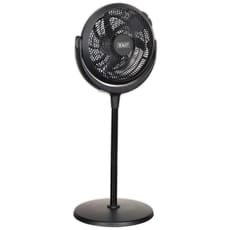
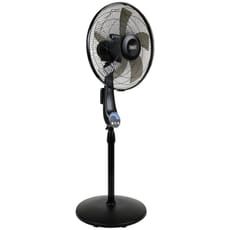
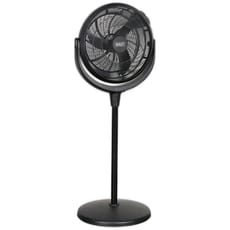
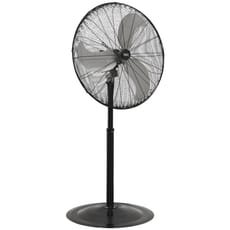
 Loading...
End of content
Error - No more pages to load
About Pedestal Fans
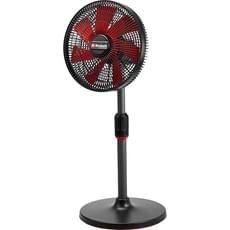
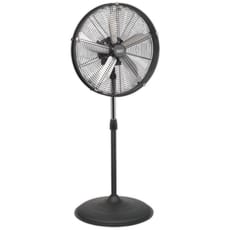
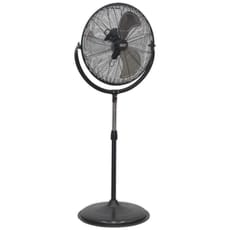
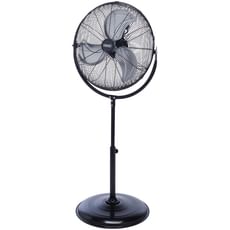
Pedestal fans are essential cooling equipment designed to provide powerful air circulation in workshops, warehouses, garages, and commercial environments. Unlike standard desk fans, these floor-standing units feature an adjustable height column mounted on a stable base, allowing users to direct airflow exactly where it's needed. With their elevated position and wide oscillation capabilities, pedestal fans excel at cooling larger spaces and improving air movement in areas where ventilation may be limited.
The range available from Tooled-Up.com includes industrial high-velocity models capable of moving substantial volumes of air, as well as more compact dual-purpose units that convert between desk and pedestal configurations. Most professional-grade pedestal fans feature robust metal construction with protective grilles, multi-speed settings, and tilt functions for precise airflow direction. Many models operate on standard 240v mains power, though battery-powered cordless options are increasingly popular for site work where access to electricity may be restricted.
Industrial pedestal fans typically incorporate powerful copper motors ranging from 50W to 120W, with blade diameters between 300mm and 450mm. Features such as oscillation, height adjustment, and speed control provide versatility for different environments, whilst safety certifications including CE and UKCA marking ensure compliance with UK electrical standards. Premium models may include quiet operation technology, making them suitable for office environments as well as demanding workshop conditions.
Jargon Buster
- High Velocity: Refers to fans specifically engineered to move large volumes of air at high speed, typically using more powerful motors and optimised blade designs. Essential for industrial cooling applications and large open spaces.
- Oscillation: The side-to-side sweeping motion that distributes airflow across a wider area rather than focusing on a single point. Most pedestal fans offer a 90-degree oscillation range, with some providing manual locking for fixed-direction cooling.
- CFM (Cubic Feet per Minute): The measurement unit indicating how much air volume a fan can move in one minute. Higher CFM ratings indicate more powerful air circulation capabilities, crucial for comparing cooling performance between models.
- Tilt Function: The ability to angle the fan head upwards or downwards, allowing precise control over airflow direction. Particularly useful for directing cool air towards ceiling areas or focusing it at floor level.
- Copper Motor: A motor featuring copper windings rather than aluminium alternatives. Copper motors typically offer superior efficiency, greater durability, and better heat dissipation for prolonged operation in demanding environments.
- IP Rating: Ingress Protection rating indicating the fan's resistance to dust and moisture penetration. Important for workshops and industrial settings where exposure to contaminants is common.
Who Uses Pedestal Fans?
- Automotive Mechanics: For cooling workshops and garages during summer months, particularly when working on hot engines or in poorly ventilated spray booths
- Warehouse Managers: To improve air circulation in storage facilities and distribution centres where climate control may be limited
- Construction Site Managers: For providing cooling in site offices, drying areas, and welfare facilities, especially during hot weather
- Manufacturing Facilities: To maintain comfortable working conditions near production lines, machinery, and heat-generating equipment
- Farmers and Agricultural Workers: For barn ventilation, livestock cooling, and workshop air circulation in rural settings
- Event Organisers: To provide cooling at outdoor events, marquees, and temporary structures during summer functions
- Gym and Leisure Centre Operators: For maintaining air circulation in fitness studios and training areas
- Maintenance Engineers: For improving ventilation when working in confined spaces or poorly ventilated plant rooms
How to Choose the Right Pedestal Fans
Power Source and Portability: Consider whether 240v mains-powered or cordless battery operation better suits your requirements. Mains-powered units typically deliver higher performance and continuous operation, whilst cordless models offer greater flexibility for outdoor work and locations without convenient electrical access. The Tooled-Up selection includes both configurations from trusted brands like Sealey, Draper, and Einhell.
Motor Power and Airflow Capacity: Match the fan's power rating to the size of your space. Smaller workshops may require only 50-80W motors, whilst large industrial units with 120W copper motors are necessary for warehouses and extensive floor areas. Check CFM ratings where available to compare actual air movement capabilities rather than relying solely on wattage.
Height Adjustment Range: Ensure the fan's adjustable column provides sufficient height variation for your application. Most professional models extend from approximately 1.2m to 1.5m, allowing airflow direction from floor level to well above head height. This versatility is particularly valuable in workshops with varied ceiling heights.
Build Quality and Construction: Industrial environments demand robust metal construction rather than plastic housings. Look for units with protective metal grilles, stable weighted bases, and reinforced adjustment mechanisms that will withstand regular repositioning and demanding working conditions. Models manufactured to British and European standards (BS EN) offer additional quality assurance.
Speed Settings and Control: Multiple speed settings provide greater versatility for different conditions. Three-speed operation is standard, though some premium models offer variable speed control for precise airflow adjustment. Push-button controls are generally more durable than rotary switches in workshop environments.
Oscillation and Directionality: Decide whether fixed-direction or oscillating airflow better suits your needs. Oscillating models distribute cooling across wider areas, whilst fixed-direction fans concentrate powerful airflow for spot cooling or drying applications. Some versatile models offer both options with manual locking mechanisms.
Popular Accessories
- Extension Leads and Cable Reels: Essential for positioning mains-powered fans away from fixed electrical outlets, particularly on construction sites and in large workshops
- Replacement Batteries: Spare battery packs for cordless models ensure continuous operation without downtime for recharging during extended work periods
- RCD Protected Adapters: Provide additional electrical safety when operating fans in damp environments or outdoor locations
- Fan Cleaning Brushes: Specialised brushes and cleaning tools for maintaining grilles and blades, ensuring optimal airflow and preventing dust accumulation
- Portable Power Stations: Battery generators for running mains-powered fans in remote locations without electrical infrastructure
- Anti-Vibration Mats: Reduce noise transmission and prevent movement on smooth floors, particularly useful for high-velocity industrial models
Safety Information
Always ensure pedestal fans are positioned on stable, level surfaces with their bases fully supporting the unit's weight. Never operate fans with damaged grilles or protective guards removed, as rotating blades pose serious injury risks. Maintain adequate clearance around the fan head – minimum 500mm on all sides – to prevent objects being drawn into the mechanism or restricting airflow.
When using mains-powered models, inspect cables regularly for damage and never operate fans with frayed or exposed wiring. In damp or outdoor environments, ensure electrical connections incorporate appropriate IP-rated protection and consider using RCD-protected supplies as recommended by HSE guidance. Avoid routing cables across walkways where they may present trip hazards.
For cordless battery-powered fans, follow manufacturer guidelines for charging procedures and never leave batteries unattended during charging. Store and charge lithium-ion batteries in well-ventilated areas away from flammable materials. When working in dusty environments, clean protective grilles regularly to prevent motor overheating caused by restricted airflow.
Frequently Asked Questions
Can pedestal fans be used outdoors on construction sites?
Mains-powered models with appropriate IP ratings can be used outdoors provided they're protected from direct rainfall and connected through suitable weatherproof electrical infrastructure. Cordless battery-powered models offer greater flexibility for outdoor applications without the constraints of electrical supply requirements. Always ensure the base remains stable on uneven ground and position fans away from strong winds that could topple the unit.
What's the difference between standard and high-velocity pedestal fans?
High-velocity fans incorporate more powerful motors (typically 100W+) and optimised blade designs specifically engineered to move substantially greater air volumes. They're built with industrial-grade components for continuous operation in demanding environments, whereas standard fans suit domestic or light commercial use. High-velocity models at Tooled-Up typically feature metal construction throughout and deliver significantly higher CFM ratings.
How much does it cost to run a pedestal fan continuously?
A typical 100W pedestal fan running continuously costs approximately 3-4 pence per hour based on average UK electricity prices. This translates to roughly 70-95 pence for a full working day, making them an economical cooling solution compared to air conditioning systems. Lower speed settings reduce power consumption further, typically by 30-50% compared to maximum speed operation.
Are cordless pedestal fans powerful enough for workshop use?
Modern brushless cordless models deliver impressive performance suitable for many workshop applications, with the advantage of complete portability. However, they typically provide shorter continuous runtime (2-4 hours depending on speed setting) compared to mains-powered equivalents. They're ideal for mobile work, temporary cooling, and locations without convenient electrical access, though high-velocity mains models remain preferable for large spaces requiring constant airflow.
Do pedestal fans require regular maintenance?
Basic maintenance involves periodically cleaning dust and debris from protective grilles and blades to maintain optimal airflow and prevent motor strain. Check adjustment mechanisms remain secure and lubricate height adjustment columns annually if specified by the manufacturer. Inspect electrical cables for damage before each use and ensure base fixings remain tight, particularly after transportation between locations.