

Pig-Tails
Pay in 3 interest-free payments on purchases from £30-2000 with  . Learn more.
 Loading...
End of content
Error - No more pages to load
About Pig-Tails
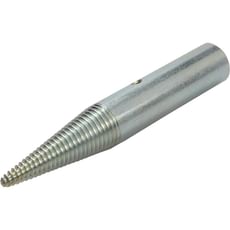
Pig-tails, also known as taper spindles or false noses, are essential workshop accessories designed to convert standard bench grinders and power drills for use with polishing mops and buffing wheels. These cleverly engineered adaptors feature a tapered shaft that securely holds polishing mops, allowing tradespeople and workshop enthusiasts to transform their existing grinding equipment into versatile polishing stations without investing in dedicated polishing machinery.
The pig-tail design typically consists of a threaded or plain shaft that mounts directly onto the spindle of a bench grinder or fits into the chuck of a power drill. The tapered end provides a friction fit for polishing mops of various sizes, enabling quick changes between different mop types and grades. This adaptability makes pig-tails invaluable for metal finishing, restoration work, jewellery making, and general workshop polishing tasks where a professional finish is required.
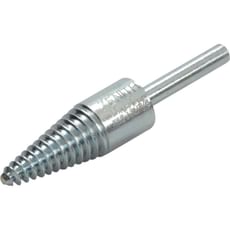
Available in different spindle sizes to suit various machines, pig-tails at Tooled-Up.com accommodate common bench grinder shaft diameters including 6mm, 12mm, and 16mm configurations. Drill-mounted versions with 6mm shanks are particularly popular for handheld polishing applications, offering greater flexibility when working on larger pieces or awkward angles that cannot be brought to a fixed grinding station.
Jargon Buster
- Taper Spindle: An alternative name for a pig-tail, referring to the conical or tapered end that grips polishing mops through friction fit.
- False Nose: Another term for a pig-tail adaptor, so-called because it extends beyond the standard grinding wheel position on a bench grinder.
- Spindle Diameter: The thickness of the shaft that fits onto your bench grinder or into your drill chuck, commonly 6mm, 12mm, or 16mm for UK machines.
- Polishing Mop: A cloth wheel made from layered cotton, calico, or synthetic materials that mounts onto the pig-tail for buffing and polishing operations.
- Buffing Compound: The abrasive paste or bar applied to polishing mops to achieve different finishes, from cutting through oxidation to achieving mirror-like shine.
- Chuck Mounting: A pig-tail design with a smooth or fluted 6mm shaft intended for gripping in a power drill chuck rather than threading onto a fixed spindle.
Who Uses Pig-Tails?
- Metal Fabricators: For finishing welds, removing surface oxidation, and achieving professional polished finishes on stainless steel and aluminium work.
- Automotive Restorers: Polishing chrome components, aluminium trim, and brightwork to showroom condition.
- Jewellers and Silversmiths: Achieving mirror finishes on precious metals and removing manufacturing marks from jewellery pieces.
- Engineering Workshop Technicians: Preparing metal surfaces, deburring machined components, and general finishing work.
- Furniture Restorers: Polishing metal hardware, handles, and decorative metalwork on antique and vintage pieces.
- DIY Enthusiasts: Home workshop users tackling restoration projects, metalwork hobbies, and general polishing tasks.
- Maintenance Engineers: Cleaning and refinishing worn components, removing corrosion, and general refurbishment work.
How to Choose the Right Pig-Tails
Selecting the appropriate pig-tail depends primarily on your existing equipment. Measure the spindle diameter of your bench grinder accurately before purchasing—common UK sizes are 12mm and 16mm for bench grinders, whilst drill-mounted versions universally use 6mm shanks. Check your grinder's manual or measure with callipers to ensure compatibility.
Consider whether you need a threaded or plain shaft version. Threaded pig-tails screw directly onto the grinder spindle and provide a more secure, permanent mounting suitable for frequent use. Plain shaft versions may slide onto untreaded spindles and are secured with locking nuts or retaining screws supplied with your grinder.
For handheld applications, drill-mounted pig-tails offer maximum versatility. Ensure your power drill operates at variable speed, as polishing typically requires slower speeds (500-1500 RPM) than drilling. A cordless drill provides excellent manoeuvrability for polishing larger items or working on-site. The selection available from Tooled-Up includes options from trusted brands like Zenith, known for precision-manufactured workshop accessories.
Think about the scale of polishing work you'll undertake. For occasional light polishing, a single drill-mounted pig-tail may suffice. Workshop professionals might prefer dedicated bench grinder conversions on both spindles, allowing quick switching between coarse cutting compounds and fine finishing mops without constant changeovers.
Popular Accessories
- Polishing Mops: Cotton, calico, and felt wheels in various diameters and ply counts for different finishing stages.
- Buffing Compounds: Tripoli for cutting, white compound for general polishing, and rouge for final mirror finishes.
- Bench Grinders: 6-inch or 8-inch models from Makita, DeWalt, or other professional brands to host your pig-tail conversion.
- Power Drills: Variable-speed corded or cordless drills rated for continuous operation during extended polishing sessions.
- Work Rests: Adjustable tool rests for bench grinders to support workpieces during polishing operations.
- Safety Goggles: Essential eye protection against compound particles and debris during buffing work.
- Cleaning Bars: Rake tools for dressing and cleaning loaded polishing mops during use.
Safety Information
Always ensure pig-tails are securely mounted before operation. Loose adaptors can work free during use, causing the polishing mop to detach at high speed with potentially serious consequences. Thread engagement should be complete, and any locking mechanisms must be properly tightened according to manufacturer specifications.
Wear appropriate personal protective equipment including safety goggles or a face shield, as buffing compounds and metal particles are ejected during polishing. Avoid loose clothing, gloves, jewellery, and tie back long hair—polishing mops can grab fabric and draw hands toward rotating equipment faster than reaction time allows.
Operate bench grinder conversions at appropriate speeds. Most manufacturers recommend maximum speeds of 2000-3000 RPM for polishing mops, significantly lower than typical grinding wheel speeds. Excessive speed generates heat that can damage workpieces and cause buffing compounds to cake onto mops. When using drill-mounted pig-tails, maintain moderate trigger pressure to avoid over-speeding.
Work in well-ventilated areas, as buffing compounds produce fine dust particles. HSE guidelines recommend adequate extraction or ventilation when performing regular polishing work. Position yourself to one side of the rotation path rather than directly in line with the mop, and never attempt to polish items while wearing gloves that might catch in the rotating wheel.
Frequently Asked Questions
Can I use the same pig-tail for different sizes of polishing mop?
Yes, the tapered design of pig-tails accommodates various polishing mop sizes. The friction fit allows mops to be pushed onto the taper to the appropriate depth, with smaller mops sitting further up the taper and larger diameter mops extending further down. Most pig-tails work with mops from approximately 50mm to 150mm diameter.
What's the difference between bench grinder and drill-mounted pig-tails?
Bench grinder versions have larger diameter shafts (typically 12mm or 16mm) that match your grinder's spindle size and may include threading for secure mounting. Drill-mounted pig-tails feature 6mm smooth shanks designed to fit standard power drill chucks, offering portability for handheld polishing applications.
Do I need to remove my grinding wheel to fit a pig-tail?
Yes, pig-tails replace the grinding wheel on one or both spindles of your bench grinder. Remove the grinding wheel, wheel guard, and any spacers, then mount the pig-tail according to the manufacturer's instructions. Some users dedicate one spindle to polishing with a pig-tail whilst keeping a grinding wheel on the other side.
Can pig-tails be used with angle grinders?
No, pig-tails are specifically designed for bench grinders with exposed spindles or power drills with chucks. Angle grinders operate at far higher speeds (typically 10,000+ RPM) than safe for polishing mops and use a completely different mounting system with threaded backing flanges. Use angle grinder-specific polishing bonnets instead.
How do I prevent polishing mops from flying off during use?
Ensure the mop is pushed firmly onto the tapered pig-tail before starting. The friction fit tightens during rotation as the mop is pushed against the work. Always rotate the spindle manually first to check the mop is secure, start at low speed, and gradually increase. If mops repeatedly slip, the taper may be worn or contaminated with compound residue—clean thoroughly or replace the pig-tail.