

Pillar Drill Accessories
Pay in 3 interest-free payments on purchases from £30-2000 with  . Learn more.


 Loading...
End of content
Error - No more pages to load
About Pillar Drill Accessories
Pillar drill accessories are essential additions that enhance the functionality, safety, and precision of bench-mounted drilling machines. These accessories transform a standard pillar drill into a versatile workshop tool capable of handling a wider range of drilling operations with improved accuracy and operator protection. From coolant systems that keep drill bits cool during extended use to guards that protect operators from swarf and debris, these accessories are vital for both professional workshops and dedicated home workshops.
The range available at Tooled-Up.com includes specialised equipment designed to improve drilling efficiency and workplace safety. Coolant systems deliver cutting fluid directly to the drill bit and workpiece interface, reducing heat buildup and extending tool life whilst improving hole quality in metals and other materials. Drill chuck guards provide essential protection by containing metal chips, swarf, and broken drill bits that can be ejected at high speed during operation. These guards are particularly important when drilling through hard materials or when working with high-speed drilling applications.
Whether you're running a professional engineering workshop, maintaining machinery in an industrial setting, or pursuing precision metalworking as a serious hobby, investing in quality pillar drill accessories ensures safer working conditions and better results. These additions are particularly valuable for repetitive drilling operations where consistency, tool longevity, and operator safety are paramount considerations.
Jargon Buster
- Coolant System: A mechanism that delivers cutting fluid to the drill bit during operation, reducing friction and heat whilst flushing away swarf. Can be manual drip-feed or powered pump systems that recirculate coolant.
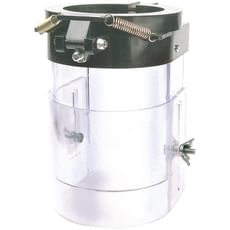
- Chuck Guard: A transparent or mesh safety barrier that surrounds the drill chuck and bit, preventing swarf, metal chips, and broken drill fragments from being thrown towards the operator whilst maintaining visibility of the workpiece.
- Morse Taper: A self-holding tapered connection system used to secure drill chucks and accessories to the pillar drill spindle, available in standard sizes (typically MT1 to MT5) depending on drill capacity.
- Swarf: The metal chips, shavings, and debris produced during drilling operations. Effective swarf management through guards and coolant systems is essential for safety and maintaining clean work areas.
- Cutting Fluid: Specialised liquid applied during drilling to reduce heat, lubricate the cutting edge, and improve surface finish. Available in water-soluble, synthetic, and oil-based formulations for different materials.
- Spindle Speed: The rotational speed of the drill chuck measured in revolutions per minute (RPM). Different materials and drill bit sizes require specific spindle speeds for optimal cutting performance and tool life.
Who Uses Pillar Drill Accessories?
Pillar drill accessories are essential equipment for a diverse range of professionals and skilled users:
- Engineering Machinists working in fabrication shops and machine shops who require precision drilling with consistent quality
- Maintenance Engineers in manufacturing facilities who drill components and repair machinery as part of routine maintenance
- Metalworkers and Fabricators creating structural steelwork, gates, railings, and custom metal products
- Toolmakers and Model Engineers requiring precise drilling operations for component manufacture and prototype development
- Motor Vehicle Technicians drilling brake drums, modifying components, and fabricating custom brackets
- Furniture Makers and Joiners who use pillar drills for repetitive drilling operations in wood and composite materials
- Educational Institutions including technical colleges, schools, and training centres where workshop safety is paramount
- Serious DIY Enthusiasts with dedicated home workshops who prioritise professional-standard equipment and safety
How to Choose the Right Pillar Drill Accessories
Selecting appropriate accessories for your pillar drill requires careful consideration of several factors:
Compatibility with Your Drill: Verify that accessories match your pillar drill's specifications, particularly the morse taper size for chuck-mounted accessories and the throat depth when fitting guards. Check the manufacturer's documentation or measure existing components before purchasing.
Material Requirements: The materials you regularly drill determine which accessories provide the most benefit. Coolant systems are essential when drilling metals, particularly stainless steel, aluminium, and hardened materials, but may be unnecessary for occasional woodworking. Consider whether water-soluble or oil-based coolants suit your applications.
Safety Considerations: Chuck guards are particularly important in environments covered by HSE regulations, educational settings, or when drilling brittle materials prone to shattering. Transparent polycarbonate guards offer excellent visibility whilst providing robust protection against flying debris.
Workshop Environment: Consider whether your workspace has adequate drainage for coolant systems and whether you need portable or fixed installations. Recirculating coolant systems with integral reservoirs suit workshops without drainage facilities, whilst direct-feed systems require careful waste fluid management.
Frequency of Use: Professional workshops with continuous pillar drill operation benefit from comprehensive accessory setups including powered coolant pumps and robust guarding. Occasional users might prioritise basic safety guards and manual coolant application methods that represent lower initial investment.
Electrical Supply: If selecting powered coolant systems, ensure they match UK 240v electrical standards and consider whether single-phase power is available at the drill location.
Popular Accessories
Tooled-Up stocks a comprehensive selection of accessories that complement pillar drill operations:
- Drill Bit Sets: HSS and cobalt drill bit sets in metric and imperial sizes for various materials
- Vices and Clamps: Machine vices, quick-release clamps, and workpiece holding solutions
- Cutting Lubricants: Specialist drilling fluids, tapping compounds, and general-purpose cutting oils
- Step Drills: Progressive diameter drills for sheet metal and panel work
- Centre Punches: Automatic and manual punches for accurate hole positioning
- Depth Stops: Precision depth setting accessories for repetitive drilling to consistent depths
- Replacement Chucks: Keyless and keyed drill chucks in various capacities
- Work Lights: Magnetic-base LED task lights for improved visibility at the drilling point
- Safety Equipment: Eye protection, hearing protection, and appropriate workshop PPE
Safety Information
Pillar drill accessories play a crucial role in maintaining safe workshop practices. Chuck guards are essential safety devices that prevent serious injuries from flying swarf, broken drill bits, and entanglement hazards. Always ensure guards are properly fitted and positioned before starting drilling operations, and never remove guards whilst the drill is running.
When using coolant systems, be aware that cutting fluids can create slip hazards on workshop floors. Maintain adequate containment and clean up spills immediately. Some cutting fluids may cause skin irritation, so consult COSHH data sheets and wear appropriate protective gloves when handling concentrated products. Ensure adequate ventilation when using oil-based coolants as mist and vapour can accumulate in enclosed workshops.
Regular maintenance of accessories is essential for continued safe operation. Inspect chuck guards for cracks or damage that could compromise their protective function, and replace damaged components immediately. Check coolant pumps and hoses for leaks, and ensure electrical connections on powered accessories comply with BS EN standards. Never bypass safety features or modify guards in ways that reduce their effectiveness.
Always disconnect the pillar drill from the 240v power supply before fitting, adjusting, or removing accessories. Ensure workpieces are securely clamped and that loose clothing, jewellery, and long hair are secured to prevent entanglement hazards. Refer to HSE guidance on safe use of drilling machines for comprehensive safety requirements in commercial workshops.
Frequently Asked Questions
Do I need a coolant system for drilling wood?
Coolant systems are generally unnecessary for woodworking applications. They're designed primarily for metalworking where heat buildup can damage drill bits and workpieces. For wood, occasional lubrication with wax or purpose-made wood drilling lubricants is usually sufficient for challenging operations like drilling dense hardwoods or deep holes.
Are chuck guards a legal requirement?
Whilst not universally mandated by law for all situations, HSE guidance strongly recommends guarding of dangerous parts of machinery including rotating drill chucks. In commercial workshops, educational settings, and anywhere covered by workplace health and safety legislation, appropriate guarding is effectively required. Even in home workshops, chuck guards represent best practice for operator protection.
Can I use any coolant in a coolant system?
Different coolant systems are designed for specific fluid types. Water-soluble coolants require proper mixing ratios and are suitable for most general drilling. Oil-based coolants provide superior lubrication for difficult materials but may not be compatible with all pump systems. Always check the coolant system manufacturer's recommendations and ensure the coolant matches your material requirements.
How do I know which morse taper size my pillar drill uses?
The morse taper size is usually marked on the drill's spindle or documented in the instruction manual. Common sizes for pillar drills range from MT1 (smallest, typically 13mm chuck capacity drills) to MT3 or MT4 (larger industrial drills). If documentation isn't available, you can measure the existing chuck's taper or contact the drill manufacturer with the model number.
Will a chuck guard reduce visibility of my workpiece?
Modern chuck guards made from clear polycarbonate provide excellent visibility whilst offering robust protection. Whilst they introduce a physical barrier between operator and workpiece, the safety benefits far outweigh minor visibility restrictions. Many guards feature anti-static coatings to prevent dust accumulation and maintain clear sightlines during operation.