

Pin Vices
Pay in 3 interest-free payments on purchases from £30-2000 with  . Learn more.
 Loading...
End of content
Error - No more pages to load
About Pin Vices
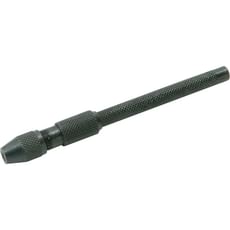
Pin vices are precision hand tools designed to securely hold small drill bits, reamers, scribers, taps, wire and other miniature components during delicate work. Often resembling small hand drills with collet-style chucks, these versatile tools feature tubular handles that allow wire or long components to pass completely through the length of the tool. The adjustable jaw mechanism accommodates a range of diameters, typically from 0mm up to around 4.5mm, making them indispensable for fine drilling, reaming and precision work where powered tools would be too aggressive or unwieldy.
Available at Tooled-Up.com, pin vices are valued by professionals and hobbyists alike for their ability to provide exceptional control when working with delicate materials or making pilot holes in awkward locations. Unlike standard hand drills, pin vices excel at holding extremely small bits firmly without slippage, whilst their compact size permits access to confined spaces where larger tools simply cannot reach. The knurled handles offer excellent grip, allowing precise rotation and control during manual drilling operations.
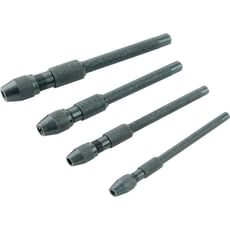
Most pin vices feature a collet-style chuck that tightens around the bit or component when the handle is twisted, creating a secure hold without damaging fine drill bits. Sets typically include multiple sizes to accommodate different diameter ranges, with each pin vice colour-coded or numbered for quick identification. The Tooled-Up range includes individual pin vices and comprehensive sets from trusted manufacturers like Faithfull, offering both professional quality and value for money.
Jargon Buster
- Collet Chuck: A tapered collar mechanism that grips the drill bit or component when tightened, distributing pressure evenly around the circumference to prevent slippage and damage to fine bits.
- Capacity Range: The minimum and maximum diameter of drill bits or components that a particular pin vice can securely hold, typically measured in millimetres (e.g., 0-1mm, 1.5-3mm).
- Tubular Handle: The hollow handle design that allows long wires or components to pass completely through the tool, eliminating length restrictions when holding wire or extended pieces.
- Scriber: A pointed marking tool often held in pin vices for precisely scratching guide lines or centre marks onto metal, plastic or wood surfaces.
- Reamer: A precision cutting tool used to enlarge and finish drilled holes to exact dimensions, frequently held in pin vices for manual reaming operations.
- Knurled Grip: The textured, diamond-pattern surface machined into the handle that provides positive grip and control during rotation, even with oily or dusty hands.
Who Uses Pin Vices?
Pin vices serve a diverse range of professionals and enthusiasts who require precision control when working with small components:
- Model Makers: Enthusiasts and professionals creating scale models, architectural models and miniature constructions requiring precise drilling in delicate materials.
- Jewellers and Silversmiths: Craftspeople drilling holes in precious metals, gemstones and delicate jewellery components where control is paramount.
- Watchmakers and Horologists: Specialists working with tiny screws, pivots and components in watch repair and restoration.
- Electronics Engineers: Technicians drilling precision holes in PCBs, enclosures and electronic components during prototyping and repair work.
- Instrument Makers: Luthiers and craftspeople creating musical instruments, often requiring delicate drilling for tuning pegs, inlays and decorative work.
- Gunsmiths and Armourers: Professionals working on firearms repair and customisation, requiring precision drilling for pins and screws.
- Dentists and Dental Technicians: Specialists using pin vices for holding small burrs and reamers in dental laboratory work.
- Hobbyists and DIY Enthusiasts: Home workshop users tackling craft projects, hobby electronics, model railways and general precision work.
How to Choose the Right Pin Vices
Selecting the appropriate pin vice depends on several key factors related to your specific applications:
Capacity Range: Consider the diameter range of drill bits and components you'll be holding most frequently. Sets containing multiple pin vices with different capacity ranges (such as 0-1mm, 1.5-3mm, and 3-4.5mm) offer maximum versatility, whilst a single pin vice may suffice if you consistently work within a narrow diameter range.
Quality and Construction: Professional-grade pin vices feature precision-machined collets that grip evenly without damaging fine drill bits. Look for tools with smooth action, minimal play in the chuck mechanism, and durable construction that will withstand regular use. The Faithfull range available from Tooled-Up offers reliable quality at competitive prices.
Handle Length and Grip: Longer handles provide better leverage for drilling through harder materials, whilst shorter designs offer enhanced control for delicate work. Knurled or textured handles improve grip, particularly important during extended use or when working with oily hands.
Set versus Individual: Four-piece sets covering capacity ranges from 0mm to 4.5mm provide comprehensive coverage for most applications and represent better value than purchasing individual pin vices. However, if you only require a specific size range, an individual pin vice may prove more economical.
Tubular Handle Design: If you regularly work with wire or need to hold long components, ensure the pin vice features a genuine tubular handle that permits the material to pass completely through the tool.
Popular Accessories
Enhance the functionality and versatility of your pin vices with these complementary products:
- Precision Drill Bit Sets: HSS micro drill bits in sizes from 0.3mm upwards, essential for detailed drilling work in metal, plastic and wood.
- Engineers' Scribers: Hardened steel marking tools for layout work, perfect for holding in pin vices when marking metal or plastic.
- Hand Reamers: Precision finishing tools for enlarging and smoothing drilled holes to exact dimensions.
- Taps and Dies: Small thread-cutting tools that fit pin vices for creating threads in confined spaces.
- Centre Punches: For creating starter dimples before drilling, preventing bit wandering on smooth surfaces.
- Magnifying Glasses and Headband Magnifiers: Essential for viewing fine work when using pin vices on miniature components.
- Cutting Fluid and Lubricants: Improve drilling performance and extend bit life when working with metals.
- Tool Storage Cases: Protect your pin vices and keep different sizes organised in your workshop or toolbox.
Frequently Asked Questions
What's the difference between a pin vice and a hand drill?
Pin vices are specifically designed for holding very small drill bits and components (typically 0-4.5mm diameter) with precision collet chucks that won't damage delicate bits. Hand drills are larger tools with gear mechanisms for drilling bigger holes, but they cannot securely grip the tiny bits that pin vices accommodate. Pin vices offer superior control and access in confined spaces.
Can I use pin vices with powered drills?
No, pin vices are manual hand tools only and should never be fitted into powered drills or drivers. The collet mechanism isn't designed for rotational speeds beyond hand operation, and attempting to use them with power tools creates serious safety hazards. For powered precision drilling, invest in a proper mini drill or rotary tool.
How do I prevent drill bits slipping in the collet?
Ensure the drill bit shank is clean and free from oil or debris before inserting. Tighten the collet firmly by rotating the handle until resistance is felt, then give an additional quarter turn. Don't overtighten, as this can damage the collet. Match the bit diameter to the appropriate capacity range of your pin vice for optimal grip.
What materials can I drill with a pin vice?
Pin vices work effectively on soft metals (brass, aluminium, copper), plastics, wood, PCBs, and composite materials. For harder metals like steel or stainless steel, use appropriate HSS or cobalt drill bits with cutting fluid, though drilling will require more effort. Very hard materials like hardened steel or glass are best avoided with manual pin vices.
How do I maintain my pin vices?
Keep the collet mechanism clean and free from metal filings or debris by occasionally flushing with light machine oil or WD-40. Store pin vices with the collet slightly open to prevent the mechanism seizing. Avoid dropping them, as this can damage the precision collet. Periodically check that the chuck tightens and releases smoothly, cleaning the threads if resistance develops.