

Pipe Benders

Pay in 3 interest-free payments on purchases from £20-£3000 with  . Learn more.
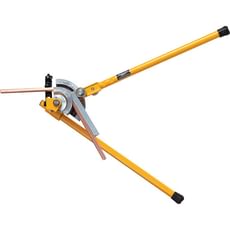
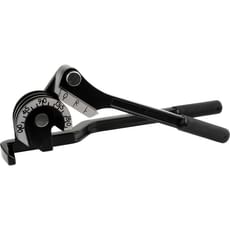
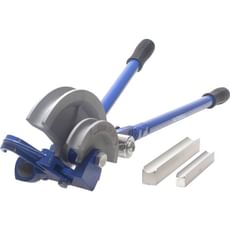
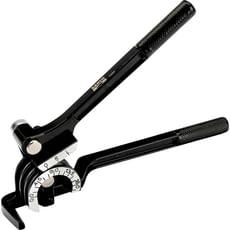
 Loading...
End of content
Error - No more pages to load
About Pipe Benders
Pipe benders are essential precision tools designed to create accurate, kink-free bends in copper, aluminium, stainless steel and brass tubing without compromising the integrity of the pipe. Whether you're working with delicate 6mm copper tube for domestic heating systems or robust automotive brake lines, a quality pipe bender ensures consistent, professional results every time. These tools range from compact handheld mini benders for confined spaces to heavy-duty lever-operated models capable of handling larger diameter pipes up to 22mm and beyond.
The selection at Tooled-Up.com includes multipurpose pipe benders from trusted brands including Bahco, Faithfull, Monument, Sealey, Hilmor and Stanley. Manual pipe benders typically feature calibrated angle scales allowing precise bends from 0° to 180°, whilst combination models accommodate multiple pipe diameters with interchangeable formers or adjustable guides. Automotive tube benders are specifically engineered for brake and fuel line work, with some models offering 3-in-1 or 4-in-1 functionality to handle various tube sizes in a single tool.
Modern pipe benders incorporate ergonomic handles for improved leverage, clearly marked measurement scales for repeatability, and hardened steel construction to withstand the demands of daily site work. Whether you're a professional plumber, heating engineer or automotive technician, investing in the appropriate pipe bender significantly reduces installation time whilst minimising material waste from crimped or flattened tubing.
Jargon Buster
- Former/Radius Block: The curved metal guide around which the pipe is bent, determining the bend radius and preventing kinking. Different formers accommodate different pipe diameters.
- Outside Diameter (O/D): The external measurement of the pipe, typically referenced when selecting the correct pipe bender size (e.g., 15mm O/D, 22mm O/D).
- Bend Radius: The measurement from the centre point of the bend to the centreline of the pipe. Tighter radii require more precise tools to prevent pipe collapse.
- Spring Bender: A coiled spring tool inserted into or around the pipe to provide internal/external support during bending, preventing kinking on gentle bends.
- Lever-Type Bender: A pipe bender using mechanical advantage through an extended handle to create bends with minimal physical effort, ideal for larger diameter pipes.
- Degree Scale: The calibrated marking on the bender showing the angle of bend being created, typically ranging from 0° to 180° for accurate, repeatable results.
Who Uses Pipe Benders?
- Plumbers – bending copper pipework for domestic water supply systems and waste installations
- Gas fitters – creating precise bends in gas supply pipework whilst maintaining flow characteristics
- Heating engineers – installing central heating systems, radiator pipework and underfloor heating circuits
- Automotive technicians – fabricating and repairing brake lines, fuel lines and hydraulic systems
- Refrigeration engineers – working with refrigerant pipework requiring kink-free bends
- Maintenance engineers – site repair and modification work across industrial facilities
- Air conditioning installers – routing copper refrigerant lines through buildings
- DIY enthusiasts – home plumbing projects, bathroom installations and heating repairs
- Agricultural engineers – hydraulic system repairs on farm machinery and equipment
How to Choose the Right Pipe Benders
Pipe Diameter Compatibility: Identify the pipe sizes you'll work with most frequently. Mini pipe benders typically handle 6mm, 8mm and 10mm tubing, whilst standard models accommodate 15mm and 22mm. Combination benders offering multiple diameter capacities provide excellent versatility for tradespeople working across various applications.
Material Type: Ensure your chosen bender suits the materials you'll be working with. Copper and aluminium are relatively soft and easy to bend, whilst stainless steel requires more robust construction. Automotive brake pipe benders are specifically designed for the smaller diameter, harder materials used in vehicle applications.
Bending Angle Requirements: Consider the angles you'll need to achieve. Most pipe benders handle up to 90° bends comfortably, but plumbing work often requires tighter bends up to 180°. Check the maximum bending capacity and whether the tool features a clearly readable degree scale for precision work.
Lever Action vs Handheld: Lever-type tube benders provide significantly more mechanical advantage, making them essential for larger diameter pipes or repetitive bending tasks. Compact handheld models excel in confined spaces such as under sinks or behind radiators where access is restricted.
Build Quality and Brand: Professional-grade pipe benders from established brands like Bahco, Monument and Hilmor feature hardened steel construction, precision-machined formers and comfortable grip handles. Tooled-Up stocks both budget-friendly options for occasional use and premium models built for daily professional demands.
Portability Requirements: Site-based tradespeople benefit from compact, lightweight benders that won't add excessive weight to tool bags. Multi-function automotive benders combining several sizes reduce the number of individual tools to carry.
Popular Accessories
- Pipe cutters – achieving clean, square cuts before bending for professional joints
- Deburring tools – removing internal and external burrs after cutting to prevent restricted flow
- Pipe springs – external coil springs providing support for gentle bends without specialist benders
- Pipe slices – quick-cutting tools for copper and plastic pipework on site
- Adjustable wrenches – holding pipework securely during bending operations
- Measuring tapes and rules – accurately marking bend positions for consistent results
- Spirit levels – ensuring pipe runs remain true and level after bending
- Pipe bending springs – internal springs for smaller diameter pipes and gentle radius bends
- Marker pens – clearly indicating bend positions on pipework before forming
Safety Information
Personal Protective Equipment: Always wear appropriate safety glasses when bending pipes, as stored tension can occasionally cause unexpected movement. Work gloves protect hands from sharp pipe edges and prevent blisters during repetitive bending tasks.
Material Condition: Inspect pipes for corrosion, existing damage or weak spots before bending. Attempting to bend compromised material can result in sudden failure and potential injury. Never exceed the manufacturer's stated capacity for pipe diameter or material hardness.
Body Positioning: Maintain stable footing and proper posture when operating lever-type benders, as significant force may be required. Position yourself to push rather than pull where possible, keeping your back straight and using leg muscles rather than straining your lower back.
Work Area: Ensure adequate workspace around the bending operation, particularly when using lever-action models that require clearance for the handle's full arc of movement. Keep other personnel clear of the operating area.
Frequently Asked Questions
What's the difference between a pipe bender and a pipe spring?
A pipe bender is a mechanical tool with formers and handles that creates precise, repeatable bends to specific angles, ideal for professional installations. A pipe spring is a coiled spring inserted into or placed over the pipe to provide support during manual bending, suitable only for gentle curves and smaller diameter pipes. Pipe benders deliver far more accurate results for plumbing and heating work.
Can I use the same pipe bender for copper and stainless steel?
Most quality pipe benders designed for copper will handle aluminium easily, but stainless steel requires significantly more force and may exceed the capacity of standard models. Check the manufacturer's specifications – multipurpose benders from brands like Bahco explicitly state compatibility with stainless steel tubing. Using an undersized bender on stainless steel risks tool damage and poor bend quality.
How do I prevent kinking when bending pipes?
Kinking occurs when the pipe wall collapses during bending. Prevent this by using the correct size former for your pipe diameter, applying steady, even pressure rather than forcing the bend, and not exceeding the minimum bend radius for your material thickness. Quality pipe benders with properly matched formers virtually eliminate kinking when used correctly.
What angle bends can I achieve with a standard pipe bender?
Most manual pipe benders accommodate bends from 0° to 90° easily, with many models capable of achieving up to 180° for tight return bends commonly required in radiator connections and heating systems. The degree scale marked on the bender allows precise angle setting. Automotive tube benders often focus on 45°, 90° and 180° positions for brake line work.
Do I need different pipe benders for metric and imperial sizes?
Yes, pipe benders are size-specific to ensure proper fit and prevent kinking. However, many benders designed for UK plumbing work (15mm, 22mm copper) may accommodate close imperial equivalents. Combination or multipurpose benders offer the best value, handling several common sizes with interchangeable formers or adjustable guides, reducing the number of individual tools required in your kit.