

Pipe Cement

Pay in 3 interest-free payments on purchases from £20-£3000 with  . Learn more.
 Loading...
End of content
Error - No more pages to load
About Pipe Cement
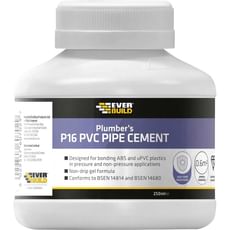
Pipe cement, also known as solvent cement or solvent weld adhesive, is a specialised bonding compound designed to create permanent, watertight seals between plastic pipes and fittings. Unlike mechanical joining methods, pipe cement works by chemically softening the surfaces of compatible plastics, allowing them to fuse together as the solvent evaporates. This creates a homogeneous bond that is often stronger than the pipe material itself, making it the preferred method for joining uPVC, ABS, and other plastic plumbing systems.
The range available at Tooled-Up.com includes professional-grade formulations suitable for both pressure and non-pressure applications. These products are engineered to comply with British Standards such as BS6209, ensuring they meet the rigorous requirements for soil and waste systems, rainwater drainage, and underground pipework. High-quality pipe cements feature thixotropic properties, meaning they resist dripping and running during application, whilst maintaining an adequate open time that allows for proper positioning before the bond sets.
Modern pipe cements are formulated to deliver rapid bond strength development, reducing downtime on installation projects whilst maintaining the long working time needed for precise assembly. They're essential for professional plumbers, drainage specialists, and DIY enthusiasts working on bathroom installations, kitchen waste systems, guttering, and underground drainage projects where reliable, leak-free joints are paramount.
Jargon Buster
- Thixotropic: A property that makes the cement thick and gel-like when at rest, preventing drips and runs, but flowing smoothly when stirred or applied with a brush.
- Open Time: The working period after application during which pipes and fittings can still be positioned and adjusted before the cement begins to set permanently.
- Solvent Weld: The chemical bonding process where solvent cement softens plastic surfaces, allowing them to fuse together as a single piece once the solvent evaporates.
- BS6209: The British Standard specification for solvent cement for non-pressure thermoplastics pipe systems, ensuring products meet quality and performance requirements.
- Non-Pressure Pipe: Pipework that carries liquids through gravity flow rather than under pressure, such as soil pipes, waste pipes, and rainwater drainage systems.
- Cure Time: The period required for the solvent cement to fully evaporate and the joint to reach maximum strength, typically ranging from 24 hours for full curing.
Who Uses Pipe Cement?
- Plumbers: For installing and repairing bathroom suites, kitchen waste systems, and soil and vent pipe installations
- Drainage Contractors: Specialists working on underground drainage systems and external waste pipe networks
- Roofing Contractors: For joining uPVC rainwater guttering, downpipes, and associated fittings
- Maintenance Engineers: Building services professionals maintaining plumbing systems in commercial and residential properties
- DIY Enthusiasts: Homeowners tackling bathroom refurbishments, kitchen installations, or guttering repairs
- Building Contractors: General builders requiring reliable pipe jointing solutions for new builds and renovations
- Facilities Managers: Maintenance teams responsible for plumbing infrastructure in schools, hospitals, and commercial premises
How to Choose the Right Pipe Cement
When selecting pipe cement, first verify that the product is compatible with your specific pipe material. Whilst many formulations work with both uPVC and ABS, always check the manufacturer's specifications to ensure suitability for your application. Products conforming to BS6209 are suitable for non-pressure applications including soil pipes, waste systems, and rainwater goods.
Consider the open time required for your project. Complex assemblies with multiple fittings benefit from cements offering extended working time, allowing proper alignment before the bond sets. Conversely, quick-setting formulations can speed up simple repairs. The thixotropic properties matter significantly for overhead or vertical applications—quality pipe cements won't drip or run, ensuring clean application even when working on vertical waste stacks or guttering.
Container size should match your project scale. Smaller tins with integral brushes suit occasional repairs and DIY work, whilst larger containers offer better value for trade professionals undertaking substantial installations. Check that products come with appropriate applicator brushes, as the correct brush size ensures even coverage without excess waste. Tooled-Up stocks professional formulations from trusted manufacturers like Everbuild, ensuring reliable performance across demanding trade applications.
Popular Accessories
- Pipe Cleaners and Primers: Specialised cleaning fluids and primers that prepare plastic surfaces for optimal bonding
- Application Brushes: Replacement brushes in various sizes for precise cement application
- Pipe Cutters: Quality cutting tools for creating clean, square cuts essential for proper joint formation
- Deburring Tools: Implements for removing burrs and smoothing cut edges before cementing
- Joint Lubricants: Compatible lubricants for rubber seals in mechanical joints adjacent to cemented connections
- Solvents and Cleaners: Products for removing excess cement and cleaning tools
- Personal Protective Equipment: Gloves and ventilation equipment for safe handling of solvent-based products
Safety Information
Pipe cement contains powerful solvents that require careful handling and appropriate safety precautions. Always work in well-ventilated areas, as solvent fumes can cause dizziness, headaches, and respiratory irritation. Where adequate natural ventilation isn't possible, use mechanical extraction or respirators with appropriate organic vapour filters. The HSE recommends limiting exposure time when working with solvent-based adhesives in confined spaces.
Wear suitable protective gloves resistant to solvents, as pipe cement can defat skin and cause irritation through prolonged contact. Safety glasses protect eyes from splashes during application. Keep products away from naked flames and ignition sources—solvent vapours are highly flammable. Store containers in cool, dry locations away from direct sunlight and heat sources, ensuring lids are tightly sealed to prevent solvent evaporation and maintain product effectiveness.
Always read and follow COSHH data sheets provided by manufacturers. Keep pipe cement out of reach of children and dispose of empty containers responsibly according to local authority guidelines for hazardous waste. Never smoke whilst using these products, and avoid eating or drinking until hands have been thoroughly washed.
Frequently Asked Questions
How long should I wait before testing a cemented pipe joint?
Whilst many pipe cements achieve initial bond strength within 15-30 minutes, you should typically wait at least 2-3 hours before testing non-pressure joints with water, and 24 hours before allowing the system to carry full flow. For pressure applications, always follow the manufacturer's specific curing recommendations, which may require 24-48 hours before pressure testing to ensure maximum joint strength.
Can pipe cement be used on wet pipes?
No, pipe cement requires clean, dry surfaces to form effective bonds. Moisture prevents proper solvent penetration and can cause joint failure. Always thoroughly dry pipes and fittings before application, and avoid working in damp conditions. If condensation forms on cold pipes, warm them gently or wait until environmental conditions improve before cementing.
What's the difference between pipe cement and mechanical push-fit joints?
Pipe cement creates permanent, chemically fused joints that cannot be disassembled and are typically stronger than the pipe itself. Push-fit joints use rubber seals and can be demounted for alterations or repairs. Cemented joints are preferred for concealed installations and where permanent, watertight seals are critical, whilst push-fit connections offer flexibility for accessible locations where future modifications may be needed.
Do I need to use primer before applying pipe cement?
Primer isn't always necessary for uPVC soil and waste applications conforming to BS4514, though it's recommended for optimum results, particularly with larger diameter pipes or in critical applications. Primer removes surface contaminants and begins the softening process, improving bond reliability. Always consult the cement manufacturer's instructions, as some formulations specifically require primer whilst others incorporate cleaning agents.
How long does pipe cement last in the tin?
Unopened pipe cement typically remains usable for 12-24 months when stored correctly in cool, dry conditions. Once opened, solvent evaporation gradually thickens the cement, reducing its effectiveness. Always reseal containers immediately after use, and discard product if it becomes excessively thick, stringy, or difficult to apply, as this indicates solvent loss that will compromise joint quality.