
Planishing Hammers

Pay in 3 interest-free payments on purchases from £20-£3000 with  . Learn more.




Loading...
End of content
Error - No more pages to load
About Planishing Hammers
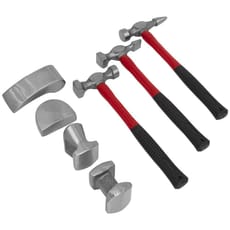
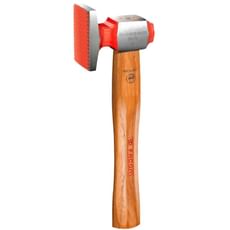
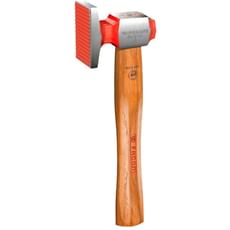
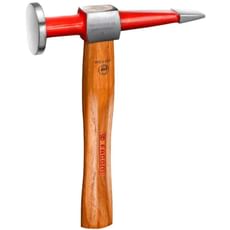
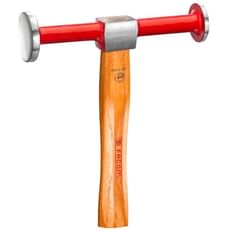
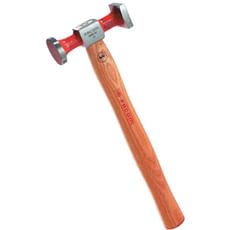
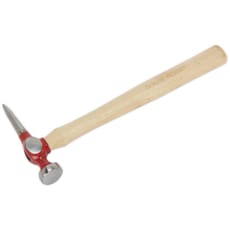
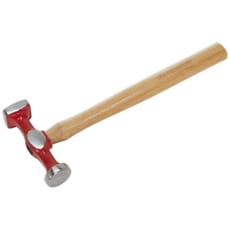
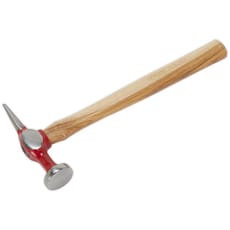
Planishing hammers are specialised metalworking tools designed for shaping, smoothing and finishing sheet metal surfaces. Unlike standard hammers used for striking or driving, planishing hammers feature carefully designed faces—typically flat, round or convex—that allow craftspeople to work metal without leaving marks or causing unwanted distortion. These precision tools are essential for panel beating, automotive restoration, fabrication and custom metalwork where a smooth, professional finish is paramount.
The collection at Tooled-Up.com encompasses traditional panel beating hammers alongside specialist variations including shrinking hammers, stretching hammers, bumping hammers and finishing hammers. Each type serves a specific purpose in the metalworking process: shrinking hammers compress metal to reduce surface area, stretching hammers expand it, whilst bumping hammers rough out larger dents before finishing work begins. Many feature dual-purpose heads with different profiles on each end, maximising versatility whilst minimising the number of tools required on site or in the workshop.
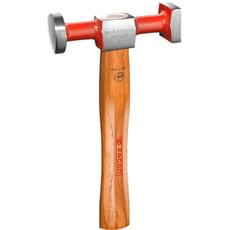
Quality planishing hammers typically feature drop-forged heads that are finely polished to prevent surface damage, securely attached to hickory or fibreglass handles that absorb shock and provide comfortable control during extended use. Professional-grade examples from brands like Facom and Sealey represent generations of refinement in tool design, offering the precise weight distribution and balance that experienced metalworkers demand for achieving flawless results.
Jargon Buster
- Planishing: The process of smoothing and finishing metal surfaces using light, controlled hammer blows to remove imperfections and achieve a uniform appearance without stretching or thinning the material.
- Shrinking Hammer: A specialist hammer with a serrated or ribbed face designed to compress stretched metal, reducing surface area and removing bulges or waves in panels.
- Bumping Hammer: A heavier planishing hammer used for initial rough work when removing larger dents or shaping panels before finishing with lighter tools.
- Pein (or Peen): The shaped end of a hammer head opposite the face, often tapered or rounded, used for working into tight curves or forming edges.
- Drop-Forged: A manufacturing process where heated metal is shaped under extreme pressure, creating tools with superior strength, durability and grain structure compared to cast alternatives.
- Dolly: A handheld anvil or support tool held behind panels whilst planishing from the front, providing a solid backing surface for controlled metalworking.
Who Uses Planishing Hammers?
Planishing hammers are essential tools for various trades and specialists including:
- Panel Beaters and Auto Body Technicians: Restoring vehicle panels and removing dents whilst preserving original metal
- Classic Car Restorers: Recreating vintage panels and repairing corroded or damaged bodywork on heritage vehicles
- Sheet Metal Fabricators: Shaping ducting, cladding and architectural metalwork components
- Coachbuilders: Crafting bespoke vehicle bodies and custom metalwork projects
- Aviation Engineers: Repairing and fabricating aircraft skin panels and components
- Metal Artists and Sculptors: Creating decorative metalwork, sculptures and artistic installations
- Marine Engineers: Repairing boat hulls and fabricating marine metalwork
- Agricultural Engineers: Repairing farm machinery panels and equipment bodywork
How to Choose the Right Planishing Hammers
Selecting appropriate planishing hammers depends on several key factors:
Head Weight and Balance: Lighter hammers (300-400g) suit finishing work and delicate panels, whilst heavier options prove more effective for initial bumping and working thicker gauge metal. The hammer should feel balanced in your hand with weight distributed naturally along the handle.
Face Configuration: Consider whether you need flat faces for general smoothing, convex faces for working curved surfaces, or specialist profiles like shrinking or stretching patterns. Multi-purpose hammers with different faces on each end offer excellent versatility for varied projects.
Handle Material: Traditional hickory handles provide excellent shock absorption and a comfortable feel preferred by many experienced craftspeople, whilst modern fibreglass alternatives offer enhanced durability and consistent performance in demanding workshop environments.
Head Finish: Highly polished faces are essential for finishing work to prevent marking delicate surfaces, whilst slightly textured faces on shrinking hammers provide the grip needed to compress metal effectively.
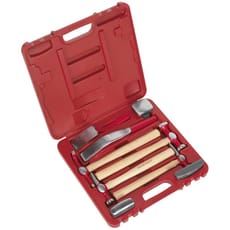
Set or Individual Tools: Comprehensive panel beating sets available from Tooled-Up provide multiple hammer types alongside complementary tools like dollies and spoons, representing excellent value for those establishing workshops or expanding capabilities. Experienced professionals often prefer selecting individual specialist hammers to complement existing collections.
Popular Accessories
- Panel Beating Dollies: Essential backing tools in various shapes for supporting metal whilst planishing
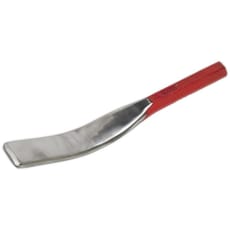
- Body Spoons: Curved levers for reaching awkward areas and spreading impact force
- Planishing Stakes: Bench-mounted or handheld anvils providing shaped support surfaces
- Tool Rolls and Storage: Protective storage preventing damage to polished hammer faces
- Fibreglass Filler and Body Repair Materials: Complementary products for complete panel restoration
- Sanding Tools and Abrasives: For surface preparation and finishing alongside metalwork
- Safety Glasses and Gloves: Essential personal protective equipment for metalworking tasks
- Work Benches and Vices: Secure workholding for controlled, accurate results
Safety Information
Whilst planishing hammers are relatively safe tools, proper practices ensure injury-free operation:
Always wear appropriate eye protection when working metal, as sharp edges and metal fragments pose risks to vision. Ensure adequate lighting in work areas to maintain precise control over hammer placement and prevent mis-strikes. Inspect hammer heads regularly for cracks, chips or loosening, as damaged tools can fail unexpectedly during use. Check handles for splits or deterioration, replacing compromised components immediately.
Maintain a clear, organised workspace free from trip hazards, with panels properly supported during work. When working on vehicle bodies or large panels, ensure adequate structural support to prevent collapse. Take regular breaks during extended planishing sessions to prevent repetitive strain injuries and maintain accuracy. Store hammers with faces protected to preserve polished finishes and prevent accidental damage to other tools or workshop surfaces.
Frequently Asked Questions
What's the difference between a planishing hammer and a regular hammer?
Planishing hammers feature carefully polished, shaped faces designed to smooth and finish metal without leaving marks or causing distortion. Regular hammers are designed for striking force rather than controlled metalworking, and would damage delicate panels.
Can planishing hammers be used on aluminium as well as steel?
Yes, planishing hammers work effectively on aluminium, steel, copper, brass and other malleable metals. However, softer metals like aluminium require lighter strikes and extra care to prevent over-working or thinning.
Do I need different hammers for shrinking and stretching metal?
Yes, shrinking hammers feature serrated or ribbed faces that compress metal, whilst stretching hammers have smooth, slightly convex faces that expand material. Using the wrong type produces opposite results to those intended.
How do I maintain planishing hammer faces?
Keep faces clean and lightly oiled to prevent rust. Avoid striking hard surfaces that could chip or mark the polished finish. Store hammers separately or with face protection to prevent contact damage. If faces become marked, they can be professionally re-polished.
Are panel beating hammer sets better value than buying individual hammers?
For those new to panel work or establishing workshops, comprehensive sets offer excellent value and ensure you have appropriate tools for various tasks. Experienced professionals often prefer selecting specific hammers to match their particular work requirements and techniques.