

Plastering Stilts

Pay in 3 interest-free payments on purchases from £20-£3000 with  . Learn more.
 Loading...
End of content
Error - No more pages to load
About Plastering Stilts
Plastering stilts are specialist height-adjustable platforms worn on the legs that elevate tradespeople to work comfortably on ceilings and upper walls without constantly repositioning ladders or scaffolding. These time-saving tools are essential equipment for plasterers, decorators, ceiling fitters and drywall installers who need to maintain a consistent working height across large areas. By eliminating the need to repeatedly climb up and down access equipment, stilts dramatically improve productivity on site whilst reducing physical strain and fatigue.
Modern plastering stilts are typically constructed from lightweight aluminium alloy, making them both durable and comfortable to wear for extended periods. Most models feature adjustable height settings—commonly ranging from 18 to 30 inches (450-750mm)—allowing tradespeople to select the optimal working height for each specific task. Quick-release strapping systems enable rapid fitting and removal, whilst ergonomic leg supports and foot platforms ensure stability and comfort during use. The range available at Tooled-Up.com includes professional-grade stilts suitable for demanding commercial applications, along with essential spares packs to keep equipment in optimal working condition.
Whilst plastering stilts require a period of familiarisation to develop confidence and balance, experienced users find them indispensable for ceiling work, upper wall finishing, suspended ceiling installation, and various other overhead tasks. They're particularly valuable on new-build sites and large refurbishment projects where extensive ceiling areas need finishing, offering significant time savings compared to traditional access methods.
Jargon Buster
- Height Adjustment Range: The minimum and maximum elevation provided by the stilts, typically measured in increments of two inches. Common ranges extend from 18 to 30 inches (450-750mm) above normal standing height.
- Quick-Release Straps: Adjustable securing systems that attach the stilts to the user's legs, designed for rapid fitting and removal without compromising stability during use.
- Foot Platform: The base component where the user's foot rests, usually featuring non-slip surfaces and secure toe retention to maintain foot position during movement.
- Leg Support/Shin Brace: Padded or cushioned components that distribute weight and pressure across the lower leg, preventing discomfort during extended wear periods.
- Drywall Stilts: Alternative term for plastering stilts, commonly used in North America and increasingly recognised in the UK, reflecting their widespread use in plasterboard installation and finishing.
- Working Height: The effective elevation at which the tradesperson can comfortably work when wearing stilts, determined by the stilt height plus the user's natural reach.
Who Uses Plastering Stilts?
- Plasterers: For skimming and finishing ceilings and upper wall sections without constant ladder repositioning
- Decorators and Painters: To efficiently paint or paper ceilings and upper walls across large rooms
- Drywall Installers: For fitting and taping plasterboard ceilings and overhead sections
- Suspended Ceiling Fitters: To install grid systems and ceiling tiles at a comfortable working height
- Electricians: When installing ceiling-mounted lighting, smoke detectors, or running cables in ceiling voids
- Shopfitters: For ceiling work and upper-level installations in retail and commercial fit-outs
- Building Contractors: General site work requiring efficient overhead access on new-builds and refurbishments
- Maintenance Professionals: For servicing and repairs in commercial and industrial premises with high ceilings
How to Choose the Right Plastering Stilts
Height Range Requirements: Consider the typical ceiling heights you'll be working at. Standard ranges of 18-30 inches suit most domestic and commercial applications, but verify the working height matches your specific needs. Remember that working height combines stilt elevation with your natural reach.
Build Quality and Materials: Professional-grade aluminium construction offers the best balance of strength and weight. Check weight capacity ratings to ensure they accommodate your body weight plus any tools or materials you'll carry whilst elevated.
Adjustment System: Look for stilts with clearly marked, secure height adjustment mechanisms that lock positively at each increment. Quick-release systems should be genuinely quick to operate but absolutely secure during use.
Comfort Features: Padded leg supports and cushioned straps make significant differences during extended wear. Tooled-Up stocks models designed for all-day comfort on demanding sites where stilts may be worn for several hours continuously.
Stability and Foot Platform Design: Wide, non-slip foot platforms with secure toe retention provide better stability and confidence, particularly important when first developing stilt-walking skills. Consider models with adjustable foot positioning if you have specific comfort requirements.
Spares Availability: Straps, pads and adjustment components will eventually require replacement. Choosing brands with readily available spares packs ensures your investment remains serviceable long-term.
Popular Accessories
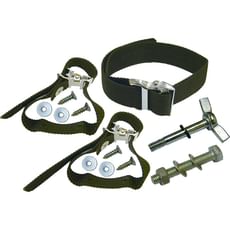
- Replacement Straps and Buckles: Essential spares for maintaining secure fitting as original straps wear through regular use
- Cushioned Leg Pads: Replacement comfort pads that maintain ergonomic support after the originals compress or degrade
- Non-Slip Rubber Tips: Replacement base components that maintain grip and stability on various floor surfaces
- Carrying Cases and Storage Bags: Protective transport solutions that prevent damage and keep components organised between jobs
- Knee Pads: Additional protection when fitting and removing stilts, particularly on hard site floors
- Tool Belts and Pouches: Keep essential tools accessible whilst elevated, reducing the need to descend repeatedly
- Hard Hats and Safety Glasses: Essential PPE when working at height, particularly on active construction sites
Safety Information
Training and Familiarisation: Never use plastering stilts without adequate training and practice. Begin in safe, controlled environments to develop balance and confidence before attempting site work. Most accidents occur during the learning phase or when users become over-confident.
Working Surface Requirements: Only use stilts on level, stable, debris-free surfaces. Remove trip hazards, cables and materials from your working area before elevating. Avoid wet, slippery or uneven floors which significantly increase fall risk.
Height Regulations: Be aware of HSE guidance regarding work at height. Whilst stilts are valuable tools, they may not be appropriate for all elevated work situations. Risk assessments should consider the specific task, environment and user competence.
Regular Inspection: Check stilts before each use for worn straps, damaged components, loose fastenings or bent framework. Replace worn parts immediately—component failure whilst elevated can result in serious injury.
Weight Limits: Never exceed manufacturer-specified weight capacities, remembering to account for tools, materials and equipment you'll carry whilst elevated. Overloading compromises structural integrity and stability.
Hazard Awareness: Maintain awareness of overhead obstructions, particularly when moving between areas. Your elevated height changes your clearance requirements and centre of gravity.
Frequently Asked Questions
How long does it take to learn to use plastering stilts?
Most users develop basic confidence within 2-3 hours of supervised practice, though true proficiency requires several days of regular use. Start with lower height settings and progress gradually. Expect an initial period of muscle fatigue as your legs adapt to the different movement pattern and balance requirements.
What height stilts do I need for standard UK ceiling heights?
For typical domestic ceilings of 2.4 metres, stilts with 18-24 inch elevation generally provide comfortable working reach for ceiling finishing. Commercial premises with 3-metre ceilings benefit from the full 30-inch range. Consider your own height and preferred working position when selecting.
Are plastering stilts suitable for DIY users or only professionals?
Whilst primarily designed for trade professionals, competent DIY enthusiasts can use stilts effectively with proper training and practice. However, for occasional ceiling work, traditional access equipment may prove more practical and cost-effective than investing in specialist stilts that require skill development.
Can I use stilts on stairs or sloped surfaces?
No. Plastering stilts should only be used on level, stable, flat surfaces. Using them on stairs, ramps or uneven ground creates serious fall hazards and voids any manufacturer liability. Alternative access equipment must be used for work on sloped or stepped areas.
How do I maintain plastering stilts for long service life?
Clean stilts after each use to remove plaster, paint and debris that can affect adjustment mechanisms. Store in dry conditions to prevent corrosion. Inspect straps, pads and fixings regularly, replacing worn components promptly. Lubricate adjustment points periodically with suitable products. Keep spares packs available from Tooled-Up to ensure immediate replacement of worn components without work delays.