

Plug Sockets & Facings
Pay in 3 interest-free payments on purchases from £30-2000 with  . Learn more.
 Loading...
End of content
Error - No more pages to load
About Plug Sockets & Facings
Plug sockets and facings are essential components of any electrical installation, providing the final connection point between 240v mains power and appliances or tools. While the internal mechanisms handle the electrical connections, the facings – or front plates – offer both functional protection and aesthetic finish. Whether you're an electrician completing a new installation, a joiner working on a renovation project, or a DIY enthusiast upgrading your home, selecting the right sockets and facings ensures safety, compliance with UK wiring regulations, and a professional appearance.
Modern plug sockets come in various configurations, from single and double 13A outlets to USB-integrated models, dimmer switches, and specialised units for specific applications. Facings are available in numerous finishes including white plastic, brushed steel, chrome, and period-style brass to complement any interior décor. The range at Tooled-Up includes installation accessories and precision tools designed to make socket fitting faster and more accurate, particularly valuable when working on multiple properties or commercial projects where consistency and speed matter.
Beyond the sockets themselves, professional installation requires careful planning and accurate positioning. This is where specialist tools such as socket box cutting templates become invaluable, ensuring that every outlet sits perfectly level and aligned with others in the room. Such precision tools eliminate guesswork and significantly reduce the time spent measuring and marking, whilst minimising costly mistakes on finished plasterboard walls.
Jargon Buster
- Back Box: The metal or plastic enclosure that sits within the wall cavity, housing the socket mechanism and providing a mounting point for the faceplate.
- Faceplate (or Front Plate): The visible front cover of a socket that screws onto the back box, available in various materials and finishes to suit different interior styles.
- Single/Double Gang: Refers to the number of socket outlets on a single faceplate – a single gang has one socket, whilst a double gang features two sockets side by side.
- Switched Socket: A socket outlet incorporating an on/off switch, allowing users to isolate appliances without unplugging them, improving safety and convenience.
- DP (Double Pole): A switching arrangement that disconnects both live and neutral conductors simultaneously, providing enhanced safety particularly for fixed appliances.
- Earth Terminal: The connection point for the earth wire (typically green/yellow sleeved), providing a safety path for fault currents in accordance with BS 7671 wiring regulations.
Who Uses Plug Sockets & Facings?
- Electricians and Electrical Contractors: Installing, maintaining, and upgrading electrical systems in domestic, commercial, and industrial settings
- Plumbers: Fitting sockets and isolation switches for boilers, immersion heaters, and other fixed electrical appliances
- Joiners and Carpenters: Working on renovations and new builds where socket positioning must coordinate with joinery and fitted furniture
- Shopfitters: Installing power outlets in retail environments, ensuring compliance with commercial electrical standards
- Property Developers and Landlords: Upgrading rental properties and new developments to meet current wiring regulations
- Facilities Managers: Maintaining and improving electrical infrastructure in commercial buildings, schools, and public spaces
- DIY Enthusiasts: Undertaking home improvements and electrical upgrades under Part P building regulations guidance
How to Choose the Right Plug Sockets & Facings
Selecting appropriate sockets and facings depends on several key factors. First, consider the location and environment – bathrooms and kitchens require IP-rated (Ingress Protection) units to guard against moisture, whilst outdoor applications need weatherproof enclosures. Standard indoor rooms typically use basic white or decorative faceplates.
The number of outlets required influences whether you need single, double, or even quad gang faceplates. Calculate the likely demand in each location, accounting for future needs rather than just current appliances. In living rooms and home offices, USB-integrated sockets have become increasingly popular, eliminating the need for separate charging adapters.
Aesthetic considerations matter particularly in visible locations. Tooled-Up.com stocks faceplates in various finishes from economical white plastic through to premium brushed stainless steel, polished chrome, and period-appropriate brass for heritage properties. Ensure consistency across rooms for a cohesive professional appearance.
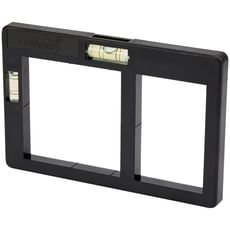
When installing multiple sockets, precision positioning tools such as socket box cutting templates ensure accuracy and consistency. These tools incorporate spirit levels for perfect horizontal alignment and provide templates for both single and double gang boxes, dramatically reducing installation time whilst improving quality. This is particularly valuable for electricians working on new-build developments where dozens or even hundreds of outlets must be fitted to exacting standards.
Always verify that products comply with current UK wiring regulations (BS 7671) and bear appropriate certification marks. Check the amp rating matches the circuit protection – typically 13A for standard ring mains supplied by 32A breakers.
Popular Accessories
- Socket Box Cutting Templates: For accurate positioning and marking of back boxes on plasterboard walls
- Dry Lining Boxes: Plasterboard mounting boxes in various depths for new installations
- Spirit Levels: Essential for ensuring sockets sit perfectly horizontal
- Padsaw or Drywall Saw: For cutting plasterboard to accommodate back boxes
- Electrical Screwdrivers: Insulated screwdrivers rated for electrical work, meeting VDE standards
- Cable Detectors: To locate existing cables before cutting into walls, preventing dangerous accidents
- Wire Strippers and Cutters: For preparing cables and making connections
- Faceplate Screws: Replacement screws in matching finishes for premium installations
- Earth Sleeving: Green/yellow sleeving for bare earth conductors as required by wiring regulations
Safety Information
Electrical installation work in the UK is governed by Part P of the Building Regulations and must comply with BS 7671 (the IET Wiring Regulations). Certain work must be carried out by a qualified electrician registered with a competent person scheme, whilst other tasks may be performed by competent DIY enthusiasts provided the work is notified to Building Control and tested appropriately.
Always isolate the electrical supply at the consumer unit before commencing any work on sockets or facings. Use a voltage tester to confirm the circuit is dead before touching any conductors. Never assume a circuit is safe simply because a switch is off.
When cutting into walls to install back boxes, always use a cable detector first to locate hidden cables and pipes. Cutting through live cables can result in fatal electric shock, fire, or damage to other services.
Ensure all connections are tight and secure, with no exposed copper visible beyond the terminal. Follow the correct colour coding for UK installations: brown (live), blue (neutral), and green/yellow (earth). Loose connections can cause overheating, arcing, and potentially fire.
After installation, all work should be tested and certified using appropriate test equipment to verify earth continuity, insulation resistance, and polarity. Keep certification documentation for future reference and property transactions.
Frequently Asked Questions
What's the difference between surface-mounted and flush-mounted sockets?
Surface-mounted sockets sit proud of the wall surface in a complete external enclosure, making them ideal for solid walls where chasing cables is impractical, or for temporary installations. Flush-mounted sockets require a back box recessed into the wall with only the faceplate visible, creating a neater appearance preferred in most modern installations. The choice depends on wall construction, aesthetic preference, and whether you're prepared to chase out plasterwork or plasterboard.
Can I replace socket faceplates myself without an electrician?
Replacing an existing faceplate on the same back box is generally considered simple maintenance that a competent person can perform, provided you isolate the power and follow correct procedures. However, if you're moving socket positions, adding new circuits, or working in special locations like bathrooms, this constitutes notifiable work under Part P and should be carried out by a qualified electrician registered with a competent person scheme.
How do I ensure sockets are level and aligned correctly?
Professional electricians use socket box cutting templates that incorporate spirit levels to guarantee perfect positioning every time. These tools provide consistent height and spacing whilst the built-in level ensures horizontal alignment. Mark your desired height around the room using a laser level or water level, then use the template to mark cutting lines for the back box. This approach is far more reliable than measuring by hand, especially when installing multiple sockets that must align visually.
What depth back box do I need for different wall types?
For standard plasterboard walls on timber or metal studs, 35mm deep dry lining boxes are typical. Solid walls generally accommodate 25mm or 35mm metal back boxes depending on available chasing depth. Deeper boxes (47mm) provide more space for cable management and are useful when multiple cables enter one location, or for special applications like dimmer switches that generate heat and require additional clearance. Always check the specific requirements of your socket mechanism and the number of cables to be accommodated.
Are metal or plastic faceplates better?
Both materials meet safety standards when properly manufactured. Metal faceplates (brushed steel, chrome, brass) offer superior durability, resist discolouration, and provide a premium appearance, making them popular for high-end residential and commercial applications. Plastic faceplates are more economical, available in numerous colours, and adequate for most domestic situations. Metal plates must be properly earthed via the mounting screws to the metal back box. The choice largely depends on budget, aesthetic preference, and the likelihood of physical impact damage in the location.