

Plumb Bobs
Pay in 3 interest-free payments on purchases from £30-2000 with  . Learn more.

 Loading...
End of content
Error - No more pages to load
About Plumb Bobs
A plumb bob is one of the oldest and most reliable tools for establishing true vertical reference points on construction sites, workshops, and installation projects. This simple yet effective instrument consists of a weighted bob suspended from a line, using gravity to create a perfectly vertical reference that's essential for accurate alignment work. Whether you're setting out walls, installing door frames, checking masonry work, or aligning structural elements, a quality plumb bob delivers precision that modern laser tools sometimes struggle to match in bright conditions or over very long drops.
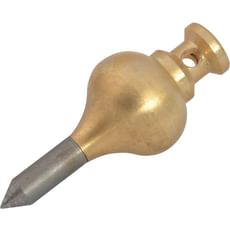
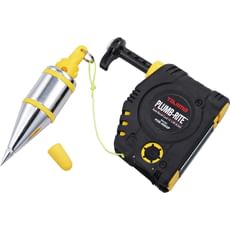
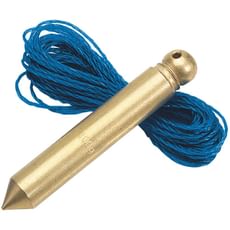
The selection at Tooled-Up.com includes both traditional brass and steel plumb bobs, as well as innovative automatic models that eliminate line tangling and speed up the setup process. Brass construction offers superior weight distribution and corrosion resistance for outdoor use, whilst steel variants provide durability at a more economical price point. Modern automatic plumb bobs feature self-retracting mechanisms that protect the line and allow for rapid deployment, making them particularly popular with professional tradespeople working on multiple jobs throughout the day.
Available from trusted brands including Faithfull, Draper, Monument, and Tajima, these precision-machined tools range from compact 100g models for light-duty work to substantial 400g bobs designed for use over extended drops where wind resistance could affect lighter alternatives. Many models come complete with nylon line ranging from 3 to 5 metres, providing versatility for various applications from interior fit-out work to larger structural projects.
Jargon Buster
- Plumb Bob Weight
- The mass of the bob itself, typically ranging from 100g to 400g. Heavier bobs stabilise more quickly in breezy conditions and are better suited for longer drops, whilst lighter versions are adequate for interior work and shorter distances.
- Automatic Plumb Bob
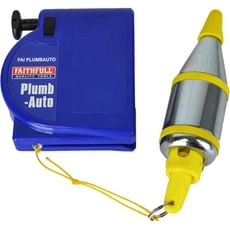
- A modern variant featuring a self-retracting line mechanism housed within the body of the tool, similar to a tape measure. This design prevents line tangling, speeds up deployment, and protects the line when not in use.
- Bob Material
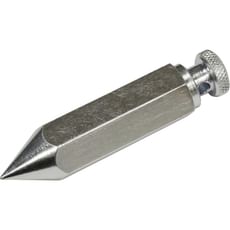
- The metal used in construction, commonly brass or steel. Brass offers better weight distribution, superior corrosion resistance, and traditional appeal, whilst steel provides excellent durability at lower cost with protective plating.
- Tip Point
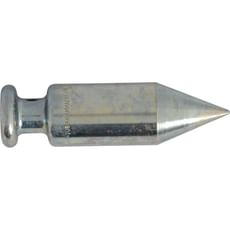
- The precisely machined point at the bottom of the bob that indicates the exact vertical reference position. A sharp, well-defined tip is essential for accurate marking and positioning work.
- Centre Line
- The imaginary vertical line created by the suspended plumb bob, representing true vertical as determined by gravity. This reference line is used to check or transfer vertical alignment.
- Stabilisation Time
- The period required for the bob to stop swinging and settle into a steady vertical position. Heavier bobs and those with aerodynamic profiles typically stabilise faster than lighter alternatives.
Who Uses Plumb Bobs?
- Bricklayers and stonemasons – checking wall verticality and setting out corners on masonry projects
- Carpenters and joiners – aligning door frames, stud walls, and vertical timber elements
- Electricians and plumbers – ensuring vertical installation of conduit, pipework, and service risers
- Plasterers and drywall installers – establishing true vertical for plasterboard installation and screeding
- Shopfitters and kitchen installers – aligning tall units, displays, and fitted furniture
- Scaffolders and steelwork erectors – checking vertical alignment of structural elements and support posts
- Surveyors and setting-out engineers – transferring reference points between floors and establishing vertical datums
- Heritage restoration specialists – working on historic buildings where traditional methods are preferred
- DIY enthusiasts – tackling home improvement projects requiring accurate vertical reference
How to Choose the Right Plumb Bobs
Weight and Application: Consider the working environment and drop height. For interior work and drops under 3 metres, a 100-140g bob is typically sufficient. For outdoor sites, longer drops, or windy conditions, opt for heavier 250-400g models that stabilise more quickly and resist wind deflection. The additional mass provides better accuracy over extended distances.
Material Selection: Brass plumb bobs offer superior corrosion resistance for outdoor use and provide excellent weight distribution thanks to the material's density. They're ideal for professional tradespeople requiring long-term reliability. Steel variants with protective plating offer good durability at lower cost and are perfectly adequate for interior work or occasional use.
Traditional vs Automatic: Traditional plumb bobs with separate line require manual winding but offer simplicity and reliability with no moving parts to fail. Automatic models from Tooled-Up feature self-retracting mechanisms that save time on site, prevent line tangling, and protect the line from damage. Consider automatic versions if you use your plumb bob frequently throughout the day.
Line Length and Quality: Most plumb bobs come with 3-5 metres of nylon line, suitable for typical building heights. Verify the supplied length meets your requirements, particularly for work in buildings with high ceilings or multi-storey projects. Quality braided nylon line resists stretching and provides years of reliable service.
Tip Precision: Examine the machining quality of the tip point. A precisely formed, sharp tip allows accurate marking and positioning work. Poor machining results in an indistinct reference point that undermines the tool's accuracy.
Brand Reputation: Established manufacturers including Faithfull, Draper, Monument, and Tajima have proven track records for precision machining and quality control. Professional-grade tools justify their cost through superior accuracy and longevity.
Popular Accessories
- Spirit levels – complementary tools for checking horizontal and vertical alignment across surfaces
- Chalk lines – for marking long straight lines once vertical reference points are established
- Laser levels – modern alternatives for certain applications, though plumb bobs remain essential for specific tasks
- Measuring tapes – for transferring measurements from the vertical reference line
- Marking pencils and scribers – for accurately marking the position indicated by the plumb bob tip
- Line replacement cord – spare nylon line for traditional plumb bobs
- Builder's line and pins – for setting out and establishing horizontal reference lines
- Tool pouches and belts – convenient storage for carrying plumb bobs alongside other hand tools
Frequently Asked Questions
Why use a plumb bob when laser levels are available?
Plumb bobs offer several advantages over laser tools in specific situations. They work perfectly in bright sunlight where laser lines become difficult to see, require no batteries or charging, function reliably over very long drops, and cost significantly less. Many experienced tradespeople keep both tools available, selecting whichever is most appropriate for the specific task and working conditions.
How do I stop my plumb bob swinging in the wind?
Use a heavier bob (300-400g) which resists wind deflection better than lighter models. Position yourself to shield the bob from prevailing wind, or create a temporary windbreak using boards or sheeting. Immersing the tip in a bucket of water or sand also dampens movement quickly. Allow adequate time for stabilisation before taking measurements, and consider suspending work in very strong winds where accuracy cannot be guaranteed.
What's the difference between brass and steel plumb bobs?
Brass plumb bobs offer superior corrosion resistance for outdoor use, better weight distribution due to the material's density, and traditional appeal favoured by craftsmen. Steel variants are more economical, equally accurate when properly machined, and perfectly suitable for interior work. Both materials provide reliable service when manufactured to professional standards by reputable brands.
Can I replace the line on my plumb bob?
Yes, traditional plumb bobs allow easy line replacement. Use quality braided nylon cord of appropriate diameter, typically 1-2mm. Thread through the top fixture, tie securely, and trim excess. Many hardware suppliers stock replacement plumb bob line. Automatic models have integrated line systems that aren't user-replaceable but are protected within the housing for extended service life.
How accurate are plumb bobs compared to modern tools?
A quality plumb bob achieves accuracy within 1-2mm over a 3-metre drop when properly stabilised, matching or exceeding many mid-range laser levels. Over very long drops exceeding 10 metres, a heavy plumb bob often outperforms lasers which can be affected by temperature gradients and atmospheric conditions. The limiting factor is typically user patience in allowing full stabilisation rather than the tool's inherent accuracy.