

Power Inverters
Pay in 3 interest-free payments on purchases from £30-2000 with  . Learn more.

 Loading...
End of content
Error - No more pages to load
About Power Inverters
Power inverters are essential devices that convert DC (direct current) electricity from batteries or vehicle electrical systems into 240v AC (alternating current), enabling you to run standard household and professional equipment away from mains power. Whether you're working remotely on a construction site, living off-grid in a caravan or motorhome, or need emergency backup power, a quality power inverter provides the flexibility to operate tools, appliances, and electronics wherever you need them.
The range available at Tooled-Up.com includes pure sine wave and modified sine wave inverters in various wattage ratings, from compact 150W units ideal for charging laptops and mobile devices, through to heavy-duty 3000W+ models capable of running power tools, welding equipment, and multiple appliances simultaneously. Pure sine wave inverters produce a clean, stable electrical output identical to mains power, making them suitable for sensitive electronics, whilst modified sine wave units offer a cost-effective solution for basic applications like lighting and simple motor-driven tools.
Modern power inverters feature built-in safety protections including over-voltage, under-voltage, over-temperature, and short-circuit protection, along with soft-start technology to handle motor surge currents. Many models also incorporate USB charging ports alongside standard 240v sockets, remote control capability, and digital displays showing input voltage, output wattage, and battery status. When selecting an inverter, it's crucial to consider both continuous power rating and peak surge capacity to ensure reliable operation of your equipment.
Jargon Buster
- Pure Sine Wave - An inverter output that produces a smooth, clean electrical waveform identical to UK mains power supply. Essential for sensitive electronics, variable speed tools, audio equipment, and appliances with electronic controls.
- Modified Sine Wave - A simpler, stepped waveform output suitable for basic resistive loads like lighting, heating elements, and universal motors. Less expensive than pure sine wave but not compatible with all devices.
- Continuous Power Rating - The sustained wattage an inverter can deliver indefinitely without overheating. This should match or exceed the running power requirement of your equipment.
- Peak/Surge Power - The short-term maximum wattage an inverter can handle, typically for 3-5 seconds. Critical for starting motor-driven equipment like compressors and power tools which draw 3-7 times their running current on startup.
- Conversion Efficiency - The percentage of DC power successfully converted to AC power, with losses expelled as heat. Quality inverters achieve 85-95% efficiency, affecting battery runtime and heat generation.
- Idle/No-Load Draw - The power consumed by the inverter when switched on but with no load connected. Lower idle draw extends battery life in standby mode.
Who Uses Power Inverters?
- Electricians and Sparkies - Running power tools and testing equipment on sites without mains supply or during electrical installation work
- Mobile Mechanics and Vehicle Technicians - Operating diagnostic equipment, power tools, and battery chargers at customer locations
- Carpenters and Joiners - Powering saws, routers, sanders, and dust extraction on remote sites or outdoor installations
- Commercial Vehicle Drivers - Running kettles, microwaves, laptops, and phone chargers during rest breaks in HGVs and delivery vans
- Caravan and Motorhome Owners - Operating domestic appliances, entertainment systems, and charging devices whilst touring or wild camping
- Marine Users - Powering equipment on boats, narrowboats, and yachts from onboard battery banks
- Off-Grid Property Owners - Converting solar battery storage or generator power to run household appliances
- Event and Exhibition Professionals - Providing mobile power for displays, audio equipment, and catering facilities
- Emergency Services and Rescue Teams - Operating essential equipment during power outages or in remote locations
- Outdoor Event Organisers and Caterers - Running food preparation equipment, lighting, and PA systems at temporary venues
How to Choose the Right Power Inverters
Calculate Your Power Requirements: Total the wattage of all devices you'll run simultaneously, then add 25-30% headroom. Remember that motor-driven equipment requires 3-7 times its running wattage during startup, so check the peak surge rating can handle this inrush current. A 500W circular saw might need 3000W surge capacity.
Pure Sine Wave vs Modified Sine Wave: Choose pure sine wave inverters for sensitive electronics including laptops, phones, audio equipment, variable speed power tools (brushless motors), medical devices, and appliances with electronic controls or timers. Modified sine wave suits basic applications like incandescent lighting, kettles, and simple universal motor tools, but may cause buzzing in transformers and motors.
Input Voltage and Battery Capacity: Match the inverter input voltage to your battery system - 12v for most vehicles and small installations, 24v or 48v for larger off-grid systems offering better efficiency at higher power levels. Ensure your battery bank has sufficient amp-hour capacity; a 1000W inverter drawing from 12v batteries requires approximately 100A, so adequate battery capacity and cable sizing are crucial.
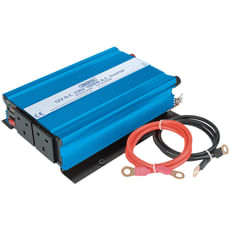
Connection Method: Smaller inverters up to 500W typically use cigarette lighter/12v socket connections, whilst units above 500W require direct battery terminal connection with appropriate gauge cables and inline fusing. Tooled-Up stocks inverters with various connection options including heavy-duty crocodile clips and ring terminal cables.
Socket Configuration and Features: Consider how many 240v sockets you need simultaneously and whether built-in USB ports would be beneficial for charging mobile devices. Remote control capability, digital displays, and cooling fan design all affect usability, whilst features like automatic shutdown on low battery voltage protect your battery from over-discharge damage.
Build Quality and Safety Certification: Look for inverters with aluminium heat-sink casings for effective cooling, comprehensive protection circuitry (over-voltage, under-voltage, over-temperature, overload, short-circuit), and compliance with relevant safety standards. Quality units include thermal management systems to prevent damage during sustained high-load operation.
Popular Accessories
- Battery Cables and Terminal Connectors - Heavy-duty copper cables in appropriate gauges (typically 25mm² to 50mm² for high-power inverters) with ring terminals for secure battery connection
- Inline Fuses and Circuit Breakers - Essential protection between battery and inverter, rated appropriately for maximum current draw
- Remote Control Panels - Allow convenient on/off switching and monitoring without accessing the inverter location
- Leisure Batteries and Deep Cycle Batteries - Designed for repeated discharge/recharge cycles unlike standard car batteries
- Battery Monitors and Voltage Meters - Track battery voltage and state of charge to prevent over-discharge
- Solar Charge Controllers - For integrating solar panels to recharge battery banks running inverters
- Extension Leads and Adaptors - Distributing 240v power from inverter sockets to multiple devices
- Battery Isolator Switches - Safely disconnect power when servicing or during storage
Safety Information
Electrical Safety: Always connect inverters directly to batteries using correctly rated cables and never exceed the recommended cable length. Install appropriate fusing within 300mm of the battery positive terminal to protect against short circuits. Ensure all connections are tight and corrosion-free to prevent voltage drop and overheating. Never operate inverters in wet conditions or where flammable gases may accumulate.
Ventilation and Heat Management: Power inverters generate significant heat during operation, particularly under high load. Position units in well-ventilated locations with adequate clearance around cooling vents and fans. Never cover an operating inverter or restrict airflow. Allow cooling time after sustained high-load use before switching off, as cooling fans may continue running.
Battery Considerations: Inverters can draw extremely high currents from batteries - a 2000W inverter may pull 200A from a 12v battery. Ensure batteries are properly secured, correctly rated for deep discharge cycles, and maintained in good condition. Monitor battery voltage to prevent over-discharge which damages batteries and may cause inverter shutdown. Working with batteries involves risks of explosive hydrogen gas, acid burns, and high short-circuit currents - follow manufacturer guidance and HSE electrical safety recommendations.
Equipment Compatibility: Verify that your inverter type (pure or modified sine wave) is suitable for all connected equipment. Some devices explicitly require pure sine wave power and may be damaged by modified sine wave output. Check equipment nameplate ratings don't exceed inverter continuous power rating, and that peak surge capacity is adequate for motor starting currents.
Frequently Asked Questions
What size power inverter do I need to run power tools?
This depends entirely on the tools you're using. A 500W angle grinder running continuously needs a 600-700W inverter with 2000W+ surge capacity. For running multiple tools or larger equipment like a mitre saw (1800W) or site compressor, you'll need 2000-3000W continuous rating with 6000W+ surge. Always check the tool nameplate rating and multiply motor-driven tools by 3-7 times for surge requirements. Pure sine wave is recommended for modern brushless power tools.
Can I run my inverter from my vehicle's cigarette lighter socket?
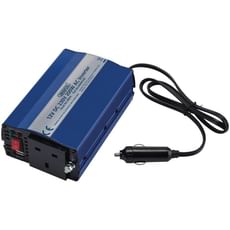
Only for very small inverters up to around 150-200W maximum. Cigarette lighter sockets are typically fused at 10-15A, limiting safe power draw to approximately 120-180W. Anything larger requires direct battery connection with properly rated cables. Attempting to draw excessive power through a lighter socket will blow fuses or damage wiring.
What's the difference between pure sine wave and modified sine wave inverters?
Pure sine wave inverters produce clean, smooth 240v power identical to UK mains supply, making them compatible with all equipment including sensitive electronics, variable speed tools, audio equipment, and appliances with electronic controls. Modified sine wave inverters produce a stepped approximation that works with simple resistive loads and universal motors but may cause buzzing, reduced efficiency, or damage to sensitive devices. For professional tool use and electronics, pure sine wave is the safer choice.
How long will my battery last running an inverter?
Calculate battery amp-hours divided by inverter current draw. For example, a 1000W load from a 12v battery draws approximately 100A (accounting for inverter efficiency losses). A 110Ah leisure battery could theoretically provide 1.1 hours, but you should only discharge leisure batteries to 50% capacity for longevity, giving around 30 minutes realistic runtime. Multiple batteries in parallel increase capacity proportionally. Actual runtime varies with battery condition, temperature, and load fluctuations.
Do I need any special installation for a power inverter?
Smaller portable units simply connect to batteries with supplied cables. Larger permanent installations require properly sized cables (often 25mm² or larger), inline fusing rated for maximum current draw positioned within 300mm of the battery positive terminal, secure mounting in a ventilated location, and potentially a battery isolator switch. Follow manufacturer installation instructions and consider having larger systems installed by a qualified auto-electrician or marine engineer. Proper installation ensures safety and optimal performance whilst protecting your expensive battery investment.