

Profile Scribing Bits
Pay in 3 interest-free payments on purchases from £30-2000 with  . Learn more.
 Loading...
End of content
Error - No more pages to load
About Profile Scribing Bits
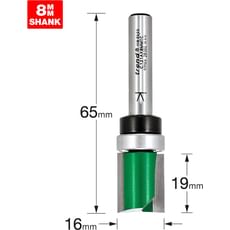
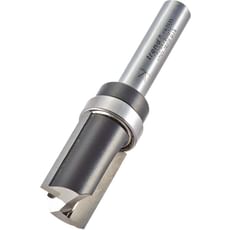
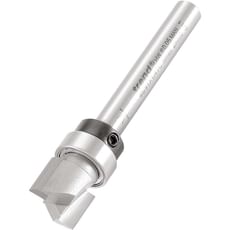
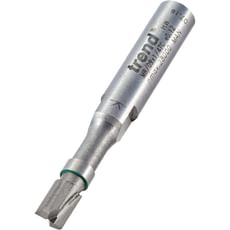
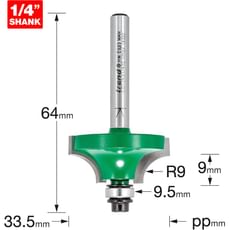
Profile scribing bits, also known as template profilers or bearing-guided profile cutters, are specialised router bits designed for accurate template work, edge trimming, and creating precise profiles in wood. These cutters feature a bearing guide mounted either on the shank or tip, which follows a template or existing edge to replicate shapes and profiles with exceptional precision. Profile scribing bits are essential tools for joinery work, particularly in door and window construction, decorative panelling, kitchen fitting, and furniture making where exact replication of profiles is crucial.
The bearing-guided design allows these router bits to follow templates or existing workpieces accurately, making them invaluable for creating matching profiles, trimming laminate edges, and producing consistent rebates. The bearing runs along the template or workpiece edge whilst the cutting edges shape the material, ensuring uniform results across multiple pieces. Tooled-Up.com stocks profile scribing bits in various configurations, including miniature versions for delicate work and heavy-duty trade-grade options for demanding professional applications.
Available with different shank diameters (typically 1/4" and 1/2"), these cutters come in various profile shapes including straight profilers, shoulder profilers, and angled template profilers. The cutting lengths and overall dimensions vary to suit different material thicknesses and application requirements, whilst the bearing diameter determines the offset between the template and finished profile.
Jargon Buster
- Bearing Guide: A precision ball-bearing mounted on the router bit that runs along a template or edge, guiding the cutter to replicate the exact profile. The bearing diameter determines the offset between the template and the cut.
- Shank Diameter: The cylindrical shaft that fits into the router collet, commonly 1/4" (6.35mm) or 1/2" (12.7mm). Larger shanks provide better rigidity and reduce deflection during heavy cutting operations.
- Template Profiling: A routing technique where a pattern or template is used with a bearing-guided bit to reproduce identical shapes and profiles across multiple workpieces, ensuring consistency in production work.
- Cut Length: The vertical height of the cutting edges, measured in millimetres, which determines the maximum depth of material that can be profiled in a single pass.
- TCT (Tungsten Carbide Tipped): Router bits with cutting edges made from extremely hard tungsten carbide, providing superior edge retention and longevity compared to high-speed steel, particularly when working with abrasive materials like MDF or chipboard.
- Rebating: Creating a stepped recess along the edge of a workpiece, commonly used in door and window construction to accommodate panels, glass, or to form joints.
Who Uses Profile Scribing Bits?
- Joiners and Carpenters: For door and window construction, creating matching profiles, and fitting decorative mouldings
- Kitchen Fitters: Scribing worktops to walls, creating template profiles for hob and sink cut-outs, and edge profiling
- Furniture Makers: Replicating decorative profiles, edge trimming veneers, and creating consistent joinery details across multiple pieces
- Shopfitters: Template work for retail fixtures, display units, and bespoke joinery installations
- Window and Door Manufacturers: Production profiling for frames, sashes, and architraves requiring precise, repeatable profiles
- Restoration Specialists: Matching existing profiles in period properties and heritage woodwork
- DIY Enthusiasts: Home improvement projects involving template routing, laminate trimming, and decorative edge work
How to Choose the Right Profile Scribing Bits
Shank Size: Match the shank diameter to your router collet capacity. Half-inch shanks offer greater rigidity and are preferable for heavier profiling work, whilst quarter-inch shanks suit lighter duty applications and smaller palm routers.
Bearing Position: Shank-mounted bearings are ideal for template work and rebating, whilst tip-mounted bearings excel at following existing edges. Consider which configuration suits your typical applications when selecting cutters at Tooled-Up.
Cut Length and Profile Depth: Ensure the cutter's cut length exceeds your material thickness. For deep profiles, multiple shallow passes are safer than attempting to remove excessive material in a single pass, reducing cutter stress and improving finish quality.
Quality Grade: Trade-grade cutters feature superior carbide quality, precision grinding, and better balance for extended tool life in professional environments. CRAFTPRO ranges offer excellent value for regular DIY use, whilst TRADE specifications suit demanding professional applications.
Profile Shape: Different profile configurations suit specific applications – straight profilers for flush trimming, shoulder profilers for stepped edges, and angled profilers for chamfering and bevelling operations.
Material Compatibility: Consider the materials you'll be cutting. TCT cutters handle abrasive materials like MDF, chipboard, and laminates effectively, whilst maintaining sharpness through extended use.
Popular Accessories
- Router Tables: Provide stable, accurate support for template profiling work, particularly beneficial for smaller workpieces
- Template Guides and Bushings: Additional guide systems for creating offset profiles and working with different template thicknesses
- MDF or Acrylic Sheet: For creating durable routing templates that withstand repeated bearing contact
- Router Collets and Collet Extensions: Ensure secure bit holding and provide additional reach when required
- Dust Extraction Accessories: Hoses, adaptors, and extraction hoods to manage routing dust effectively
- Cutter Cleaning Products: Resin removers and pitch solvents to maintain bearing function and cutting performance
- Digital Callipers: For precise measurement of profiles, bearing diameters, and template dimensions
- Featherboards and Push Sticks: Essential safety accessories for controlled feeding and hand protection during routing operations
Safety Information
Personal Protective Equipment: Always wear safety glasses or a face shield to protect against flying chips and dust. Hearing protection is essential as routers operate at high noise levels. Use a dust mask or respirator when routing creates fine airborne particles, particularly with MDF and engineered materials.
Router Speed and Feed Rate: Profile scribing bits must be used at appropriate router speeds – typically between 16,000-24,000 RPM depending on bit diameter. Never force the cutter through material; maintain steady, controlled feed rates to prevent kickback and cutter breakage.
Secure Workpiece Clamping: Always secure workpieces firmly before routing. Inadequately clamped work can shift during cutting, causing dangerous kickback and ruined profiles.
Inspection and Maintenance: Examine cutters before each use for damage, cracks, or wear. Check that bearings rotate freely without play or roughness. Replace damaged cutters immediately – never use compromised tooling.
Shallow Passes: Remove material in multiple shallow passes rather than attempting deep cuts in a single pass. This reduces cutter stress, improves finish quality, and significantly enhances operator safety.
Electrical Safety: Ensure your router is properly earthed and connected to a 240v supply with appropriate circuit protection. Consider using an RCD (residual current device) for additional protection, particularly in workshop environments.
Frequently Asked Questions
Q: What's the difference between shank-mounted and tip-mounted bearings?
A: Shank-mounted bearings sit above the cutting edges, making them ideal for template work and rebating applications where the bearing follows a pattern. Tip-mounted bearings sit below the cutters and are better suited for following existing edges on workpieces. Profile scribing bits typically feature shank-mounted bearings for template guidance.
Q: Can I use profile scribing bits in a drill?
A: No, profile scribing bits must only be used in routers or spindle moulders designed for high-speed rotation. Drills lack the necessary speed (typically operating at only 1,000-3,000 RPM compared to a router's 16,000-24,000 RPM) and cannot safely or effectively operate router bits.
Q: How do I prevent tear-out when using template profilers?
A: Always route in the correct direction – against the cutter rotation – to minimise tear-out. Use sharp cutters, make multiple shallow passes rather than one deep cut, and consider using a backing board to support fibres at the exit point. Routing from face side rather than the reverse often produces cleaner results.
Q: Why does my bearing get hot during use?
A: Excessive bearing heat typically indicates that you're feeding too slowly, causing the bearing to rub against the template rather than roll smoothly. Increase feed rate slightly. Also check that the bearing is clean and free from resin build-up, which can impede rotation. Replace bearings that feel rough or have excessive play.
Q: Can profile scribing bits be resharpened?
A: Yes, TCT profile scribing bits can be professionally resharpened, though the complex profiles and small cutting edges make this a specialist service. For occasional users, replacement is often more cost-effective than resharpening, whilst professional users may benefit from a resharpening service for their frequently-used cutters.