

Pronged Tee Nuts
Pay in 3 interest-free payments on purchases from £30-2000 with  . Learn more.
 Loading...
End of content
Error - No more pages to load
About Pronged Tee Nuts
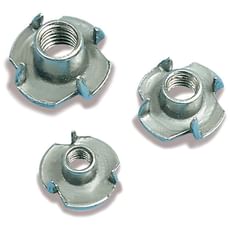
Pronged tee nuts are essential threaded fasteners designed to create strong, permanent anchoring points in wood, chipboard, MDF, plywood and other composite materials. Unlike standard nuts that require a bolt to pass through both sides of a material, pronged tee nuts embed directly into the workpiece, with sharp prongs that bite into the material to prevent rotation when tightening bolts or machine screws. The threaded barrel protrudes from one side, providing a secure fixing point for repeated assembly and disassembly without degrading the host material.
These versatile fixings consist of a cylindrical threaded body with a flat flange at one end, from which three or four sharp prongs extend. Installation is straightforward: a pilot hole is drilled to the correct diameter, the pronged tee nut is positioned with prongs facing the material, and it's hammered flush until the flange sits flat against the surface. The prongs grip the material fibres, creating a mechanical lock that distributes load effectively. Tooled-Up.com stocks pronged tee nuts in various thread sizes and materials to suit different applications, from furniture assembly to workshop jig construction.
The primary advantage of pronged tee nuts over alternative fastening methods is their ability to create robust, reusable threaded connections in materials too thin or soft to tap threads directly. They're particularly valuable in knockdown furniture, theatrical scenery, custom workbenches, equipment mounting and any application requiring frequent disassembly. The low profile design keeps fixings unobtrusive, whilst the pronged retention mechanism provides superior holding power compared to simple insert nuts or threaded inserts that rely solely on friction.
Jargon Buster
- Barrel: The threaded cylindrical portion of the tee nut that accepts bolts or machine screws. Available in various thread sizes including M4, M5, M6, M8 and imperial equivalents.
- Flange: The flat, disc-shaped portion at the top of the tee nut that sits flush against the material surface. The prongs extend from the underside of the flange to grip the workpiece.
- Prongs: Sharp, angled teeth that extend from the flange base, typically three or four in number. These bite into the material when hammered home, preventing rotation under torque and providing mechanical retention.
- Pilot Hole: The pre-drilled hole required before installation. Diameter must be precise – too small and the tee nut won't seat properly; too large and the prongs won't grip effectively.
- Thread Pitch: The distance between adjacent threads on the barrel, measured in millimetres for metric fasteners. Must match the corresponding bolt specification for proper engagement.
- Zinc Plating: Common protective coating applied to steel pronged tee nuts to prevent corrosion. Provides adequate protection for interior applications and workshop environments.
Who Uses Pronged Tee Nuts?
- Joiners and Cabinet Makers: For knockdown furniture construction, cabinet assembly and creating adjustable shelving systems that can be easily reconfigured.
- Carpenters: Installing reusable fixing points in timber frames, creating demountable connections for site work and temporary structures.
- Shopfitters: Assembling retail displays, exhibition stands and modular display systems requiring frequent reconfiguration without damaging panels.
- Theatre and Set Designers: Building scenery flats, platforms and props that need to be assembled and struck repeatedly throughout production runs.
- Workshop Enthusiasts and DIYers: Constructing jigs, fixtures, workbenches and tool storage systems with adjustable or replaceable components.
- Musical Instrument Makers: Creating secure mounting points in speaker cabinets, amplifier chassis and equipment racks built from plywood or MDF.
- Automotive and Vehicle Fitters: Installing fixtures within commercial vehicle fit-outs, camper van conversions and custom interiors using composite panel materials.
- Maintenance Engineers: Repairing damaged threads in wooden or composite equipment housings, machinery guards and access panels.
How to Choose the Right Pronged Tee Nuts
Thread Size and Type: Select the metric or imperial thread size matching your bolts or machine screws. Common sizes include M6 and M8 for general applications. The range at Tooled-Up includes industry-standard thread specifications compatible with widely available fasteners.
Material Thickness: Ensure the barrel length is appropriate for your workpiece thickness. The flange must seat flush whilst leaving sufficient barrel protruding for bolt engagement. For thin materials under 12mm, shorter barrel options prevent breakthrough; thicker stock may require longer barrels or countersinking the flange.
Material Type: Steel pronged tee nuts offer maximum strength for high-load applications but may corrode in damp environments unless plated. Stainless steel variants provide corrosion resistance for outdoor furniture or marine applications. Brass options suit decorative work where aesthetics matter.
Prong Configuration: Four-prong designs typically offer superior grip and rotation resistance compared to three-prong versions, particularly important for applications involving high torque or vibration. Consider prong length relative to material density – softer materials like pine accept longer prongs more easily than hardwoods.
Load Requirements: Assess whether the fixing will experience shear loads (parallel to material surface), tension loads (pulling perpendicular), or combined forces. Larger diameter tee nuts with more substantial flanges distribute loads more effectively, reducing the risk of pull-through in softer materials.
Quantity and Pack Sizes: For production work or large projects, bulk packs offer better value. Smaller quantities suit repair work or prototyping. Keep mixed sizes in your workshop for maximum flexibility across different applications.
Popular Accessories
- Machine Screws and Bolts: Hex head bolts, socket cap screws and button head machine screws in matching thread sizes for use with installed tee nuts.
- Pilot Hole Drill Bits: HSS or brad point bits in sizes corresponding to tee nut pilot hole requirements, ensuring accurate hole diameter for optimal grip.
- Countersink Bits: For flush-mounting tee nut flanges below the material surface when a completely flat finish is required.
- Dead Blow Hammers: Provide controlled impact force during installation without damaging the tee nut or surrounding material.
- Threaded Insert Tools: Installation drivers and setting tools for applications requiring precise seating depth and alignment.
- Thread Repair Kits: For situations where tee nut threads become damaged, though replacement is often more practical.
- Wrenches and Socket Sets: Appropriate spanners or sockets matching your bolt heads for assembly and disassembly of tee nut connections.
Safety Information
Installation Precautions: Always wear safety glasses when hammering pronged tee nuts into place, as the impact can occasionally cause wood splinters or metal fragments to become airborne. Ensure the workpiece is adequately supported and secured to prevent movement during installation – use clamps or a vice where practical.
Sharp Prongs: Handle pronged tee nuts carefully as the teeth are extremely sharp and can cause puncture injuries. Store them in compartmented boxes rather than loose in tool bags. When sorting through multiple fixings, tip them into a container rather than reaching into bags blindly.
Pre-Drilling Requirements: Never attempt to hammer a pronged tee nut into material without first drilling an appropriate pilot hole. Forcing installation can split the workpiece, particularly near edges, and may bend or break the prongs. Follow manufacturer specifications for pilot hole diameter precisely.
Load Limitations: Whilst pronged tee nuts provide excellent holding power in appropriate materials, they're not suitable for critical structural connections or load-bearing applications in building construction. Always assess whether the material substrate can support anticipated loads – tee nuts are only as strong as the material they're installed in.
Frequently Asked Questions
What size pilot hole do I need for pronged tee nuts?
Pilot hole diameter depends on the specific tee nut size and manufacturer specifications. As a general guide, the hole should be slightly larger than the barrel diameter but smaller than the flange diameter. For M6 tee nuts, typically 9-10mm; for M8, approximately 12-13mm. Check the packaging or manufacturer specifications for precise dimensions, as undersized holes prevent proper seating whilst oversized holes compromise prong grip.
Can pronged tee nuts be used in plasterboard or drywall?
Pronged tee nuts are not suitable for plasterboard, drywall or other friable materials. They require solid wood-based substrates like plywood, chipboard, MDF or solid timber to function effectively. The prongs need substantial material to bite into, and the flange must bear against material capable of resisting compression. For hollow wall applications, use specialist hollow wall anchors or toggle fixings instead.
How do I remove a pronged tee nut if I've installed it incorrectly?
Removal is challenging because the prongs create a mechanical lock. Insert a bolt partially into the threads, then use pliers or a claw hammer against the bolt head to lever the tee nut out. This typically damages both the tee nut and surrounding material, so prevention through careful measurement and test fitting is preferable. For flush-mounted installations, drilling out may be necessary, then filling and re-drilling.
Are pronged tee nuts reusable if I dismantle a project?
The tee nuts themselves remain functional through multiple bolt insertion cycles – that's their primary advantage. However, once installed in material, they cannot be removed and reinstalled elsewhere without damage. The threaded barrel accepts repeated bolt fastening and removal without degradation, making them ideal for furniture requiring regular disassembly for transport or reconfiguration.
What's the difference between pronged tee nuts and threaded inserts?
Pronged tee nuts install quickly with a hammer and require only a simple pilot hole, making them faster for production work. Threaded inserts typically screw or press into place, offering a neater appearance with no external flange and better suitability for end-grain applications. Tee nuts generally provide superior pull-out resistance due to the large flange area, whilst threaded inserts work better where flush external surfaces are essential. Choose based on your specific application requirements and installation preferences.