

PU Coated

Pay in 3 interest-free payments on purchases from £20-£3000 with  . Learn more.
 Loading...
End of content
Error - No more pages to load
About PU Coated
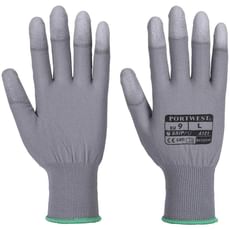
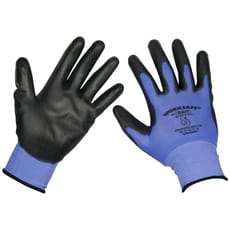
PU coated gloves represent one of the most versatile and widely-used forms of hand protection in professional and DIY settings. Featuring a polyurethane coating applied to a knitted liner—typically made from polyester or nylon—these gloves offer an exceptional balance of dexterity, grip, and protection. The PU coating is applied to either the palm and fingers or just the fingertips, creating a tactile surface that excels in handling small components, operating touchscreens, and working with materials in dry to slightly oily conditions.
The selection at Tooled-Up.com includes PU coated gloves from trusted manufacturers such as Portwest, Scan, Draper, and Sealey, each designed to meet EN388 safety standards while providing comfort during extended wear. These gloves are particularly valued for their breathability compared to heavier rubber or nitrile alternatives, making them ideal for precision work where prolonged hand fatigue can compromise safety and productivity. Many modern PU coated gloves now incorporate touchscreen compatibility, allowing workers to operate mobile devices and tablets without removing their protective equipment.
Available in various gauge weights—commonly 13 or 14 gauge—PU coated gloves cater to different applications, from general handling tasks to more demanding work requiring cut resistance levels up to Cut 5 protection. The elasticated wristbands ensure a secure fit whilst preventing debris ingress, and the lightweight construction means these gloves can be worn comfortably throughout an entire shift without the bulk associated with heavier-duty gloves.
Jargon Buster
- PU Coating (Polyurethane): A flexible polymer coating applied to glove palms and fingers that provides excellent grip, abrasion resistance, and tactile sensitivity whilst remaining breathable and comfortable.
- Gauge: Refers to the thickness and tightness of the knit in the glove liner—higher gauge numbers (e.g., 13 or 14 gauge) indicate a finer, more flexible knit that offers greater dexterity for precision work.
- EN388 Standard: The European safety standard for protective gloves against mechanical risks, with a four-digit code indicating performance levels for abrasion, cut, tear, and puncture resistance.
- Cut Resistance Level: A rating from 1 to 5 (or A to F under updated standards) that indicates a glove's ability to protect against cuts from sharp objects, with higher numbers providing greater protection.
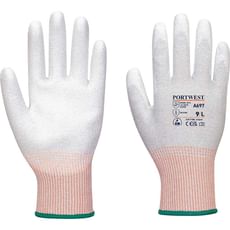
- ESD (Electrostatic Discharge): Gloves with ESD properties safely dissipate static electricity, protecting sensitive electronic components from damage during assembly or repair work.
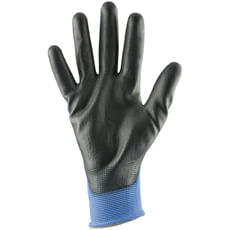
- Palm Dipped: A manufacturing process where the glove liner is dipped into liquid polyurethane, coating the palm and fingers whilst leaving the back of the hand uncoated for improved breathability.
Who Uses PU Coated?
PU coated gloves are essential hand protection across numerous trades and industries:
- Electricians and electronics technicians requiring dexterity and touchscreen compatibility
- Warehouse operatives and logistics workers handling packages and operating scanning equipment
- Assembly line workers and manufacturing staff managing small components and precision tasks
- Automotive mechanics working with clean parts and detailed repairs
- General maintenance personnel performing varied tasks throughout facilities
- Carpenters and joiners handling timber and operating power tools
- Painters and decorators requiring grip without compromising feel
- DIY enthusiasts undertaking home improvement and garden projects
- Retail and hospitality staff moving stock and performing cleaning duties
- Laboratory technicians handling equipment and materials in controlled environments
How to Choose the Right PU Coated
Selecting appropriate PU coated gloves depends on several key factors:
Coating Coverage: Full palm dipped gloves offer maximum protection and grip across the entire palm and fingers, ideal for general handling. Fingertip-coated options provide enhanced breathability and are preferable for tasks requiring maximum dexterity with minimal hand fatigue.
Cut Resistance Requirements: Assess the level of cut protection needed for your specific tasks. Cut Level 1 or 3 gloves from Tooled-Up suit general handling, whilst Cut Level 5 options provide substantially greater protection when working with sharp materials or glass.
Gauge and Dexterity: Higher gauge gloves (13-14 gauge) offer superior flexibility and tactile sensitivity for intricate work, whilst lower gauge options provide additional durability for more demanding applications.
Touchscreen Compatibility: If your work involves operating mobile devices, tablets, or touchscreen machinery, choose gloves specifically designed with conductive materials that allow touchscreen operation without removal.
Size and Fit: Properly fitted gloves are essential for both comfort and safety. Gloves that are too large compromise grip and dexterity, whilst undersized gloves cause fatigue and may tear prematurely. Most manufacturers offer sizes from small through to extra-large.
Special Features: Consider whether you require ESD protection for electronics work, enhanced wrist support, or specific compliance with industry standards for your sector.
Popular Accessories
- Glove Dispensers: Wall-mounted storage solutions for organised glove access in workshops and warehouses
- Hand Sanitiser and Skin Care Products: Maintaining hand hygiene before and after glove use
- Cut-Resistant Sleeves: Additional arm protection when working with sharp materials
- Safety Goggles and Face Protection: Complementary PPE for comprehensive workplace safety
- Tool Belts and Pouches: Convenient storage for gloves when temporarily removed
- High-Visibility Clothing: Essential for site work where visibility is paramount
Safety Information
Whilst PU coated gloves provide excellent protection for many applications, it's essential to understand their limitations. These gloves are designed primarily for mechanical risks in dry to slightly damp conditions—they are not suitable for handling hazardous chemicals, extreme heat, or molten materials. Always verify that the gloves meet the relevant EN388 standards for your specific application.
Inspect gloves before each use for signs of wear, punctures, or coating degradation, and replace damaged gloves immediately. PU coatings can degrade when exposed to certain oils and solvents, so ensure you select appropriate gloves for your working environment. When working with machinery, be aware that gloves can present entanglement hazards with rotating equipment—follow HSE guidance and your employer's risk assessments.
Replace gloves regularly according to usage intensity and manufacturer recommendations. Even without visible damage, the protective properties of PU coated gloves diminish over time, particularly with frequent washing or exposure to UV light.
Frequently Asked Questions
Can PU coated gloves be washed and reused?
Yes, most PU coated gloves can be hand washed in lukewarm water with mild soap and air dried away from direct heat sources. However, frequent washing will gradually reduce the coating's effectiveness, so it's important to inspect gloves regularly and replace them when grip performance diminishes.
What's the difference between PU and nitrile coated gloves?
PU coated gloves offer superior dexterity, breathability, and tactile sensitivity, making them ideal for precision work. Nitrile gloves provide better resistance to oils, chemicals, and punctures, suited to heavier-duty applications. For general handling and assembly work, PU coating typically provides better comfort during extended wear.
How long do PU coated gloves typically last?
Lifespan varies significantly based on usage intensity and working conditions. In light-duty applications, quality PU coated gloves may last several weeks, whilst heavy daily use might require replacement every few days. Visible coating wear, reduced grip, or any tears indicate immediate replacement is necessary.
Are PU coated gloves suitable for outdoor work in wet conditions?
PU coated gloves perform best in dry to slightly damp conditions. Whilst they maintain some grip when wet, their performance is significantly reduced compared to latex or nitrile alternatives. For consistently wet environments, consider gloves specifically designed for water resistance.
Do I need different gloves for different tasks?
For optimal safety and performance, yes. Whilst PU coated gloves are remarkably versatile, matching the glove specification to your specific task—considering cut resistance, coating coverage, and gauge—ensures maximum protection and comfort. Many professionals maintain several glove types for different applications throughout their workday.