

Pullers

Pay in 3 interest-free payments on purchases from £20-£3000 with  . Learn more.



Loading...
End of content
Error - No more pages to load
About Pullers
Pullers are indispensable mechanical tools engineered to safely extract tightly-fitted components from shafts, hubs, and housings without causing damage. From bearings and gears to pulleys and bushings, these versatile implements apply controlled force to remove parts that would otherwise be impossible to extract by hand. Whether you're tackling automotive repairs, maintaining industrial machinery, or undertaking engineering projects, the right puller transforms a potentially destructive task into a precise, controlled operation that preserves both the component being removed and the surrounding assemblies.
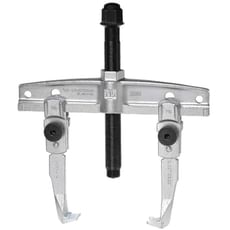
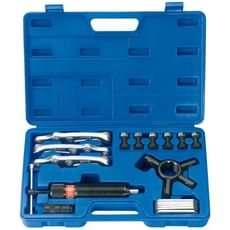
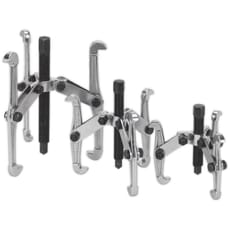
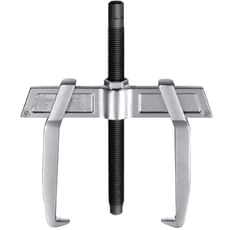
Tooled-Up.com supplies a comprehensive selection of pullers including two-leg and three-leg reversible gear pullers, bearing separators, hydraulic puller kits, slide hammers, and specialist automotive pullers designed for specific applications such as ball joints, coil-on-plug systems, and wheel hubs. The range features professional-grade equipment from leading manufacturers including Facom, Draper, and Sealey, offering solutions suitable for light-duty workshop tasks through to heavy industrial applications requiring up to 10 tonnes of pulling force.
Modern pullers combine robust construction with intelligent design features such as reversible jaws for internal and external pulling, self-centring mechanisms for even force distribution, and quick-adjustment systems that reduce setup time. Specialist pullers are engineered for particular vehicle makes or component types, ensuring proper fitment whilst minimising the risk of component damage during extraction. Chrome vanadium steel construction, hardened jaws, and precision-machined threads characterise quality pullers that deliver reliable performance across thousands of operations.
Jargon Buster
- Two-Leg vs Three-Leg Pullers: Refers to the number of arms that grip the component. Two-leg pullers excel in confined spaces and for smaller components, whilst three-leg pullers provide more stable, evenly-distributed force for larger items, reducing the risk of components slipping during extraction.
- Reversible Puller: A versatile puller design where the jaws can be flipped to pull either externally (gripping the outside of a component) or internally (pushing against an inner surface), making one tool suitable for multiple applications without requiring separate equipment.
- Bearing Separator: A specialised tool that clamps around the inner race of a bearing, providing a secure pulling point without damaging the bearing or surrounding components. Essential for removing bearings from shafts where there's no lip or shoulder to pull against.
- Slide Hammer: A puller that uses impact force generated by sliding a weight along a shaft to extract components. Particularly effective for dislodging stubborn parts like axle bearings, seals, and for dent removal applications.
- Hydraulic Puller: Uses hydraulic pressure rather than manual force to extract components, capable of generating significantly higher pulling forces (often 5-20 tonnes) for industrial applications and extremely tight-fitting parts that resist conventional pulling methods.
- Jaw Capacity: The maximum reach or spread of the puller's legs, determining the largest component diameter you can grip. Always verify this measurement matches your application requirements before purchasing.
Who Uses Pullers?
- Motor Vehicle Technicians: Removing bearings, gears, pulleys, ball joints, and steering components during automotive repairs and routine servicing
- Agricultural Engineers: Maintaining farm machinery, tractors, and harvesting equipment where bearings and gears require regular replacement
- Plant Maintenance Engineers: Servicing industrial machinery, conveyor systems, pumps, and manufacturing equipment in factories and processing plants
- HGV and Plant Mechanics: Working on heavy goods vehicles, construction equipment, and plant machinery with large-capacity bearings and components
- Marine Engineers: Maintaining boat engines, winches, and marine equipment where corrosion often makes component removal particularly challenging
- Bicycle Mechanics: Removing bottom brackets, bearings, and pressed-in components from bicycle frames and forks
- DIY Enthusiasts: Tackling home vehicle maintenance, machinery repairs, and restoration projects requiring professional-standard tools
- Engineering Workshops: General fabrication and repair facilities working across multiple sectors requiring versatile pulling equipment for diverse applications
How to Choose the Right Pullers
Identify Your Primary Applications: Consider the most common components you'll be removing. General workshop use typically requires a good quality two-leg and three-leg reversible puller set, whilst specialist automotive work may benefit from application-specific pullers for ball joints, coil packs, or wheel hubs. The Draper bearing separator and puller sets available at Tooled-Up provide maximum versatility for those working across varied disciplines.
Assess Required Capacity: Match the puller's rated capacity to your needs. Light automotive and general workshop tasks typically require pullers with 2-5 tonne capacity, whilst industrial machinery and heavy plant maintenance may demand hydraulic pullers rated at 10-20 tonnes. Check both the maximum pulling force and the jaw spread capacity to ensure the tool physically fits your components.
Consider Jaw Configuration: Two-leg pullers excel in tight spaces and provide adequate grip for most small to medium components. Three-leg pullers offer superior stability and force distribution for larger items, reducing the risk of slippage. Reversible designs provide the flexibility to tackle both internal and external pulling tasks with a single tool, offering excellent value for money.
Evaluate Build Quality: Professional-grade pullers from brands like Facom, Draper, and Sealey feature hardened steel construction, precision-machined threads, and properly heat-treated components that withstand repeated high-stress use. Drop-forged steel jaws resist spreading under load, whilst quality thread mechanisms ensure smooth, controlled force application. Chrome vanadium steel with black oxide finishes provides corrosion resistance for long-term durability.
Think About Specialist Requirements: Vehicle-specific pullers designed for particular makes (such as the Draper Coil On Plug Puller for VW applications) ensure proper fitment and reduce the risk of expensive component damage. If you frequently work on specific vehicle types or equipment brands, these targeted tools can prove invaluable despite their specialised nature.
Don't Forget Slide Hammers: These impact-based pullers complement traditional threaded pullers and excel at removing components where there's limited grip surface or where gradual force isn't effective. A slide hammer with interchangeable adapters expands your capability considerably for stubborn extraction jobs.
Popular Accessories
- Bearing Separator Sets: Essential companions to pullers, providing secure gripping points on bearing inner races for safe extraction
- Adapter Sets: Extend puller versatility with different jaw configurations, internal pulling attachments, and specialist hooks for various applications
- Hydraulic Pump Units: Power source for hydraulic pullers, available in manual and powered versions for different capacity requirements
- Penetrating Lubricants: Products like WD-40 Specialist or Plus Gas help free corroded components before pulling, reducing required force
- Torque Wrenches: Ensure proper, controlled force application when tightening puller centre bolts without exceeding safe limits
- Pressing Tools: Complementary to pullers for reinstalling bearings, bushings, and pressed components after maintenance work
- Engineers' Tool Storage: Organise puller sets and accessories in tool chests, drawer inserts, or dedicated blow moulded cases
- Heating Equipment: Heat guns or induction heaters assist difficult extractions by expanding outer components to reduce interference fit
Safety Information
Personal Protection: Always wear safety glasses or goggles when using pullers, as sudden component release or tool failure can propel parts at high velocity. Steel-toed safety boots protect against dropped components, whilst work gloves provide grip and protect against sharp edges and hot surfaces if heat has been applied to assist extraction.
Tool Inspection: Before each use, inspect pullers for signs of damage including cracked jaws, bent legs, damaged threads, or deformed centre screws. Never exceed the manufacturer's rated capacity, as overloading can cause catastrophic tool failure. Replace worn or damaged components immediately – attempting repairs or continued use of damaged pullers creates serious safety hazards.
Proper Setup: Ensure puller jaws are securely positioned with even contact around the component. Misaligned or partially-engaged jaws can slip under load, potentially causing injury or component damage. Always apply force gradually and steadily, monitoring the setup throughout the extraction process. If a component refuses to move, stop and reassess rather than applying excessive force.
Work Area Management: Secure the workpiece properly before applying pulling force. Components under high tension store considerable energy and can move violently when released. Keep hands, face, and body clear of the direct line of force, and ensure bystanders maintain a safe distance during pulling operations in accordance with HSE guidance for workshop safety.
Frequently Asked Questions
What's the difference between internal and external pulling?
External pulling is the most common method where the puller jaws grip around the outside of a component (like a bearing or gear) and the centre screw pushes against the shaft to extract it. Internal pulling reverses this – the jaws push outward against an internal surface whilst the centre screw pulls against a threaded adapter or the shaft end. Reversible pullers can perform both functions by flipping the jaw configuration, offering excellent versatility.
Can I use a two-leg puller for all applications?
Whilst two-leg pullers handle many tasks and work better in confined spaces, three-leg pullers provide more stable, evenly-distributed force that reduces the risk of components tilting or jaws slipping during extraction. For larger components, heavy-duty applications, or whenever maximum stability is needed, a three-leg puller is the safer, more effective choice. Many professionals keep both types available for different situations.
How do I know what capacity puller I need?
Start by considering the size and fit tightness of components you typically work with. Light automotive work, bicycle repair, and general machinery maintenance usually requires 2-5 tonne capacity. Industrial machinery, agricultural equipment, and heavy plant maintenance often demands 10-20 tonne hydraulic pullers. If a component won't move with appropriate force, applying heat or penetrating oil is safer than using an undersized puller beyond its rated capacity.
Why won't my puller extract the bearing?
Common issues include insufficient pulling capacity, improper jaw positioning, or corrosion creating excessive resistance. Ensure jaws are positioned correctly behind the component's shoulder with even contact all round. Try applying penetrating lubricant and allowing time to work, or carefully heat the surrounding housing (not the bearing itself) to expand it slightly. If the component still won't move, you may need a higher-capacity puller or hydraulic assistance.
Do I need vehicle-specific pullers or will universal pullers work?
Universal pullers handle the majority of general workshop tasks effectively and represent excellent value for varied work. However, vehicle-specific pullers designed for applications like VW coil-on-plug systems, particular ball joint configurations, or manufacturer-specific wheel hub designs ensure proper fitment, reduce the risk of expensive component damage, and often make challenging jobs significantly easier. If you regularly service specific vehicle makes, targeted specialist pullers prove their worth quickly.