

Punch Pliers

Pay in 3 interest-free payments on purchases from £20-£3000 with  . Learn more.
 Loading...
End of content
Error - No more pages to load
About Punch Pliers
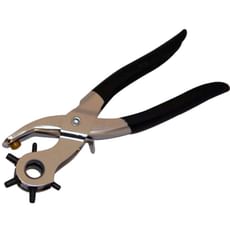
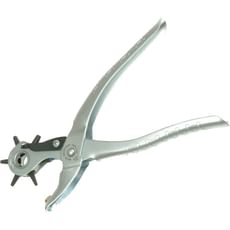
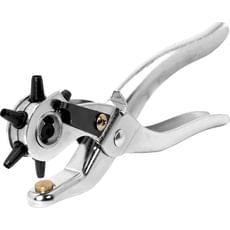
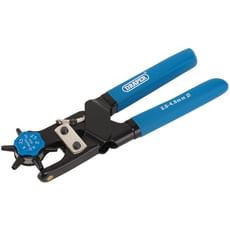
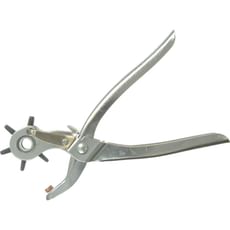
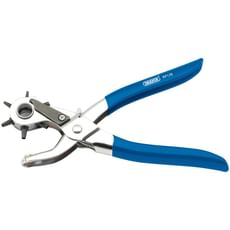
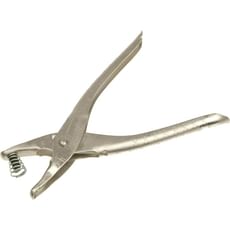
Punch pliers are versatile hand tools designed to create clean, precise holes in a variety of materials including leather, plastic, rubber, canvas, paper, and thin sheet metal. Unlike traditional hole punches that require a stable surface and manual force, punch pliers offer the convenience of one-handed operation with a lever-action mechanism that generates significant punching power. The most common type features a revolving head with multiple punch sizes, allowing tradespeople and craftspeople to switch between different hole diameters quickly without changing tools.
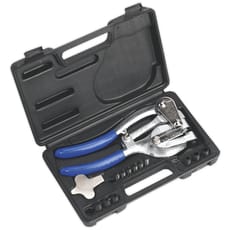
The selection available from Tooled-Up.com includes revolving hole punch pliers, eyelet pliers, leather punch pliers, and specialist sheet metal punch sets from trusted brands including Draper, Maun, Rapid, and Faithfull. Revolving models typically feature between four and six punch sizes ranging from 2mm to 4.8mm, with hardened carbon steel cutting heads that maintain sharpness through repeated use. Many modern designs incorporate waste collection chambers that capture the punched-out material, keeping workspaces cleaner and preventing debris from interfering with precision work.
Professional-grade punch pliers feature pressed steel frames with ergonomic handles, often plastic-coated for improved grip and reduced hand fatigue during extended use. Whether you're fitting eyelets in tarpaulins, creating ventilation holes in plastic enclosures, punching holes for leather goods, or preparing materials for riveting, punch pliers deliver consistent, burr-free results that manual awls and drills cannot match for speed and convenience.
Jargon Buster
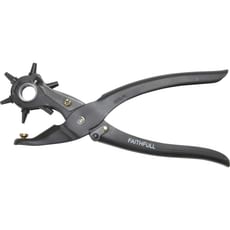
- Revolving Head: A rotating turret mechanism that houses multiple punch sizes, allowing quick selection of different hole diameters by simply turning the head to align the desired size with the anvil.
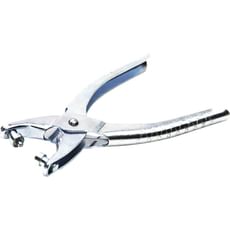
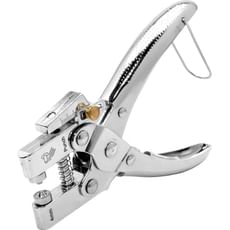
- Eyelet Pliers: Specialised punch pliers designed not only to create holes but also to set metal eyelets or grommets, featuring a dual-action mechanism with interchangeable dies for different eyelet sizes.
- Anvil: The solid metal base component against which the punch cuts, providing the necessary resistance to create a clean hole without tearing or distorting the material.
- Waste Collection Chamber: A built-in compartment that captures the circular material pieces (slugs) removed during punching, preventing them from falling onto work surfaces or machinery.
- Throat Depth: The distance from the punch point to the frame of the pliers, determining how far from the edge of a material you can create a hole—critical when working with larger sheets or items.
- Hardened Steel Punches: Cutting heads manufactured from heat-treated carbon or tool steel that maintain sharp edges through thousands of punches without dulling or deforming.
Who Uses Punch Pliers?
- Leather Workers & Cobblers: Creating holes for stitching, lacing, and fitting buckles in belts, bags, shoes, and other leather goods
- Upholsterers: Punching holes in leather, vinyl, and fabric for buttons, fixings, and decorative detailing
- Saddlers & Equestrian Professionals: Adjusting and repairing tack, bridles, saddles, and horse blankets
- Canvas & Sailmakers: Creating drainage holes, fitting eyelets, and preparing materials for lashing and reinforcement
- Electricians: Punching holes in gaskets, seals, and plastic enclosures for cable entry points
- Sheet Metal Workers: Creating pilot holes and small apertures in thin gauge materials before further fabrication
- Sign Makers: Preparing mounting holes in vinyl, plastic, and composite signage materials
- Craft Workers & Hobbyists: Card making, scrapbooking, model making, and general DIY projects requiring clean holes
- Automotive Trimmers: Working with interior materials, headlinings, and trim components
- Tent & Marquee Repairers: Fitting eyelets and creating drainage holes in canvas and synthetic fabrics
How to Choose the Right Punch Pliers
Punch Size Range: Consider the hole diameters you'll need most frequently. Revolving models at Tooled-Up typically offer between four and six sizes from 2mm to 4.8mm, whilst specialist sets may include larger diameters up to 12mm or more. For general leatherwork and fabric applications, a standard revolving punch with 2mm to 5mm sizes proves most versatile.
Material Compatibility: Different punch pliers suit different materials. Leather punch pliers work excellently on organic materials and soft plastics, whilst sheet metal punch sets feature more robust construction and harder cutting edges for thin gauge steel, aluminium, and copper. Check the manufacturer's specifications for maximum material thickness—typically ranging from 2mm for leather to 1.2mm for sheet metal.
Build Quality & Frame Strength: Professional tradespeople should prioritise pressed steel or forged frames over lightweight aluminium construction. Tooled-Up stocks heavy-duty models from brands like Draper Expert and Maun that withstand daily site use without frame flex or misalignment, which can cause incomplete cuts or torn materials.
Handle Design: Ergonomic, plastic-coated handles reduce hand fatigue and improve grip, particularly important when punching large quantities of holes. Spring-return mechanisms automatically open the jaws after each punch, speeding up repetitive work. Consider handle length too—longer handles provide greater leverage for tougher materials.
Throat Depth: This often-overlooked specification determines how far from an edge you can punch. Standard models offer 25-40mm throat depth, sufficient for belt holes and edge work, whilst specialist long-reach models extend to 75mm or more for centre-area punching on larger items.
Additional Features: Waste collection chambers keep your workspace tidy and are particularly valuable for site work. Eyelet setting capability adds versatility if you regularly fit grommets. Replaceable punch heads extend tool life and represent better long-term value for professional users.
Popular Accessories
- Replacement Punch Heads: Individual cutting heads for specific sizes, extending tool life when particular sizes wear
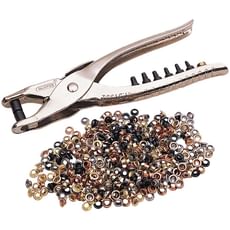
- Eyelet & Grommet Assortments: Metal reinforcing rings in various sizes and finishes for strengthening punched holes
- Setting Dies: Interchangeable anvils and punches for fitting different eyelet sizes
- Cutting Mats: Self-healing work surfaces protecting benches when using hand-held punch tools
- Leather Conditioner & Care Products: Maintaining material quality before and after punching
- Marking Tools: Centre punches, scribers, and marking gauges for accurate hole positioning
- Rivet Sets: Complementary tools for creating permanent fastenings through punched holes
- Tool Rolls & Storage: Protecting punch pliers during transport and keeping accessories organised
- Lubricating Oil: Maintaining pivot points and cutting edges for smooth operation
Safety Information
Hand Protection: Always position hands and fingers well clear of the punch area. The lever action generates considerable force, and pinch points between handles can cause injury. Never place fingers behind the material being punched.
Eye Protection: Whilst waste collection chambers capture most debris, small material fragments can occasionally eject from the tool, particularly when punching brittle plastics or very hard materials. Safety glasses are recommended for extended use.
Secure Material Positioning: Ensure the workpiece is stable and won't slip during punching. Movement can cause incomplete cuts, torn edges, or tool slippage. Use a stable work surface or clamp materials when possible.
Tool Maintenance: Keep cutting edges sharp and clean. Dull punches require excessive force, increasing fatigue and the risk of tool slippage. Blunt punches also produce ragged holes with raised burrs that can cause cuts when handling finished work.
Material Thickness Limits: Never exceed the manufacturer's specified maximum thickness. Forcing the tool through overly thick materials can damage cutting edges, bend the frame, or cause sudden mechanical failure.
Frequently Asked Questions
What's the difference between punch pliers and a traditional hole punch?
Punch pliers use a lever-action mechanism similar to pliers, allowing one-handed operation and the ability to punch holes anywhere on a material, not just at edges. Traditional desktop hole punches require a flat surface and can only reach a limited distance from the edge. Punch pliers are portable and versatile, whilst desktop punches typically offer greater capacity for punching through multiple sheets simultaneously.
Can I use leather punch pliers on sheet metal?
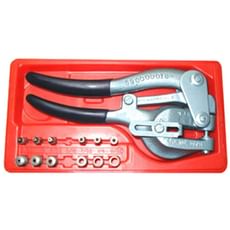
Standard leather punch pliers are designed for softer materials and will quickly dull or damage when used on metal. For sheet metal work, choose specialist metal punch sets with hardened steel cutting edges. Browse the range at Tooled-Up.com to find models specifically rated for thin gauge steel, aluminium, and other metals, such as the Whitney sheet metal punch sets.
How do I sharpen punch pliers?
Most punch pliers feature hardened steel cutting edges that cannot be effectively sharpened with conventional methods. Instead, replace worn punch heads with new ones—many professional models offer replaceable punches. To extend cutting life, clean punches regularly, avoid punching materials contaminated with abrasives, and lubricate pivot points to maintain smooth operation.
Why do my punched holes have rough edges?
Rough or torn edges typically result from dull cutting edges, punching through materials that are too thick, or insufficient pressure during the punch stroke. Ensure you're using sharp punches appropriate for your material type and thickness. Complete each punch with one firm, decisive action rather than multiple partial strokes, and always punch onto the tool's anvil—never against a soft surface.
What size holes should I punch for different eyelet sizes?
Hole diameter should match the eyelet's barrel size, not the flange diameter. Most eyelet packaging specifies the required punch size, typically ranging from 3mm to 5mm for common applications. If in doubt, test on scrap material first. The hole should allow the eyelet barrel to pass through cleanly without forcing, but shouldn't be so loose that the flange doesn't grip securely when set.