

Rack Clamps
Pay in 3 interest-free payments on purchases from £30-2000 with  . Learn more.
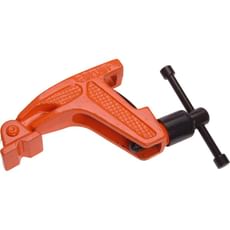
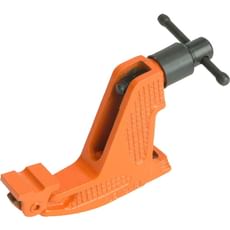

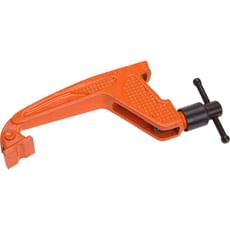
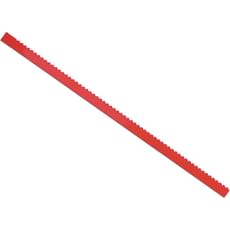
 Loading...
End of content
Error - No more pages to load
About Rack Clamps
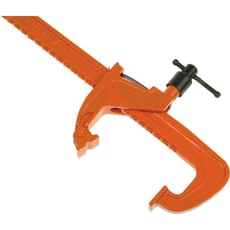
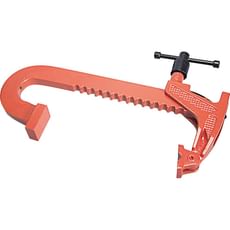
Rack clamps are heavy-duty metalworking clamps specifically engineered for demanding workshop environments, particularly welding and fabrication applications. Unlike conventional quick-release clamps or G-clamps, rack clamps feature a unique design with a fixed jaw and bar paired with a moveable jaw that slides rapidly along a toothed rack mechanism before being locked firmly in place. This design allows for quick positioning and secure clamping without exposed threads that could become damaged by welding spatter, grinding debris, or metalworking fluids. The all-metal construction ensures exceptional durability and longevity in harsh workshop conditions where other clamps might fail.
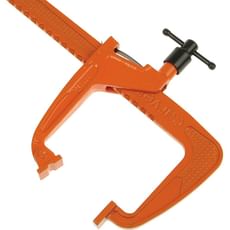
The versatility of rack clamps extends beyond simple clamping applications. Many models feature reversible jaws that transform the tool into a spreader, making them invaluable for panel work, body repairs, and situations requiring outward force rather than inward pressure. Available in various throat depths and reaching capacities, these clamps can accommodate everything from small fabrication projects to large structural assemblies. Tooled-Up.com stocks the renowned Carver range of rack clamps, which have become the benchmark for quality and reliability among UK tradespeople and serious DIY enthusiasts.
The product selection includes standard duty models ideal for general workshop use, medium duty variants for more demanding applications, and long reach versions that provide extended throat depth for working on larger workpieces. Replacement parts such as moveable jaws and bars are also available, allowing users to maintain and extend the working life of their investment or adapt existing clamps to different task requirements.
Jargon Buster
- Rack Mechanism: A toothed bar system that allows the moveable jaw to slide freely along the clamp bar before being locked into position at precise intervals, providing quick adjustment without rotating a screw thread.
- Throat Depth: The distance from the jaw face to the supporting bar, determining how far into a workpiece the clamp can reach. Standard models typically offer 80-100mm depth, whilst long reach versions extend to 150-300mm or more.
- Clamping Force (daN): The maximum pressure a clamp can exert, measured in decanewtons. Higher values indicate greater holding power, with standard duty clamps typically delivering around 850 daN and heavy-duty models exceeding this significantly.
- Reversible Jaws: Jaw assemblies that can be removed and repositioned to convert the clamp from applying inward pressure (clamping) to outward force (spreading), adding versatility to the tool.
- Fixed Jaw: The stationary jaw permanently attached to one end of the clamp bar, providing a solid reference point against which the workpiece is secured.
- Moveable Jaw: The sliding jaw component that travels along the rack bar to accommodate different workpiece sizes and applies the clamping pressure when locked in position.
Who Uses Rack Clamps?
Rack clamps are essential tools for various trades and applications:
- Welders and Fabricators: Primary users who require spatter-resistant clamps for securing steel assemblies, framework, and fabricated components during welding operations.
- Automotive Body Repair Technicians: Professionals who use rack clamps for panel alignment, body straightening work, and securing components during repair and restoration projects.
- Metal Workshop Owners: General engineering workshops, machine shops, and maintenance facilities that require robust clamping solutions for metalworking tasks.
- Agricultural Engineers: Farm machinery repair specialists who need durable clamps capable of withstanding outdoor workshop environments and heavy-duty applications.
- Structural Steel Workers: Construction professionals working with steel framework, railings, and structural assemblies that require secure positioning during fabrication.
- Maintenance Fitters: Industrial maintenance personnel who need reliable clamping tools for equipment repairs, modifications, and fabrication work on-site.
- Educational Institutions: Technical colleges, training centres, and schools with metalwork or fabrication departments requiring durable equipment for teaching purposes.
- Serious DIY Enthusiasts: Home workshop owners undertaking metal fabrication projects, restorations, or repairs who require professional-grade tools.
How to Choose the Right Rack Clamps
Selecting appropriate rack clamps depends on several key factors that match the tool to your specific requirements:
Duty Rating: Consider the intensity and frequency of use. Standard duty models suit occasional workshop use and lighter materials, whilst medium and heavy-duty variants are necessary for daily professional use and thicker materials. The clamping force specification indicates holding power, with higher daN ratings providing greater security for demanding applications.
Throat Depth Requirements: Assess the typical size of workpieces you'll be clamping. Standard rack clamps with 80-100mm throat depth suffice for most small to medium fabrication work, but long reach models extending to 150-300mm become essential when working on larger assemblies, deep channels, or situations requiring access further into the workpiece.
Jaw Versatility: Determine whether you need spreading capability alongside standard clamping. Models with reversible jaws offer greater versatility, eliminating the need to purchase separate spreading tools. This feature proves particularly valuable for panel work, body repairs, and situations requiring both compression and expansion forces.
Replacement Parts Availability: Choose systems where replacement jaws and bars are readily available from Tooled-Up, allowing you to maintain your tools economically and adapt them to different applications without purchasing entirely new clamps.
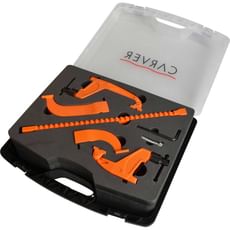
Set Options: Multi-clamp sets combining different sizes in a dedicated carry case provide excellent value and versatility for workshops handling varied projects. These sets typically include standard and long reach variants with interchangeable components, offering comprehensive clamping solutions in one package.
Brand Reputation: The Carver range represents the gold standard in UK workshops, with proven durability and widespread parts availability ensuring long-term value and reliability.
Popular Accessories
- Replacement Moveable Jaws: Spare jaw assemblies for standard, medium, and long reach models, allowing quick replacement of worn components or adaptation of existing clamps to different configurations.
- Replacement Bars: Additional or replacement clamp bars in various lengths, enabling extension of clamping capacity or restoration of damaged tools.
- Welding Magnets: Complementary positioning tools that work alongside rack clamps to hold metal components at precise angles during assembly and welding.
- Protective Jaw Covers: Soft covers or pads that protect finished surfaces from jaw marking when clamping painted, polished, or delicate metal components.
- Storage Cases: Dedicated carry cases for organising and transporting multiple clamps and accessories, protecting them from workshop damage and improving efficiency.
- Welding Tables and Fixtures: Dedicated work surfaces with mounting points and features that complement rack clamp usage in fabrication environments.
- Engineer's Squares and Angle Finders: Precision measuring tools used alongside clamps to ensure accurate workpiece positioning before securing.
Safety Information
Whilst rack clamps are relatively straightforward tools, observing proper safety practices ensures effective and safe operation:
Secure Positioning: Always ensure clamps are properly engaged with adequate thread or rack teeth engaged before applying full pressure. Insufficient engagement may result in slippage or sudden release, potentially causing workpiece movement or injury.
Appropriate Force: Avoid over-tightening, which can damage workpieces, distort thin materials, or stress the clamp mechanism beyond its design limits. Apply sufficient pressure to secure the work without excessive force.
Welding Spatter Protection: Although designed for welding environments, periodically clean accumulated spatter from rack mechanisms to maintain smooth operation and prevent premature wear. Allow clamps to cool before handling after welding operations.
Regular Inspection: Check clamps for signs of damage, wear, or distortion before use. Damaged tools should be repaired or replaced to prevent failure during operation. Pay particular attention to jaw condition, rack teeth integrity, and bar straightness.
Proper Storage: Store rack clamps in dry conditions to prevent rust and corrosion. Keep jaws slightly open when not in use to avoid stress on the mechanism and ensure they're ready for immediate deployment.
Personal Protective Equipment: When using rack clamps during welding, grinding, or other metalworking operations, always wear appropriate PPE including safety glasses, welding helmets, gloves, and protective clothing as required by HSE guidelines and the specific task being performed.
Frequently Asked Questions
What's the difference between standard and long reach rack clamps?
The primary difference lies in throat depth – the distance from the jaw face to the supporting bar. Standard models typically offer 80-100mm depth, suitable for most general workshop applications, whilst long reach versions extend to 150-300mm or more, providing access deeper into workpieces or around larger assemblies. Long reach clamps are essential for automotive body work, large fabrications, and situations where standard depth proves inadequate.
Can rack clamp jaws be used in reverse for spreading applications?
Many rack clamp models feature reversible jaws that can be removed and repositioned to convert the clamp into a spreader, applying outward rather than inward force. This versatility makes them valuable for panel separation, body work, and various fabrication tasks. However, not all models offer this feature, so check product specifications at Tooled-Up.com before purchasing if spreading capability is required.
How do rack clamps withstand welding environments better than standard clamps?
Rack clamps feature all-metal construction without exposed threads or mechanisms that could be damaged by welding spatter, grinding debris, or heat. The rack mechanism remains protected within the bar, and the absence of external threads means spatter cannot fuse moving parts together. This design ensures reliable operation in harsh metalworking environments where conventional threaded clamps would quickly fail or become difficult to operate.
Are replacement parts available for Carver rack clamps?
Yes, replacement moveable jaws and bars are available for the Carver range, allowing economical repair and maintenance rather than complete replacement. This parts availability extends tool life significantly and enables adaptation of existing clamps to different configurations, making them a cost-effective long-term investment for professional workshops.
What clamping force do I need for typical fabrication work?
Standard duty rack clamps typically provide around 850 daN clamping force, sufficient for most general fabrication, light to medium welding, and workshop applications. Medium and heavy-duty models offer higher forces for thicker materials, structural work, or situations requiring maximum holding power. For typical workshop tasks involving mild steel up to 10mm thickness, standard duty models prove adequate, whilst heavier structural work benefits from medium or heavy-duty variants.