

Radial Arm Saws
Pay in 3 interest-free payments on purchases from £30-2000 with  . Learn more.
 Loading...
End of content
Error - No more pages to load
About Radial Arm Saws
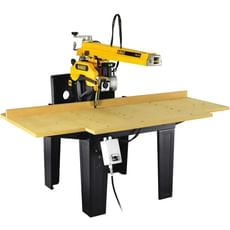
Radial arm saws are heavy-duty workshop machines designed for precision crosscutting, mitreing, ripping, and bevelling operations in professional joinery shops, carpentry workshops, and well-equipped home workshops. Unlike standard mitre saws or table saws, these powerful tools feature a horizontal arm mounted above the work surface, with the blade and motor assembly travelling along the arm to make cuts. This distinctive configuration allows the workpiece to remain stationary whilst the cutting head moves, making radial arm saws particularly effective for handling long lengths of timber, wide boards, and sheet materials with exceptional accuracy and repeatability.
These versatile machines have earned their place in professional workshops where repetitive, accurate crosscuts are essential to daily operations. The radial arm saw's ability to perform multiple cutting operations—including dado cuts, housings, rebates, and compound angles—makes it an extremely productive tool for joinery and carpentry work. Modern models feature robust cast iron construction, powerful motors typically ranging from 2000W to 4000W running on 240v UK mains supply, and comprehensive dust extraction capabilities to maintain clean and safe working conditions throughout extended cutting sessions.
Tooled-Up.com stocks professional-grade radial arm saws from industry-leading manufacturers such as DeWalt, renowned for their reliability, precision engineering, and ability to withstand the demanding conditions of daily commercial use. These machines are built to deliver the accuracy required for fine joinery whilst handling the heavy workloads of timber yards, shopfitting operations, and busy construction workshops.
Jargon Buster
- Crosscut Capacity: The maximum width of material the saw can cut perpendicular to the grain when the radial arm is positioned at 90 degrees. Professional models typically offer crosscut capacities between 600mm and 750mm, allowing them to handle standard sheet materials, wide boards, and door frames in a single pass.
- Radial Arm: The horizontal beam that extends over the worktable, along which the motor and blade assembly travels during cutting operations. The arm can typically be rotated and locked at various angles for precise mitre cuts, with positive stops at common angles for speed and accuracy.
- Yoke: The carriage assembly that holds the motor and blade, allowing it to move smoothly along the radial arm during cutting. Quality yokes feature precision ball bearings for smooth, vibration-free operation and can often be tilted for bevel cuts.
- Rip Capacity: The maximum width of material that can be cut parallel to the grain when the saw is configured for ripping operations. This is achieved by rotating the yoke assembly 90 degrees along the radial arm, though table saws generally offer superior performance for extensive ripping work.
- Depth of Cut: The maximum thickness of material the blade can cut through in a single pass, typically ranging from 80mm to 100mm on professional models. This capacity is reduced when making bevel cuts due to the angled blade position.
- Soft Start: An electronic motor control feature that gradually increases motor speed during start-up, reducing mechanical stress on the machine components and preventing power surges on workshop electrical circuits, particularly important with high-powered 240v motors.
Who Uses Radial Arm Saws?
- Joiners and Carpenters: For precision cutting of door frames, window casings, architraves, skirting boards, and bespoke joinery components requiring repeatable accuracy
- Shopfitters: For cutting display fixtures, shelving units, retail installations, and point-of-sale displays with consistent dimensions across multiple identical pieces
- Furniture Makers: For dimensioning timber stock, creating housings and joints, and producing multiple identical components for tables, chairs, cabinets, and fitted furniture
- Contractors and Builders: For workshop-based cutting of structural timber, flooring materials, trim work, and construction components requiring precision and repeatability
- Timber Merchants and Lumberyards: For processing raw stock and dimensioning timber to customer specifications with speed and accuracy
- Educational Workshops: In colleges, training centres, and apprenticeship programmes teaching traditional and modern woodworking skills and carpentry techniques
- Serious DIY Enthusiasts: Home workshop owners undertaking substantial renovation projects, furniture making, or restoration work requiring professional-grade cutting capabilities
- Restoration Specialists: For precise cutting when restoring period properties, matching existing joinery, and fabricating replacement architectural woodwork
How to Choose the Right Radial Arm Saws
Motor Power and Performance: Professional radial arm saws feature motors ranging from 2000W to 4000W, providing ample power for cutting hardwoods, dense materials, and thick stock without bogging down. Consider the types of timber you'll be cutting most frequently—hardwoods like oak and ash require more powerful motors, whilst softwood joinery work can be accomplished with moderately powered machines. Ensure the motor is designed for UK 240v electrical supply and consider soft-start functionality to protect your workshop circuits.
Cutting Capacity: Assess both the crosscut capacity (width) and depth of cut required for your typical projects. Models with 600-750mm crosscut capacity handle most standard applications including door frames and wide boards, whilst depths of cut typically ranging from 80mm to 100mm accommodate substantial stock and allow for bevelled cuts without compromising capacity. Consider whether you regularly work with oversized materials that would benefit from maximum capacity.
Build Quality and Accuracy: Look for machines with rigid construction, precision-machined components, and minimal play in the radial arm and yoke assembly. Cast iron construction or heavy-gauge steel fabrication ensures longevity and maintains accuracy over years of professional use. Quality ball bearings, smooth adjustment mechanisms, and robust locking systems are essential for professional results and repeatable accuracy across production runs.
Dust Extraction: Effective dust collection is crucial for maintaining visibility of cutting lines, protecting respiratory health, and keeping your workshop clean and compliant with HSE regulations. Choose models with integrated dust ports compatible with standard 100mm extraction hoses, and consider the overall efficiency of the dust collection shroud design. Connection to a proper workshop vacuum or dust extraction system is essential for professional use.
Safety Features: Modern machines available from Tooled-Up should include comprehensive blade guards, electric brakes for rapid blade stopping, and clearly visible emergency stop buttons positioned for quick access. Soft-start functionality protects both the machine and your electrical supply whilst improving operator control during start-up. Ensure all safety features comply with current UK machinery safety regulations.
Workspace Considerations: Radial arm saws require substantial floor space and ideally should be permanently mounted on a sturdy bench or dedicated stand bolted to the workshop floor. Ensure you have adequate space on both sides of the machine for handling long materials safely—typically 3-4 metres clearance—plus operator access space in front and room behind for dust extraction connections and maintenance access.
Popular Accessories
- TCT Saw Blades: Tungsten carbide-tipped blades in various tooth configurations and diameters for crosscutting, ripping, fine finishing work, and cutting different materials. Keep multiple blades dedicated to specific applications for optimal results.
- Dado Heads: Specialised blade sets for cutting grooves, housings, and rebates with a single pass, significantly improving productivity for joinery work and eliminating the need for multiple passes with standard blades.
- Dust Extraction Hoses and Adaptors: High-quality 100mm diameter hoses, reducers, and fittings to connect your radial arm saw to workshop vacuum systems and extraction units for effective dust removal and HSE compliance.
- Mobile Bases and Stands: Heavy-duty wheeled bases allowing you to reposition substantial workshop machines whilst maintaining rigid stability during operation, particularly useful in shared workshop spaces.
- Roller Stands and Outfeed Tables: Support systems for handling long workpieces safely, reducing the risk of material sagging, binding during cuts, or tipping the workpiece during operation.
- Push Sticks and Hold-Downs: Essential safety accessories for keeping hands away from the blade whilst maintaining positive control of smaller workpieces throughout the cutting operation.
- Measuring and Marking Guides: Flip stops, length gauges, digital readouts, and precision measuring systems for setting up repetitive cuts with speed and accuracy across production runs.
- Replacement Guards and Safety Equipment: Spare blade guards, anti-kickback devices, and safety accessories to maintain compliance with workshop safety standards throughout the machine's service life.
Safety Information
Radial arm saws are powerful industrial machines that demand respect and proper safety practices at all times. Always wear appropriate personal protective equipment including safety glasses or a full face shield to protect against flying debris, hearing protection rated for industrial machinery noise, and ensure loose clothing, jewellery, and long hair are properly secured. Never wear gloves when operating the saw, as they can catch on the rotating blade and pull your hand into the cutting area.
Ensure the machine is properly earthed and connected to a suitably rated electrical supply in compliance with UK BS 7671 wiring regulations. The motor should be supplied with clean 240v mains power through appropriately rated cabling and circuit protection. Consider using an RCD (residual current device) for additional electrical safety, particularly in workshop environments where extension leads or multiple power tools share circuits. The HSE requires comprehensive risk assessments for all woodworking machinery in commercial settings, and operators should receive proper training before using radial arm saws.
Keep the work area well-lit with adequate illumination of the cutting area, and maintain clear access around the machine with no trip hazards or obstructions. Always allow the blade to reach full operating speed before making contact with the workpiece, and wait for complete blade stoppage before reaching near the cutting area or removing cut pieces. Regularly inspect blade guards and ensure all safety devices are functioning correctly—never remove or disable safety features to accommodate difficult cuts or unusual operations.
Maintain sharp blades in good condition, as dull blades increase the risk of kickback, require excessive feed pressure, and produce poor quality cuts with dangerous vibration. Always use the appropriate blade type and tooth configuration for the material being cut, and ensure workpieces are properly supported on both sides of the cut. Disconnect the machine from the power supply before changing blades, adjusting settings, or performing maintenance. Never reach over or behind the blade during operation, and keep bystanders at a safe distance from the cutting area.
Frequently Asked Questions
What's the difference between a radial arm saw and a mitre saw?
A radial arm saw features a blade that travels along a horizontal arm over a stationary workpiece, offering greater versatility for ripping, dado cuts, and handling very long materials without requiring material support at the cut point. Mitre saws have the blade mounted on a pivot head that swings down through the workpiece, making them more portable and quicker for simple crosscuts and mitres. Radial arm saws excel in permanent workshop installations where multiple cutting operations, maximum capacity, and the ability to handle sheet goods are priorities, whilst mitre saws are better suited to site work and dedicated crosscutting applications.
Can I use a radial arm saw for ripping timber?
Yes, radial arm saws can be configured for ripping operations by rotating the motor and blade assembly 90 degrees along the arm and locking it in position. However, dedicated table saws are generally preferred for extensive ripping work as they offer superior fence systems, better blade visibility, and safer operation for this specific task. Radial arm saws are best suited for crosscutting applications where their unique design truly excels, with ripping capability serving as a useful secondary function for occasional use rather than production ripping.
How much workshop space do I need for a radial arm saw?
Allow approximately 3-4 metres of clear space on either side of the machine to accommodate long materials such as door frames, skirting boards, and sheet goods, plus at least 1.5 metres in front for operator access and safe working position. You'll also need approximately 1 metre behind the machine for dust extraction connections, power supply access, and maintenance work. The machine itself typically requires a dedicated bench area of around 1.5 metres wide by 800mm deep, though larger professional models may need more substantial mounting surfaces and additional capacity for the extended radial arm.
Are radial arm saws suitable for on-site work?
Whilst technically portable, radial arm saws are heavy machines weighing typically 80-150kg that are best suited to permanent workshop installation. Their substantial weight, requirement for precise setup and calibration to maintain accuracy, and need for rigid mounting make them impractical for regular site transport and relocation. For on-site cutting operations, sliding mitre saws or portable table saws offer better mobility, easier setup, and quicker adjustment whilst still delivering excellent cutting performance for construction and installation work.
What maintenance do radial arm saws require?
Regular maintenance includes keeping the radial arm tracks clean and lightly lubricated with appropriate machine oil, checking blade sharpness and condition before each use, ensuring all adjustment locks and angle settings function correctly, and verifying accuracy of angle indicators and measurement systems. Clean dust extraction ports and shrouds regularly to maintain collection efficiency, inspect electrical cables and connections for damage or wear, and periodically check that all fasteners remain tight through the vibration of normal operation. Annual professional servicing is recommended for commercial workshop machines to maintain accuracy, verify safety compliance, and ensure continued reliable performance.