

Radius, Cove & Cavetto Bits
Pay in 3 interest-free payments on purchases from £30-2000 with  . Learn more.
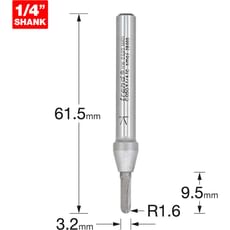
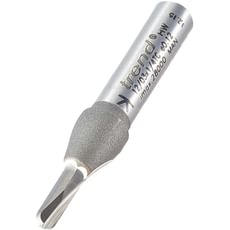
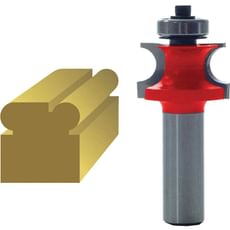
 Loading...
End of content
Error - No more pages to load
About Radius, Cove & Cavetto Bits
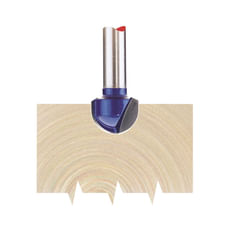
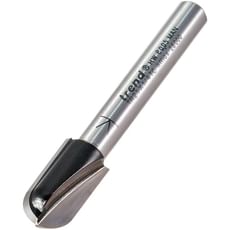
Radius, cove and cavetto router bits are essential edge-forming and decorative cutters used to create smooth, curved profiles in timber and manufactured boards. These tungsten carbide tipped (TCT) bits produce concave curves and rounded edges that add a professional finish to furniture making, joinery, architectural mouldings and cabinetry projects. A radius bit creates a simple rounded edge or decorative groove, whilst cove bits produce a concave quarter-circle profile and cavetto bits cut a sharper, more angular concave curve similar to traditional hand-carved mouldings.
The selection at Tooled-Up.com includes bearing-guided and non-guided variants in both 1/4" and 1/2" shank sizes, suitable for use with handheld routers and table-mounted routing setups. Bearing-guided cutters are particularly useful for following template edges or working freehand along board edges, as the bearing controls the depth of cut and prevents over-cutting. These bits excel when working with MDF, softwoods, hardwoods and plywood, making them versatile tools for both site work and workshop-based projects.
Quality router bits from established brands such as Trend, Faithfull and Draper ensure clean cuts with minimal tearout and longer cutting life between sharpenings. Professional-grade bits feature balanced designs that reduce vibration at higher speeds, improving both safety and surface finish quality. Whether creating decorative edges on shelving, adding detail to door frames or producing custom moulding profiles, these specialist cutters deliver repeatable results across numerous projects.
Jargon Buster
- TCT (Tungsten Carbide Tipped) - Router bits with brazed-on carbide cutting edges that maintain sharpness significantly longer than high-speed steel alternatives, particularly when cutting abrasive materials like MDF and chipboard.
- Bearing-Guided - A router bit fitted with a ball bearing pilot that runs along the workpiece edge or template, controlling the width of cut and allowing precise edge profiling without the need for a fence.
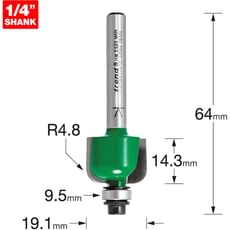
- Radius Profile - A curved cutting profile that creates either a rounded edge (corner rounding) or a concave groove (core box). Measured by the radius dimension, typically ranging from 3mm to 12mm or more.
- Cove Profile - A concave quarter-circle decorative profile that creates a smooth, flowing curve, commonly used for cornice mouldings and transitional edges between surfaces.
- Cavetto Profile - Similar to a cove but with a sharper, more defined concave curve, traditionally used in classical architectural mouldings and period furniture reproduction.
- Shank Diameter - The cylindrical portion that fits into the router collet, available in standard sizes of 1/4" (6.35mm) and 1/2" (12.7mm). Larger shanks provide better stability and reduced deflection during cutting.
Who Uses Radius, Cove & Cavetto Bits?
- Joiners and Cabinet Makers - Creating decorative edges on bespoke furniture, fitted kitchens and custom cabinetry projects
- Carpenters and Chippies - Producing architectural mouldings, door and window frames, and decorative trim work on site
- Shopfitters - Finishing display units, counters and retail fixtures with professional edge treatments
- Furniture Restorers - Reproducing period moulding profiles and matching existing decorative details on antique pieces
- Architectural Joinery Specialists - Manufacturing cornice mouldings, skirting profiles and decorative panelling for heritage and contemporary projects
- DIY Enthusiasts - Adding professional finishing touches to home woodworking projects, shelving and general carpentry work
- Staircase Manufacturers - Creating decorative handrail profiles and newel post details
- Boat Builders - Producing smooth, rounded edges for marine joinery and reducing sharp corners that could cause injury or snag lines
How to Choose the Right Radius, Cove & Cavetto Bits
Profile Type and Size: Consider the visual effect required and the scale of your workpiece. Smaller radius dimensions (3-6mm) suit delicate furniture work and box making, whilst larger profiles (9-12mm) create more dramatic effects on architectural mouldings and larger furniture pieces. Cove profiles produce gentler curves than cavetto bits, which offer sharper definition.
Shank Diameter: Match the shank size to your router's collet capacity and the scale of work. Half-inch shanks provide superior rigidity and reduced vibration for heavy-duty applications and deeper cuts, whilst quarter-inch shanks suit lighter routers and smaller-scale work. Never reduce a 1/2" bit down to fit a 1/4" collet using adapters, as this compromises safety.
Bearing-Guided vs Non-Guided: Bearing-guided cutters excel for freehand edge work and template routing, whilst non-guided bits work best in router tables with fence setups. Tooled-Up stocks both variants to suit different working methods and applications.
Material Quality: Professional tungsten carbide tipped bits from brands like Trend maintain sharpness through thousands of linear metres of cutting, justifying the higher initial cost through extended service life. Budget-friendly options from Faithfull and Draper suit occasional users and DIY applications where cutting volume is lower.
Router Compatibility: Verify your router's maximum speed rating and power output. Larger diameter bits require lower spindle speeds (typically 16,000-20,000 RPM) to prevent overheating and ensure clean cuts. Most standard trim routers and plunge routers operating at 240v mains power handle these bits comfortably.
Popular Accessories
- Router Guide Bushes - Essential for template work and maintaining consistent offset distances when using non-bearing-guided bits
- Router Tables and Fences - Provide stable, controlled setups for repetitive edge profiling work and improved safety when routing smaller components
- Featherboards and Push Sticks - Keep workpieces tight against fences and protect fingers when routing narrow stock or small components
- Router Bit Storage Cases - Protect cutting edges from damage and keep bits organised for quick identification on site or in the workshop
- Collet Extensions - Allow deeper plunging capability when working with template jigs or routing into recessed areas
- Diamond Honing Stones - Maintain sharp cutting edges between professional regrinding services, extending bit life and cut quality
- Dust Extraction Hoses and Adaptors - Connect routers to workshop vacuum systems, essential for managing fine dust when cutting MDF and manufactured boards
Safety Information
Eye and Respiratory Protection: Always wear safety glasses or a full face shield when routing, as chips can eject at high velocity. Dust masks or powered respirators are essential when cutting MDF and manufactured boards, which produce harmful fine dust particles. Ensure adequate workshop ventilation or connect dust extraction equipment.
Bit Installation and Security: Ensure router bits are inserted fully into the collet (at least three-quarters of the shank length) and tighten securely using the correct spanners. Never start a router with the bit in contact with the workpiece. Check bits for damage, cracks or missing carbide before each use.
Feed Direction and Speed: Always feed workpieces against the rotation direction of the cutter when using a router table, and move the router left-to-right when handheld routing edges. Feeding in the wrong direction can cause violent kickback. Use appropriate feed rates - forcing the cut causes burning, whilst feeding too slowly also generates excessive heat.
Workpiece Security: Clamp workpieces securely to prevent movement during routing. Never attempt to rout small pieces freehand - use push sticks, featherboards or sacrificial backing boards. Disconnect the router from 240v mains power before changing bits or making adjustments.
Frequently Asked Questions
What's the difference between cove and cavetto router bits?
Both create concave profiles, but cove bits produce a smooth, quarter-circle curve with equal radii at top and bottom, whilst cavetto bits create a sharper, more angular concave curve that resembles traditional hand-carved architectural mouldings. Cove profiles appear softer and more contemporary, whereas cavetto profiles suit period furniture and classical architectural details.
Can I use radius bits in a handheld router or do I need a router table?
Bearing-guided radius bits work excellently in handheld routers for edge profiling, as the bearing controls the cut depth. Non-guided versions require a router table with fence for accurate results. For production work or routing multiple identical pieces, a table setup offers better consistency and safety regardless of bearing type.
How do I prevent burning when using decorative profile bits?
Burning results from excessive heat caused by dull cutters, incorrect feed rate or inappropriate router speed. Maintain sharp cutting edges, use moderate feed rates (neither rushing nor hesitating), and reduce router speed when working larger diameter bits. Taking multiple shallow passes rather than one deep cut also reduces heat buildup and improves finish quality.
What router speed should I use for radius and cove bits?
Smaller bits (up to 25mm diameter) typically run at 20,000-24,000 RPM, whilst larger profile cutters work best at 16,000-20,000 RPM. Consult the manufacturer's recommendations and adjust based on material type - harder woods may benefit from slightly higher speeds, whilst manufactured boards often cut cleaner at moderate speeds with sharp bits.
How often do tungsten carbide router bits need sharpening?
Professional TCT bits from brands like Trend available from Tooled-Up.com typically maintain cutting performance through dozens of projects before requiring professional regrinding. Signs that sharpening is needed include increased feed resistance, burning even at correct speeds, fuzzy rather than clean cuts, and excessive noise during operation. Amateur users may achieve several years of service from quality bits with occasional use.