

Ratchet Screwdrivers

Pay in 3 interest-free payments on purchases from £20-£3000 with  . Learn more.
 Loading...
End of content
Error - No more pages to load
About Ratchet Screwdrivers
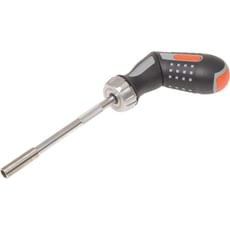
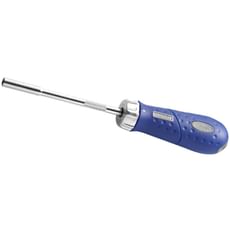
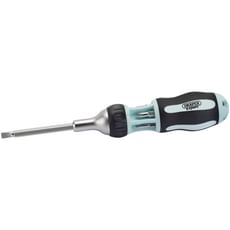
Ratchet screwdrivers are precision hand tools that incorporate an integrated ratcheting mechanism, allowing users to drive fasteners with continuous motion without needing to reposition their grip. The internal ratchet works similarly to those found on socket handles, enabling the screwdriver handle to rotate backwards whilst the blade remains stationary. This ingenious design means tradespeople and DIY enthusiasts can work faster and more efficiently than with conventional screwdrivers, particularly when dealing with multiple fasteners or working in confined spaces where full hand rotation is difficult.
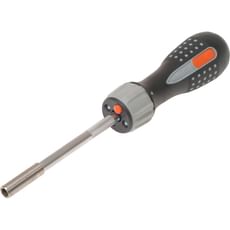
Most ratchet screwdrivers feature a three-position switch that allows users to select clockwise (fastening), anti-clockwise (unfastening), or neutral (locked) mode. In neutral mode, the tool functions exactly like a standard screwdriver for precision work. The majority of models available from Tooled-Up.com are designed as bit holders with 1/4 inch hex sockets, accepting standard screwdriver bits rather than having fixed blades. This versatility makes them incredibly practical for professionals who need to switch between different bit types throughout the day, though it does mean the shaft tends to be thicker than conventional screwdrivers, which can occasionally limit access to deeply recessed fasteners.
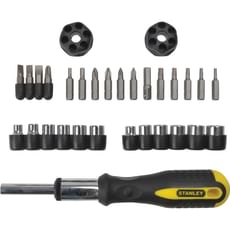
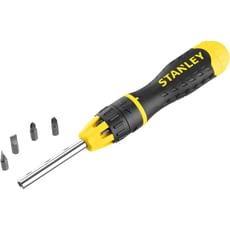
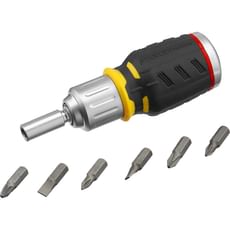
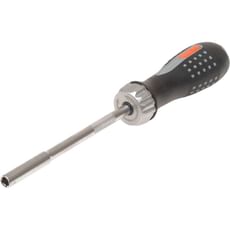
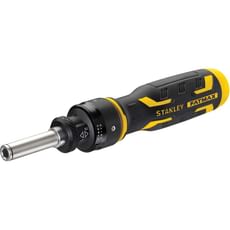
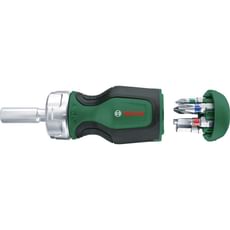
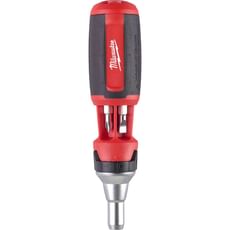
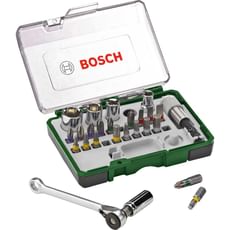
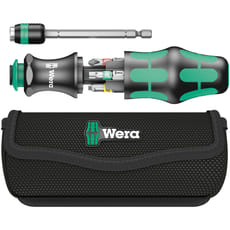
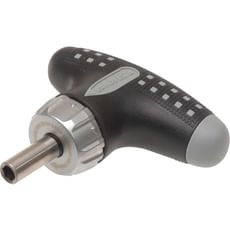
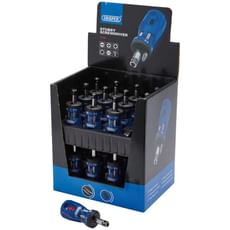
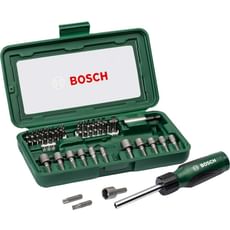
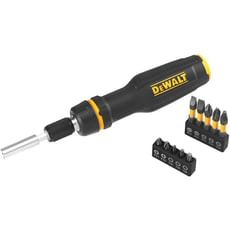
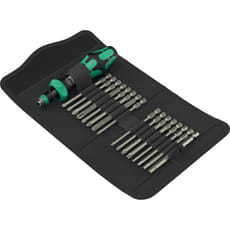
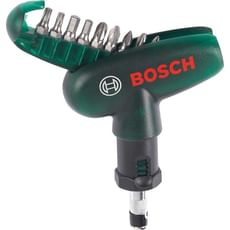
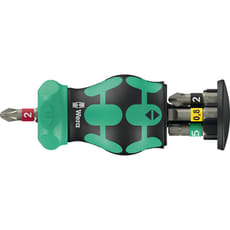
The range at Tooled-Up includes various configurations to suit different applications, from full-length models for general use to stubby versions for tight spaces, plus specialist designs like pistol grip handles for improved ergonomics and T-handle variants for maximum torque application. Leading manufacturers such as Bahco, Wera, Stanley, and Bosch produce ratchet screwdrivers with features including ergonomic multi-component handles, LED lighting, telescopic shafts, and comprehensive bit sets for complete screwdriving solutions.
Jargon Buster
- Ratcheting Mechanism: The internal gear system that allows the handle to rotate freely in one direction whilst locking in the other, preventing the blade from turning backwards during operation.
- 1/4 Inch Hex Socket: The standard hexagonal bit holder size (6.35mm across flats) that accepts industry-standard screwdriver bits, allowing quick bit changes without tools.
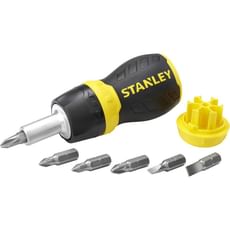
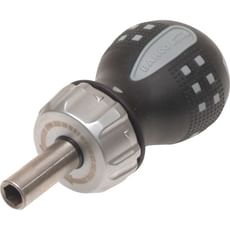
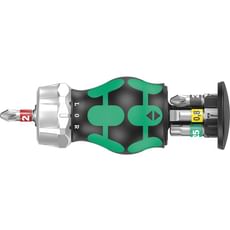
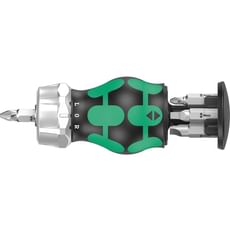
- Stubby Ratchet Screwdriver: A compact version with a shortened shaft designed for accessing fasteners in confined spaces where standard-length tools cannot reach or rotate fully.
- Three-Position Switch: The selector mechanism that controls the ratchet direction - typically offering clockwise, anti-clockwise, and locked (neutral) positions.
- Bit Retention: The magnetic or mechanical system that holds screwdriver bits securely in the socket during use, preventing them from falling out during overhead work or when inverted.
- Multi-Component Handle: An ergonomic grip design featuring different materials (usually hard plastic core with softer rubber overmould) providing comfort and improved torque transfer.
Who Uses Ratchet Screwdrivers?
- Electricians and Sparkies: For terminal connections, consumer unit installations, and general electrical assembly work where insulated versions ensure safety around live circuits
- Plumbers and Heating Engineers: Installing radiator valves, securing pipe clips, and assembling bathroom fittings in awkward spaces
- Kitchen Fitters and Joiners: Hanging cabinets, fitting hinges, and assembling flat-pack furniture where speed and efficiency matter
- Motor Mechanics and Vehicle Technicians: Accessing fasteners in engine bays and underneath vehicles where full hand rotation is impossible
- Appliance Engineers: Servicing washing machines, dishwashers, and other household appliances with multiple fastener types
- Telecommunications and Network Installers: Mounting equipment racks, connecting terminals, and securing cable management systems
- General Maintenance Technicians: Facilities management and building maintenance requiring versatile tools for varied fastener types
- DIY Enthusiasts and Home Improvers: Anyone undertaking regular home maintenance, repairs, or renovation projects
How to Choose the Right Ratchet Screwdrivers
Handle Length and Style: Consider your typical working environment. Standard-length ratchet screwdrivers (around 150-200mm) provide good leverage and control for general use, whilst stubby versions (typically 70-100mm) excel in restricted spaces like behind radiators or inside electrical enclosures. Pistol grip designs offer ergonomic benefits for repetitive fastening tasks, and T-handle models deliver maximum torque for stubborn fasteners.
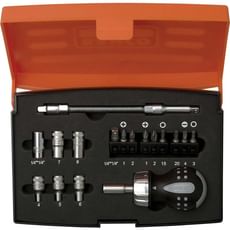
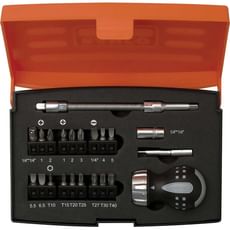
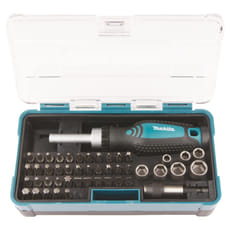
Bit Compatibility and Storage: Most models accept standard 1/4 inch hex bits, but check whether bits are included or sold separately. Sets with integrated bit storage in the handle keep commonly-used bits readily accessible. Consider whether you need a comprehensive set with multiple bit types (Pozidriv, Phillips, Torx, hex) or a basic model to complement existing bit collections.
Ratchet Quality and Tooth Count: Higher quality ratchet mechanisms feature more teeth, resulting in finer increments between clicks and requiring less handle rotation per stroke. This becomes particularly valuable in confined spaces. Look for models from established brands like Wera, Bahco, and Facom which offer reliable ratcheting mechanisms built to withstand professional use.
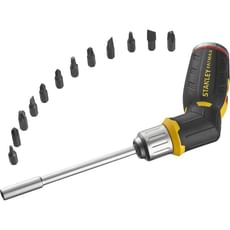
Specialist Features: Electricians should consider insulated models tested to relevant safety standards for work near live circuits. LED-equipped versions illuminate work areas in poorly-lit locations. Telescopic designs offer adjustable reach for different applications. Magnetic bit holders improve bit retention, particularly valuable for overhead work or when accessing awkward fasteners.
Build Quality and Warranty: Professional tradespeople requiring daily use should invest in premium brands offering robust construction and comprehensive warranties. DIY users undertaking occasional projects may find mid-range options from manufacturers like Stanley, Draper, or Bosch Home and Garden provide excellent value whilst maintaining good quality standards.
Popular Accessories
- Screwdriver Bit Sets: Comprehensive collections of Pozidriv, Phillips, Torx, hex, and specialist security bits in 1/4 inch hex shank format
- Magnetic Bit Holders and Extensions: Extend reach and improve bit retention, particularly useful for accessing recessed fasteners
- Impact-Rated Bits: Hardened bits designed to withstand higher torque loads without stripping or breaking
- Socket Adaptors: Convert 1/4 inch hex sockets to accept standard socket drive sizes for increased versatility
- Tool Rolls and Storage Cases: Organised storage solutions keeping screwdrivers and bit collections protected and easily transportable
- Bit Ratchets: Compact ratcheting bit drivers without handles for ultra-confined spaces
- Replacement Bit Storage Caps: Keep handle-stored bits secure and prevent loss during transport
Frequently Asked Questions
What's the advantage of a ratchet screwdriver over a standard screwdriver?
Ratchet screwdrivers allow continuous driving motion without repositioning your grip, significantly speeding up fastening tasks. The ratcheting mechanism means you only need small rotational movements rather than full 360-degree turns, making them invaluable in confined spaces where you cannot fully rotate a conventional screwdriver. This reduces hand fatigue during repetitive work and improves overall efficiency.
Can I use ratchet screwdrivers for high-torque applications?
Whilst ratchet screwdrivers handle moderate torque well, they're not designed for extremely tight fasteners or heavy-duty applications. The ratcheting mechanism contains small components that can be damaged by excessive force. For high-torque requirements, use the neutral (locked) position which bypasses the ratchet, or select a dedicated tool like a T-handle screwdriver or appropriate socket wrench.
Are stubby ratchet screwdrivers worth buying if I already have a standard length model?
Absolutely. Stubby models access spaces that standard-length screwdrivers simply cannot reach, such as behind radiators, inside electrical consumer units, or in cramped engine bays. Professional tradespeople often carry both lengths to cover all eventualities. The compact size also makes stubby versions easier to store in pocket tool rolls or belt pouches.
Why do most ratchet screwdrivers use bits rather than fixed blades?
The additional manufacturing cost and complexity of incorporating a ratcheting mechanism makes fixed-blade versions economically impractical for every drive type. By using standard 1/4 inch hex bits, manufacturers produce one versatile tool that accommodates any bit type – Pozidriv, Phillips, Torx, hex, and specialist security drives – providing far greater flexibility than maintaining separate fixed-blade ratchet screwdrivers for each fastener type.
How do I maintain my ratchet screwdriver?
Keep the ratchet mechanism clean and free from debris which can impede operation. Periodically apply a small amount of light machine oil to the ratchet mechanism through any available openings. Avoid dropping the tool as impact can damage the internal pawls and gears. Store in a dry location to prevent corrosion, and regularly inspect bits for wear, replacing damaged or worn bits promptly to prevent fastener damage.