

Regulators
Pay in 3 interest-free payments on purchases from £30-2000 with  . Learn more.
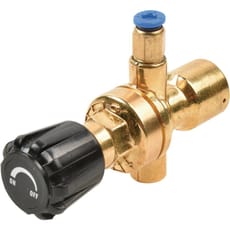
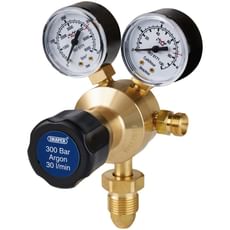
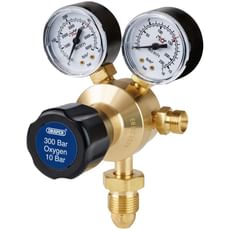
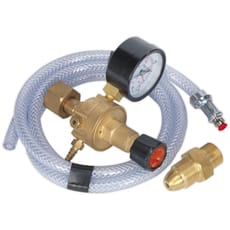
 Loading...
End of content
Error - No more pages to load
About Regulators
Gas regulators are essential safety devices that control and reduce the pressure of gas flowing from high-pressure cylinders to a safe, usable level for welding and cutting equipment. Whether you're working with MIG welders, TIG welders, or oxy-fuel cutting systems, a properly functioning regulator ensures consistent gas flow and protects both the operator and equipment from dangerous pressure fluctuations. These precision instruments are designed to handle various gas types including argon, oxygen, acetylene, and CO2, each requiring specific regulator designs to maintain safe working conditions.
Tooled-Up.com stocks a comprehensive range of gas regulators from trusted brands including Sealey and Draper, covering applications from light fabrication work to heavy industrial welding. Available options include single gauge regulators for basic pressure monitoring, dual gauge models that display both cylinder and delivery pressure, and specialised units designed for specific gas types and cylinder connections. Regulators are available for both standard industrial gas cylinders and disposable bottles, with various pressure ratings from 130 bar through to 300 bar for high-pressure applications.
Modern gas regulators feature robust brass or aluminium construction with precision-engineered diaphragms and valves that deliver accurate pressure control across extended use. Many models include integrated safety features such as pressure relief valves and non-return mechanisms to prevent backflow, whilst durable gauge faces with clear markings ensure easy pressure monitoring even in challenging workshop environments.
Jargon Buster
- Bar: The unit of pressure measurement used for gas regulators, where 1 bar equals approximately 14.5 psi. Industrial gas cylinders typically operate at pressures between 130 and 300 bar.
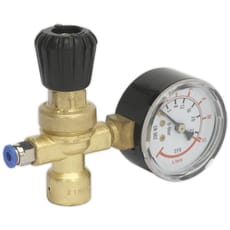
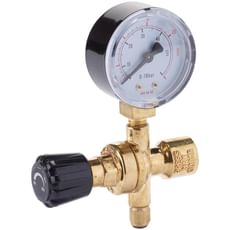
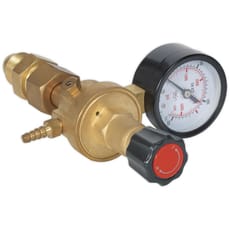
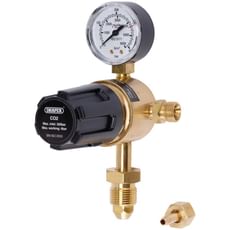
- Single Gauge Regulator: A regulator fitted with one pressure gauge showing the outlet (working) pressure being delivered to the equipment. The cylinder contents pressure must be checked separately.
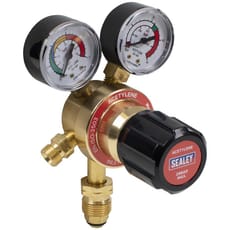
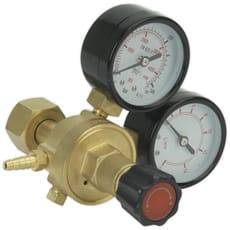
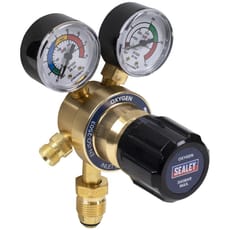
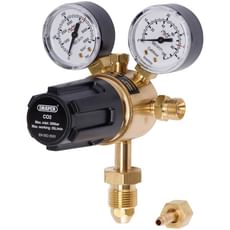
- Dual Gauge Regulator: Features two pressure gauges – one displaying the high-pressure gas remaining in the cylinder, and another showing the regulated low-pressure output to the welding equipment.
- Bullnose Connection: A specific type of cylinder connection commonly used on disposable CO2 and argon gas bottles, featuring a distinctive rounded connector profile.
- Flashback Arrestor: A safety device that prevents flames from travelling back through the gas line into the regulator or cylinder, essential for oxygen and acetylene applications.
- Delivery Pressure: The reduced, controlled pressure at which gas exits the regulator and flows to the welding or cutting equipment, typically adjustable via a control knob.
Who Uses Regulators?
- Welders and Fabricators: Professional welders working with MIG, TIG, and gas welding equipment requiring precise gas flow control
- Automotive Technicians: Mechanics and body shop professionals performing welding repairs and panel fabrication work
- Construction Workers: Site operatives using gas-powered cutting and welding equipment for structural steelwork
- Agricultural Engineers: Farm maintenance teams repairing machinery and fabricating agricultural equipment
- Maintenance Engineers: Industrial maintenance staff performing repairs and modifications in manufacturing facilities
- Artists and Sculptors: Metal artists using gas welding and cutting equipment for creative metalwork projects
- DIY Enthusiasts: Home workshop users tackling welding projects with both disposable and full-size gas cylinders
- Educational Institutions: College and training centre workshops teaching welding and fabrication skills
How to Choose the Right Regulators
Selecting the correct regulator starts with identifying your gas type, as each gas requires a specific regulator design with appropriate materials and pressure ratings. Oxygen regulators differ fundamentally from acetylene or inert gas models, and using the wrong type can create serious safety hazards. Always match the regulator to both the gas type and the cylinder connection standard you're using.
Consider whether you need a single or dual gauge configuration. Whilst single gauge regulators cost less and show the working pressure, dual gauge models available at Tooled-Up provide the added benefit of monitoring remaining cylinder contents, helping you plan work and avoid running out mid-job. For professional applications where continuous work is critical, the investment in a dual gauge unit typically proves worthwhile.
Pressure rating is crucial – ensure your regulator's maximum input pressure matches or exceeds your cylinder pressure. Standard disposable bottles typically operate around 130 bar, whilst full industrial cylinders for argon and oxygen commonly reach 300 bar. Using an under-rated regulator poses serious safety risks and will fail prematurely.
Check the outlet connection type matches your welding equipment. Most MIG welders use standard hose connections with bullnose or threaded fittings, but some equipment requires specific adapters. For industrial applications, look for regulators with robust brass bodies and replaceable gauge faces, whilst lighter fabrication work may suit aluminium-bodied units designed for disposable cylinders.
Don't overlook safety features, particularly for oxy-fuel cutting applications. Integrated flashback arrestors, pressure relief valves, and non-return mechanisms provide essential protection. Professional tradespeople working with oxygen and acetylene should consider regulators specifically designed with enhanced safety features meeting BS EN standards.
Popular Accessories
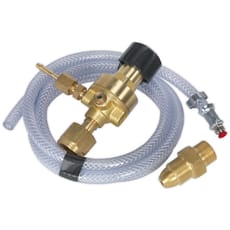
- Gas Hoses: High-pressure rubber or PVC hoses rated for specific gas types, available in various lengths with appropriate end fittings
- Flashback Arrestors: Inline safety devices providing additional protection against flame backflow into gas lines and cylinders
- Hose Clips and Jubilee Clips: Securing connections between regulators, hoses, and welding equipment to prevent dangerous gas leaks
- Spanners and Adjustment Tools: Specialised tools for fitting and removing regulators from cylinder valves safely
- Replacement Gauges: Spare pressure gauges for maintaining regulator accuracy and replacing damaged components
- Gas Cylinder Trolleys: Wheeled carriers for safely transporting cylinders with regulators fitted around the workshop
- Leak Detection Fluid: Specialist solutions for checking all connections and identifying gas leaks before beginning work
- PTFE Tape: Thread sealant for ensuring gas-tight threaded connections on regulator fittings
Safety Information
Gas regulators are critical safety devices requiring careful handling and regular inspection. Always check regulators for visible damage, gauge accuracy, and seal integrity before each use. Never use damaged or leaking regulators, and replace any unit showing signs of corrosion, impact damage, or gauge malfunction immediately.
When fitting regulators to cylinders, ensure all connections are clean and free from oil, grease, or contamination – particularly crucial for oxygen regulators where hydrocarbons can cause combustion. Open cylinder valves slowly and stand to one side of the regulator when pressurising to avoid injury should gauge failure occur. Always release all pressure from regulators by closing the cylinder valve and purging the line before disconnecting equipment.
Store regulators in clean, dry conditions away from heat sources and corrosive atmospheres. Keep oxygen regulators completely separate from fuel gas equipment to prevent cross-contamination. HSE guidance requires regular professional servicing of gas equipment used in commercial environments, with inspection intervals depending on usage intensity and working conditions.
Never attempt to repair regulators yourself – internal components require specialist knowledge and calibration equipment. Only use regulators with gas types they're designed and certified for, as incompatible gas exposure can degrade seals and create dangerous situations. Ensure adequate ventilation when using gas equipment, and always follow COSHH regulations for gas storage and handling on site.
Frequently Asked Questions
What's the difference between 130 bar and 300 bar regulators?
The bar rating indicates the maximum input pressure the regulator can safely handle. 130 bar regulators suit disposable gas bottles and some smaller industrial cylinders, whilst 300 bar models are essential for full-size industrial cylinders containing argon, oxygen, and other compressed gases at higher pressures. Using a 130 bar regulator on a 300 bar cylinder is extremely dangerous and can cause catastrophic failure.
Can I use the same regulator for different gas types?
No – each gas type requires a specifically designed regulator. Oxygen regulators must be kept completely separate from fuel gases and inert gases due to contamination risks. Argon and CO2 regulators have different internal components suited to their gas properties. Using incorrect regulators compromises safety and can damage equipment. Always match the regulator to the specific gas you're using.
Do I need a dual gauge regulator or will a single gauge do?
Single gauge regulators show working pressure only, which is sufficient for basic applications where you can physically check cylinder weight or aren't concerned about running out mid-job. Dual gauge models display both cylinder contents and delivery pressure, making them preferable for professional use where monitoring gas supply is important for workflow planning and avoiding interruptions during critical welds.
How often should gas regulators be serviced or replaced?
Professional regulators used in commercial environments require annual inspection and servicing according to HSE guidance, with more frequent checks for intensive-use situations. Replace regulators immediately if gauges become inaccurate, if you notice gas leaks, or if there's any visible damage. For occasional DIY use, inspect before each session and replace if any deterioration is evident. Gauges typically need replacing every few years depending on usage.
Why won't my regulator fit my gas cylinder?
Gas cylinders use different connection standards depending on the gas type and cylinder size. Disposable bottles typically use bullnose connections, whilst industrial cylinders have threaded connections that vary by gas type – this is a deliberate safety feature preventing incorrect gas/regulator combinations. Check your cylinder connection type matches your regulator, or source the appropriate adapter if working with different cylinder systems.