

Retaining
Pay in 3 interest-free payments on purchases from £30-2000 with  . Learn more.
 Loading...
End of content
Error - No more pages to load
About Retaining
Retaining compounds, also known as bearing fit retainers or thread retention adhesives, are specialised anaerobic adhesives designed to secure cylindrical assemblies by filling the microscopic gaps between mating metal surfaces. These high-performance chemical solutions provide a reliable alternative to traditional mechanical methods such as pins, keys, shrink fits, and press fits, creating a strong, vibration-resistant bond that prevents loosening, leakage, and corrosion in mechanical assemblies. Unlike mechanical fastening methods that can weaken components through drilling or machining, retaining compounds actually increase the load-bearing capacity of assemblies whilst eliminating the need for expensive precision tolerances.
The selection at Tooled-Up.com includes retaining compounds engineered for demanding workshop and industrial applications, from securing bearings and bushings to locking gears, pulleys, and cylindrical components onto shafts. Available in various strength grades, these anaerobic adhesives cure in the absence of air when confined between close-fitting metal surfaces, transforming from a liquid into a tough thermoset plastic that can withstand extreme temperatures, vibration, and chemical exposure. Whether working on automotive repairs, hydraulic systems, plant maintenance, or general engineering projects, the right retaining compound eliminates the need for costly machining operations whilst providing superior assembly performance.
Tooled-Up stocks both standard and specialised formulations, with options for oil-tolerant applications, high-strength permanent bonds, and bearing fit solutions designed for larger clearances. Leading brands like Bondloc and Sealey provide professional-grade compounds trusted by engineers and maintenance technicians across the UK, ensuring reliable performance in workshop environments and on-site repairs alike. These products are particularly valuable in maintenance situations where worn tolerances have degraded assembly fit, allowing technicians to salvage expensive components that would otherwise require replacement.
Jargon Buster
- Anaerobic Adhesive: A type of adhesive that cures in the absence of air when confined between close-fitting metal surfaces. It remains liquid when exposed to oxygen but hardens rapidly when trapped in the gap between components, typically triggered by contact with metal ions.
- Retaining Compound: A specialised adhesive designed specifically to secure cylindrical parts such as bearings, bushings, gears, and sleeves onto shafts or into housings, filling microscopic gaps to create a solid, load-bearing assembly that resists rotational and axial forces.
- Bearing Fit: The dimensional relationship between a bearing and its housing or shaft. Retaining compounds can compensate for worn or oversized fits, restoring assemblies to serviceable condition without expensive re-machining or component replacement.
- Shear Strength: The maximum load a cured retaining compound can withstand before failure when force is applied parallel to the bonded surface, measured in megapascals (MPa) or newtons per square millimetre. This determines the torque capacity of the assembly.
- Oil Tolerant: A formulation capable of curing on surfaces with light oil contamination, eliminating the need for perfect degreasing in maintenance and repair situations where complete cleaning isn't practical or where surrounding components may contaminate the bond area.
- Gap Fill: The maximum distance between mating surfaces that a retaining compound can effectively bridge whilst maintaining full strength, typically ranging from 0.10mm to 0.50mm depending on the product specification. Bearing fit formulations handle larger gaps than standard retainers.
Who Uses Retaining?
Retaining compounds are essential for a wide range of trades and industries:
- Mechanical Engineers – for machinery assembly, refurbishment projects, and preventative maintenance work
- Automotive Technicians – securing bearings, bushings, transmission components, and wheel hub assemblies
- Plant Maintenance Fitters – repairing worn assemblies on production equipment without lengthy downtime
- Hydraulic Engineers – sealing and securing hydraulic pump and motor components in mobile and industrial systems
- Agricultural Mechanics – repairing farm machinery with worn tolerances in field conditions
- Marine Engineers – maintaining marine engines, propulsion systems, and deck equipment
- General Engineering Workshops – for fabrication, repair, and prototype assembly projects
- Maintenance Contractors – conducting on-site repairs without access to specialist machining facilities
- Manufacturing Facilities – production line assembly, quality assurance, and process improvement applications
- Mining and Quarrying Operations – maintaining heavy equipment in demanding environments
How to Choose the Right Retaining
Selecting the appropriate retaining compound depends on several critical factors:
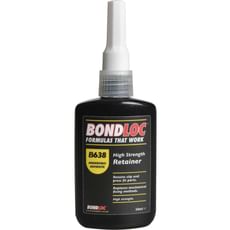
Strength Requirements: High-strength formulations like Bondloc B638 create permanent bonds ideal for static assemblies that won't require future disassembly, whilst medium-strength variants allow for removal with heat when future maintenance is anticipated. Consider whether the assembly needs to be serviceable or permanently secured, and match the compound strength to the anticipated loads and operating conditions.
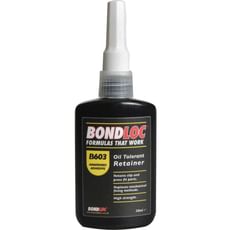
Surface Condition: Standard retaining compounds require clean, degreased metal surfaces for optimal performance and maximum bond strength. If working with surfaces that have oil residue or can't be thoroughly cleaned during field repairs, opt for oil-tolerant formulations like Bondloc B603, which are specifically designed to cure despite light contamination and are ideal for maintenance applications.
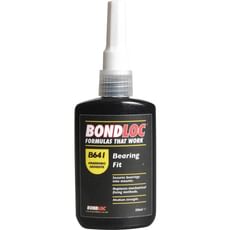
Gap Size: Bearing fit retainers such as Bondloc B641 are formulated for larger clearances (up to 0.38mm), whilst general retaining compounds work best in gaps under 0.25mm. Measure your clearance carefully using bore gauges or micrometres, or choose a versatile bearing fit product for worn or oversized assemblies where precision isn't achievable.
Temperature Exposure: Check the operating temperature range of your chosen compound against your application requirements. Most professional retaining compounds withstand continuous temperatures between -55°C and +150°C, but specific applications such as exhaust systems or furnace components may require specialised high-temperature formulations with enhanced thermal stability.
Cure Time: Consider your production or repair schedule when selecting products. Fixture times vary from 5 to 30 minutes depending on formulation, with full cure strength typically achieved within 24 hours at room temperature. Some applications may benefit from heat-accelerated curing or surface activators, particularly useful in production environments or cold workshop conditions during winter months.
Certifications and Standards: For critical applications in regulated industries, verify that your chosen product meets relevant standards and has appropriate approvals for your sector, whether automotive, food processing, aerospace, or other specialised environments where material compliance is essential for quality assurance.
Popular Accessories
- Activators and Primers: Surface treatments that accelerate cure speed on inactive surfaces like stainless steel or in cold conditions below 5°C
- Degreasing Solvents: Specialist cleaners and surface preparation products for removing oil, grease, and contamination before adhesive application
- Dispensing Equipment: Precision applicator bottles, syringes, and needle tips for controlled compound placement in difficult-to-reach areas
- Thread Lockers: Complementary anaerobic adhesives for securing threaded fasteners in the same assembly
- Gasket Makers: Related sealing compounds for flanges, mating surfaces, and static joints
- Surface Wipes: Pre-saturated cleaning wipes for surface preparation and degreasing in field applications
- Heat Guns: For activating cure, accelerating bond development, or disassembling high-strength bonded components
- Measuring Tools: Micrometres, bore gauges, and dial indicators for accurately assessing clearances before compound selection
- PPE Equipment: Nitrile gloves, safety glasses, and barrier creams for safe handling of chemical products
Safety Information
Retaining compounds are chemical products that require proper handling, storage, and disposal procedures to ensure user safety and product effectiveness:
Personal Protection: Always wear appropriate PPE including nitrile gloves and safety glasses when handling uncured compounds. Avoid skin contact as these adhesives can bond skin rapidly. Work in well-ventilated areas or use local exhaust ventilation to minimise inhalation exposure to vapours, particularly important in confined spaces or when working with larger quantities.
COSHH Compliance: Consult the product Safety Data Sheet (SDS) before first use and ensure your workplace risk assessment covers the specific hazards of anaerobic adhesives. Store products in accordance with manufacturer recommendations, typically in a cool, dry place away from heat sources and direct sunlight. Keep containers tightly closed when not in use to prevent premature curing from air exposure.
Skin Contact: If retaining compound contacts skin, wash immediately with soap and warm water. Do not use solvents on skin as this can increase absorption. If accidental bonding occurs, gently peel or roll bonded skin apart rather than pulling directly. Do not attempt to force separation as this may tear skin. Seek medical attention if irritation persists or if a significant area is affected.
First Aid: In case of eye contact, rinse immediately with plenty of water for at least 15 minutes and seek medical attention. If swallowed, do not induce vomiting – rinse mouth with water and seek medical advice immediately. Keep product containers and SDS information readily available for emergency services.
Disposal: Dispose of empty containers and waste materials in accordance with local authority requirements and HSE guidance. Uncured material may require disposal as chemical waste rather than general workshop refuse. Allow small quantities to cure fully before disposal as they become inert once polymerised.
Frequently Asked Questions
Can retaining compounds be used on worn or oversized bearings?
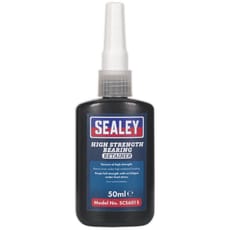
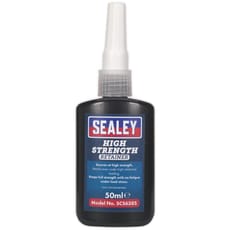
Yes, bearing fit retaining compounds like Bondloc B641 and the Sealey High Strength Bearing Fit Retainer are specifically formulated to fill larger gaps up to 0.38mm, making them ideal for salvaging worn assemblies that would otherwise require expensive machining or component replacement. This makes them particularly valuable in maintenance situations where tolerances have deteriorated through wear, corrosion, or repeated assembly cycles.
How do I remove a component secured with retaining compound?
Disassembly methods depend on the compound strength grade. Medium-strength retainers typically release when heated to approximately 250°C using a heat gun or torch, which breaks down the polymer structure. High-strength permanent formulations may require more aggressive heating or mechanical methods such as pressing or controlled destruction of the bonded component. Always consult the product technical data sheet for specific removal procedures and temperature requirements.
What's the difference between retaining compound and thread locker?
Whilst both are anaerobic adhesives that cure in the absence of air, retaining compounds are formulated for cylindrical assemblies and can fill larger gaps (up to 0.5mm), making them suitable for bearing fits, bush installations, and shaft-to-gear assemblies. Thread lockers are optimised for threaded fasteners with their characteristic helical gaps, different stress patterns, and typically require lower viscosity for thread penetration.
Do I need to clean oily surfaces before applying retaining compound?
Standard retaining compounds require clean, degreased metal surfaces for optimal performance and maximum bond strength. However, oil-tolerant formulations like Bondloc B603 are designed to cure despite light oil contamination, making them ideal for maintenance situations where thorough degreasing isn't practical, possible, or where surrounding components may contaminate the bond area during application.
How long does retaining compound take to cure?
Fixture time (handling strength) typically ranges from 5 to 30 minutes depending on the specific product formulation, substrate materials, and ambient temperature. Full functional strength usually develops within 24 hours at room temperature (approximately 20°C). Cure speed can be accelerated using surface activators or heat (typically 100-120°C), which is particularly useful in production environments, cold workshop conditions, or when working with passive metals like stainless steel that naturally cure more slowly.