

Ring Spanners
Pay in 3 interest-free payments on purchases from £30-2000 with  . Learn more.
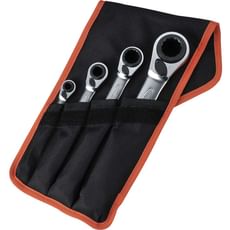
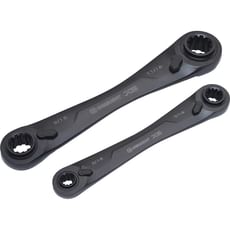
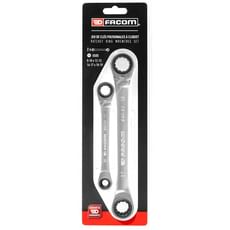
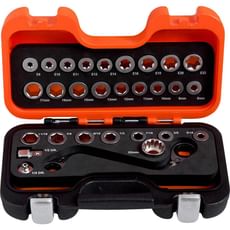

 Loading...
End of content
Error - No more pages to load
About Ring Spanners
Ring spanners are essential hand tools featuring a closed-loop end that completely encircles a nut or bolt head, providing superior grip and torque transfer compared to open-ended spanners. The fully enclosed ring design distributes force evenly across all six points of a hexagonal fastener, significantly reducing the risk of rounding off bolt heads and enabling work in confined spaces where socket sets cannot reach. Available in both single-ended and double-ended configurations, ring spanners come in metric and imperial sizes to suit virtually any fastening application across automotive, engineering, plumbing, and general mechanical work.
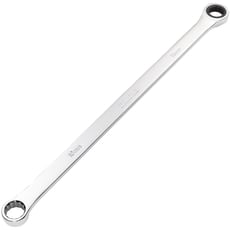
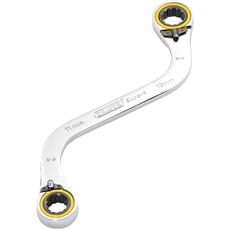
Modern ring spanners have evolved considerably beyond basic designs, with manufacturers now offering specialist variants including offset patterns for improved knuckle clearance, ratcheting mechanisms for faster operation in restricted spaces, and S-shaped profiles for accessing deeply recessed fasteners. The selection at Tooled-Up.com encompasses everything from traditional chrome vanadium steel spanners for everyday workshop use to high-specification ratcheting sets from brands like Bahco, Draper Expert, and Facom. Many contemporary ring spanners feature 12-point or bi-hexagonal ring profiles that engage fasteners at 30-degree intervals rather than 60 degrees, allowing operation in tighter confines where swing radius is limited.
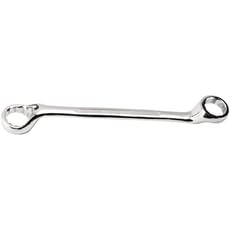
Professional-grade ring spanners typically undergo heat treatment and surface hardening processes to ensure durability under high-torque applications, with satin chrome or polished finishes providing corrosion resistance and easy wipe-clean maintenance. Deep ring and extra-long variants address specific challenges such as accessing recessed nuts on suspension components or reaching fasteners behind obstructions, whilst obstruction spanners incorporate cranked designs to navigate around pipework and structural elements that would block conventional tools.
Jargon Buster
- 12-Point Ring (Bi-Hex): A ring profile with twelve internal points rather than six, engaging a hexagonal fastener at every 30 degrees instead of 60 degrees. This design requires less swing radius, making it ideal for working in confined spaces, though it distributes force across smaller contact points than a 6-point ring.
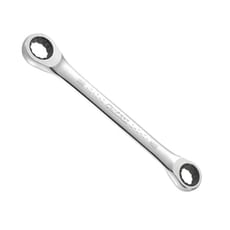
- Offset Pattern: The angle between the ring end and the spanner shaft, typically 15 or 45 degrees. This offset provides knuckle clearance when working on flat surfaces and enables the spanner to be flipped over after each swing to progress the fastener with minimal arc movement.
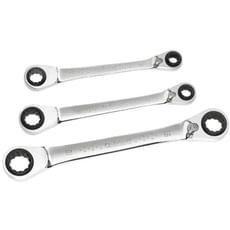
- Ratcheting Ring Spanner: Features an internal ratchet mechanism within the ring end, allowing the tool to remain engaged with the fastener whilst being moved back and forth. The ratchet can typically be reversed via a lever, enabling both tightening and loosening without removing the spanner from the nut.
- Deep Ring Configuration: An extended ring end that positions the fastener deeper within the tool profile, designed specifically for accessing nuts on long threaded studs or recessed fixings where standard rings cannot reach the fastener properly.
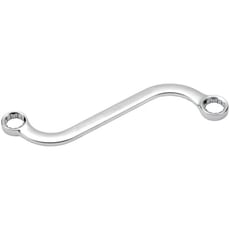
- S-Type Spanner: A ring spanner with an S-shaped profile that provides multiple offset angles along its length, offering exceptional access around obstructions and allowing various approach angles to difficult fasteners.
- Chrome Vanadium (Cr-V): A steel alloy containing chromium and vanadium that provides excellent strength, durability, and resistance to wear. This is the standard material specification for professional-quality ring spanners.
Who Uses Ring Spanners?
- Motor Vehicle Technicians and Mechanics: For engine work, suspension components, brake assemblies, and general automotive maintenance where fasteners must not be damaged
- Plant and Agricultural Engineers: Maintaining and repairing heavy machinery, tractors, and agricultural equipment with large-scale fasteners
- Plumbers and Heating Engineers: Accessing compression fittings, radiator valves, and pipework connections in confined spaces
- Bicycle Mechanics: Working on brake callipers, chainring bolts, and other precision cycle components requiring careful torque application
- General Maintenance Engineers: Factory maintenance, building services, and industrial plant operations across all sectors
- Construction and Groundwork Operatives: Assembling scaffolding, formwork, temporary structures, and site equipment
- White Goods and Appliance Engineers: Accessing fasteners in confined spaces within washing machines, dishwashers, and other domestic appliances
- DIY Enthusiasts and Home Mechanics: General household repairs, furniture assembly, and automotive maintenance projects
- Agricultural Contractors: Field repairs and maintenance of harvesting equipment, balers, and farm machinery
How to Choose the Right Ring Spanners
Measurement System: Determine whether you primarily work with metric (millimetre) or imperial (AF/inch) fasteners. UK automotive and engineering applications predominantly use metric sizing, whilst older British machinery and American equipment may require imperial spanners. Combination sets covering both standards offer versatility but represent a larger initial investment.
Ring Profile Configuration: Standard 6-point rings provide maximum contact area and are less likely to damage fasteners, making them ideal for seized or corroded nuts. However, 12-point (bi-hex) rings require less swing radius and prove invaluable when working in confined spaces where you cannot rotate the spanner through a full 60-degree arc between engagement positions.
Offset Angle and Profile: Consider the typical working environment. Standard 15-degree offset spanners suit general workshop use, providing adequate knuckle clearance for most applications. Deep offset, cranked, or S-type configurations become necessary when working around obstructions, in engine bays, or on equipment with limited access. Tooled-Up stocks specialist obstruction spanners from Draper and other manufacturers specifically for these challenging scenarios.
Ratcheting Versus Fixed: Ratcheting ring spanners significantly accelerate work in restricted spaces by eliminating the need to remove and reposition the tool after each swing. The internal ratchet mechanism allows continuous operation with minimal arc movement. Whilst more expensive than fixed ring spanners, ratcheting variants dramatically improve productivity when dealing with multiple fasteners or working in awkward positions. Brands like Bahco and Facom offer reversible ratchet spanners with fine tooth counts for precise operation.
Material Quality and Finish: Professional applications demand chrome vanadium steel construction with proper heat treatment for durability under high torque. Satin chrome or polished finishes resist corrosion and facilitate cleaning. Budget spanners may use inferior steel grades that flex under load or wear rapidly. Established brands such as Expert by Facom, Bahco, and Draper Expert indicate professional-grade construction with appropriate certifications.
Individual Sizes or Complete Sets: Purchasing a comprehensive spanner set provides better value and ensures you have the correct size for most situations. Sets from Sealey, Draper, and Bahco typically range from 6mm to 32mm (or imperial equivalents), covering the vast majority of fastener sizes encountered in mechanical work. However, if you require specialist sizes or configurations for specific tasks, individual spanners allow targeted investment.
Length and Leverage: Longer spanners provide increased leverage for stubborn fasteners but may not fit in confined spaces. Extra-long variants suit larger industrial fasteners, whilst short-pattern spanners enable access in restricted areas. Consider the typical fastener torque requirements and available working space in your applications.
Popular Accessories
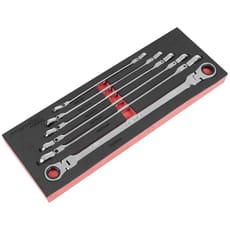
- Spanner Storage Systems: Tool rolls, foam drawer inserts, and wall-mounted racks to organise and protect spanner sets in workshops and service vehicles
- Combination Spanners: Complementary tools featuring an open-ended spanner at one end and ring spanner at the other, providing operational flexibility
- Adjustable Spanners: Variable-jaw spanners for occasional use on non-standard sizes or situations where the correct fixed spanner is unavailable
- Socket Sets: For situations where ring spanners cannot access fasteners, offering alternative approaches with ratchets and extension bars
- Torque Wrenches: Essential for applications requiring precise torque specifications, such as cylinder heads, wheel nuts, and critical fasteners
- Penetrating Lubricants: Products like WD-40 or Plus Gas to free seized fasteners before applying torque with ring spanners
- Spanner Extenders: Slide-over accessories that increase leverage for stubborn fasteners, though care must be taken not to exceed fastener or spanner design limits
- Magnetic Parts Trays: For safely holding nuts, bolts, and washers during disassembly operations
- Workshop Gloves: Providing hand protection whilst maintaining dexterity for tool operation
Safety Information
Correct Size Selection: Always use the precisely correct size ring spanner for each fastener. An incorrectly sized spanner will round off bolt heads, damage the tool, and may slip causing hand injuries. If a spanner fits loosely on a fastener, do not use it—select the correct size or consider whether the fastener head is already damaged.
Pull Rather Than Push: Whenever possible, position yourself to pull the spanner towards you rather than pushing away. This technique provides better control and reduces injury risk if the spanner slips or the fastener suddenly releases. If you must push, use an open palm rather than a closed fist to minimise injury potential.
Inspect Tools Before Use: Check ring spanners for cracks, wear, or damage before use, particularly around the ring opening where stress concentrates. Worn or damaged spanners may slip under load or fracture, causing injury. Remove damaged tools from service immediately and replace them with serviceable items.
Never Extend or Modify Spanners: Do not use pipes or other spanners to extend leverage beyond the tool's designed capacity. Excessive force can cause fastener damage, spanner failure, or sudden release resulting in injury. If a fastener will not move with reasonable force from the correct spanner, apply penetrating lubricant, use heat (where safe), or employ a properly sized breaker bar with socket.
Wear Appropriate PPE: Safety glasses protect eyes from rust particles and debris when working with corroded fasteners. Work gloves can prevent hand injuries, though bulky gloves may reduce dexterity with smaller spanners. Ensure adequate lighting to see the work area clearly and position fasteners correctly.
Frequently Asked Questions
What's the difference between a ring spanner and a combination spanner?
A ring spanner features closed-loop rings at one or both ends, whilst a combination spanner has a ring at one end and an open-ended spanner at the other. Ring spanners provide superior grip and torque transfer, making them preferable for tight fasteners, whereas combination spanners offer versatility with both tool types in one unit. Many professionals carry both types to suit different situations.
Why do some ring spanners have 12 points instead of 6?
The 12-point (bi-hexagonal) design allows the spanner to engage a hexagonal fastener at 30-degree intervals rather than 60 degrees, requiring half the swing radius to operate. This proves invaluable in confined spaces where you cannot move the spanner through a full 60-degree arc. However, 6-point rings distribute force more evenly and are less likely to damage fastener heads, making them preferable for seized or high-torque applications.
Are ratcheting ring spanners as strong as fixed ring spanners?
Quality ratcheting ring spanners from reputable manufacturers like Bahco, Facom, and Draper Expert are designed to withstand comparable torque loads to fixed spanners of equivalent size. The ratchet mechanism is engineered for professional use and incorporates fine tooth counts for strength. However, the internal mechanism does add complexity, and ratcheting spanners require periodic cleaning to maintain smooth operation, particularly in dirty working environments.
Can I use metric ring spanners on imperial fasteners or vice versa?
Whilst some metric and imperial sizes are superficially similar (for example, 13mm and 1/2-inch), using an incorrectly specified spanner will damage both the fastener and tool. The fit will be inexact, causing the spanner to round off bolt corners under torque. Always use the correct measurement system for your fasteners—maintain separate metric and imperial spanner sets if you work on both types of equipment.
How should I maintain my ring spanners?
Wipe spanners clean after use to remove oil, dirt, and moisture that can cause corrosion. For ratcheting spanners, periodically clean the ratchet mechanism with solvent and apply a light machine oil to maintain smooth operation. Store spanners in a dry environment, preferably organised in racks or rolls where they won't knock against each other. Inspect tools regularly for wear or damage, particularly around the ring openings where stress concentrates, and replace worn items promptly.