

Riveters

Pay in 3 interest-free payments on purchases from £20-£3000 with  . Learn more.





 Loading...
End of content
Error - No more pages to load
About Riveters
Riveters are essential fastening tools used to join two or more materials together using rivets—permanent mechanical fasteners consisting of a cylindrical shaft with a head. Unlike screws or bolts, rivets create strong, vibration-resistant joints that won't loosen over time, making them ideal for metalwork, automotive repairs, construction projects, and fabrication work. Tooled-Up.com stocks a comprehensive selection of manual hand riveters, lazy tong riveters, swivel head models, and nut riveters to suit every application from light DIY tasks to heavy-duty industrial use.
The range includes hand-operated pop riveters for aluminium, steel, and stainless steel rivets in various sizes, typically from 2.4mm to 6.4mm diameter. Professional tradespeople often prefer long-arm compound leverage models that provide greater pulling force with less hand fatigue, whilst compact short-arm riveters excel in tight spaces or overhead work. Threaded nut riveters offer a different fastening solution, creating strong threaded inserts in thin materials like sheet metal, allowing for repeated assembly and disassembly where traditional rivets would be unsuitable.
Modern riveters feature ergonomic designs with soft-grip handles, quick-change nozzle systems for different rivet sizes, and collection bowls or bottles to catch spent mandrels. Many sets available at Tooled-Up include assorted rivets and storage cases, providing everything needed to start riveting immediately. Whether repairing vehicle bodywork, installing guttering, assembling furniture, or fabricating metal structures, the right riveter ensures strong, reliable joints that stand the test of time.
Jargon Buster
- Pop Rivet (Blind Rivet): A type of rivet that can be installed from one side of the workpiece, ideal when you cannot access both sides of the material. The mandrel pulls through the rivet body, creating a secure fastening.
- Mandrel: The central pin or shaft that runs through a blind rivet. During installation, the riveter pulls the mandrel, causing the rivet body to expand and deform. The mandrel then snaps off, leaving the permanent fastening in place.
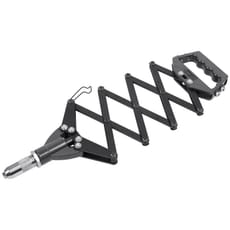
- Lazy Tong Riveter: A compound leverage riveting tool with multiple pivot points that significantly increase pulling force whilst reducing hand effort. Essential for heavy-duty applications or installing larger diameter rivets in thick materials.
- Nut Riveter (Rivet Nut Tool): A specialised tool for installing threaded inserts (rivet nuts or nutserts) into thin materials, creating strong threaded holes in sheet metal, plastic, or composite panels where conventional tapping isn't practical.
- Nose Piece (Nozzle): The interchangeable front section of a riveter that accommodates different rivet diameters. Quality riveters include multiple nose pieces (typically 2.4mm, 3.2mm, 4.0mm, and 4.8mm) and a wrench for quick changes.
- Grip Range: The maximum material thickness that a rivet can effectively fasten together. Selecting rivets with the correct grip range ensures proper installation and maximum joint strength.
Who Uses Riveters?
- Metal Fabricators and Sheet Metal Workers: For assembling ductwork, enclosures, brackets, and structural metalwork
- Automotive Technicians and Panel Beaters: Repairing vehicle bodywork, fixing panels, installing trim, and structural repairs
- Roofing and Cladding Contractors: Fixing guttering, downpipes, flashing, and metal roofing systems
- Caravan and Boat Repair Specialists: Fixing aluminium panels, canvas frames, and lightweight structures
- Maintenance Engineers: General repairs, equipment maintenance, and fabrication work across industrial facilities
- Joiners and Furniture Makers: Assembling metal furniture components, brackets, and reinforcement plates
- HVAC Engineers: Installing air conditioning units, ventilation ducting, and mounting brackets
- DIY Enthusiasts and Home Improvers: Various household repairs, garden projects, and restoration work
- Agricultural and Farm Workers: Repairing machinery, fixing gates, fencing, and general farm maintenance
How to Choose the Right Riveters
Application and Rivet Size: Consider the materials you'll be joining and the rivet sizes you'll typically use. Standard hand riveters handle 2.4mm to 4.8mm rivets adequately for light to medium work, whilst heavy-duty applications require long-arm compound leverage models that accommodate rivets up to 6.4mm diameter. Check the maximum rivet size capacity before purchasing.
Leverage and Handle Length: Longer handles provide greater mechanical advantage, reducing hand fatigue during repetitive use. Compound leverage mechanisms multiply pulling force significantly—essential for harder materials like stainless steel. Short-arm riveters suit confined spaces but require more hand strength.
Swivel Head Functionality: Swivel head riveters allow the handle to rotate independently of the nose piece, providing better access in awkward positions and reducing wrist strain when working at angles. Particularly valuable for automotive work and site applications where access is restricted.
Build Quality and Durability: Professional-grade riveters feature all-steel construction with hardened jaws for longevity under daily use. Chrome-plated or powder-coated finishes resist corrosion. Budget models with aluminium bodies suit occasional DIY use but won't withstand heavy professional demands.
Ergonomics and Comfort: Soft-grip vinyl or rubber handles reduce hand fatigue and improve comfort during extended use. Spring-loaded handles that automatically open after each pull speed up work and reduce repetitive strain. Handle locks aid compact storage.
Nose Piece Selection: Quality riveters include multiple interchangeable nose pieces for different rivet diameters, plus a wrench for tool-free changes. Some models store spare nozzles in the handle for convenience on site.
Mandrel Collection: Built-in collection bottles or bowls catch spent mandrels, keeping the workspace tidy and preventing sharp waste from creating hazards. Essential for professional workshop use and preferable for any application.
Popular Accessories
- Assorted Rivet Sets: Mixed packs of aluminium, steel, and stainless steel rivets in commonly-used sizes (2.4mm, 3.2mm, 4.0mm, 4.8mm) for various material thicknesses
- Replacement Nose Pieces: Spare nozzles in different sizes or replacements for worn components, ensuring your riveter remains versatile
- Rivet Nuts (Nutserts): Threaded inserts in metric sizes (M3, M4, M5, M6, M8) for creating strong threaded holes in thin materials
- Drill Bits for Rivet Holes: Quality HSS or cobalt drill bits in appropriate sizes for preparing clean, accurate holes before riveting
- Storage Cases: Protective cases or organisers for tools and assorted rivets, ideal for mobile tradespeople
- Mandrel Collection Bottles: Replacement or additional collection containers for catching spent rivet mandrels
- Rivet Removal Tools: Specialist drill bits and punches for removing damaged or incorrectly-installed rivets
- Adhesives and Sealants: Used alongside rivets for waterproof joints in roofing, automotive, and marine applications
Safety Information
Personal Protective Equipment: Always wear safety glasses or goggles when riveting, as mandrels can snap off unpredictably and sharp fragments may be ejected. Gloves protect hands from sharp edges on materials and spent mandrels, whilst hearing protection is advisable when working with metal in enclosed spaces.
Work Area Safety: Ensure adequate lighting and secure workpieces firmly before riveting to prevent movement. Keep fingers and hands clear of the rivet area during operation. Use mandrel collection systems to prevent sharp waste creating slip or puncture hazards on the floor.
Tool Maintenance: Inspect riveters regularly for worn or damaged jaws, which can cause incomplete rivet installation or tool failure. Lubricate pivot points occasionally with light machine oil. Replace worn nose pieces promptly to maintain proper grip on rivets.
Correct Rivet Selection: Using rivets with insufficient grip range for the material thickness creates weak joints that may fail under load. Conversely, rivets that are too long may not form properly. Always match rivet specifications to the application and material thickness, following manufacturer recommendations for structural or safety-critical applications.
Frequently Asked Questions
What's the difference between aluminium and steel rivets?
Aluminium rivets are lighter, more corrosion-resistant, and easier to install, making them ideal for softer materials, outdoor applications, and general purpose use. Steel rivets provide greater strength and are necessary for high-load applications or when fastening harder materials. Stainless steel rivets offer maximum corrosion resistance for marine or chemical environments but require more pulling force to install.
Can I use one riveter for different rivet sizes?
Yes, most quality hand riveters come with interchangeable nose pieces for different rivet diameters, typically 2.4mm, 3.2mm, 4.0mm, and 4.8mm. You simply swap the nose piece using the supplied wrench to accommodate different rivet sizes. However, very large rivets (5mm and above) may require a heavy-duty long-arm riveter with sufficient pulling force.
How do I know what length rivet I need?
Measure the total thickness of materials you're joining, then select a rivet with a grip range that encompasses this thickness. As a general rule, the rivet should protrude approximately 1.5 times its diameter beyond the back of the workpiece to form properly. Most rivet packaging specifies the grip range, making selection straightforward.
Why do some riveters cost significantly more than others?
Premium riveters feature all-steel construction for durability under professional daily use, compound leverage mechanisms that multiply pulling force, ergonomic designs that reduce fatigue, and superior manufacturing tolerances for reliable operation. Budget models with aluminium bodies and simpler mechanisms suit occasional DIY use but won't withstand the demands of trade applications or last as long.
What's a lazy tong riveter and when would I need one?
A lazy tong riveter uses multiple pivot points to create compound leverage, significantly increasing pulling force whilst reducing the effort required from your hand. This design is essential for installing larger diameter rivets (4.8mm-6.4mm), working with harder materials like stainless steel, or when you're doing repetitive riveting that would otherwise cause hand fatigue. The extended reach also helps access recessed areas.