

Roll Pins

Pay in 3 interest-free payments on purchases from £20-£3000 with  . Learn more.
 Loading...
End of content
Error - No more pages to load
About Roll Pins
Roll pins, also known as spring pins or tension pins, are hollow cylindrical fasteners manufactured from spring steel and rolled into shape with a longitudinal slot running their length. This characteristic slot allows the pin to compress slightly during insertion, creating a secure interference fit that relies on spring tension rather than adhesives or additional locking mechanisms. The spring action of these versatile fasteners makes them ideal for absorbing shock loads, compensating for minor variations in hole diameters, and providing reliable retention in applications requiring repeated assembly and disassembly. Unlike solid dowel pins that demand precision-machined holes, roll pins are more forgiving and easier to install, making them a practical choice for both workshop repairs and production assemblies.
These essential fastening components are available in various sizes, typically ranging from 1.5mm to 25mm in diameter and from 6mm to 100mm or more in length. Material options include carbon steel for general engineering applications and stainless steel variants offering superior corrosion resistance for outdoor, marine, or food processing environments. Roll pins serve multiple functions across mechanical assemblies: securing components onto shafts, aligning parts during assembly, acting as sacrificial shear pins in safety-critical linkages, and providing temporary or permanent fastening solutions in fabrication work. Their ability to maintain spring tension through multiple installations makes them particularly valuable in maintenance environments where equipment requires regular servicing.
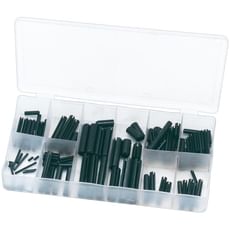
Tooled-Up.com stocks comprehensive roll pin assortments from trusted manufacturers like Draper, providing tradespeople and DIY enthusiasts with organised selections of commonly used sizes. These assortment kits prove invaluable in workshop settings, eliminating delays caused by waiting for specific fastener sizes and ensuring mechanics, engineers, and fabricators can complete repairs efficiently. Whether you're maintaining agricultural machinery, repairing automotive components, or undertaking custom fabrication projects, having ready access to quality roll pins is essential for professional results.
Jargon Buster
- Roll Pin (Spring Pin): A hollow cylindrical fastener rolled from spring steel with a longitudinal slot, designed to compress when inserted into a hole and maintain constant radial tension for secure retention without additional locking mechanisms.
- Nominal Diameter: The specified diameter of the roll pin before installation, typically matching the hole size designation. The actual outside diameter is slightly larger, requiring a specific hole size (usually 0.1-0.2mm larger) to achieve proper interference fit.
- Chamfered End: The bevelled or tapered edge machined on one or both ends of a roll pin, which facilitates easier insertion by guiding the pin into the hole and preventing damage to the slot during installation.
- Shear Strength: The maximum force a roll pin can withstand when loaded perpendicular to its axis before failure occurs. This specification is critical for applications where pins secure components under operational loads or act as sacrificial safety elements.
- Spring Steel: Heat-treated carbon steel with high yield strength and elasticity, allowing roll pins to compress during installation whilst maintaining their spring properties throughout their service life, ensuring consistent retention force.
- Interference Fit: The deliberate dimensional relationship where the pin's outside diameter is slightly larger than the hole diameter, creating friction and spring tension that holds the pin securely in place without movement or rotation.
Who Uses Roll Pins?
Roll pins are utilised across numerous trades and applications:
- Mechanical Engineers - Designing and maintaining machinery, equipment assemblies, and mechanical linkages in industrial settings
- Agricultural Engineers - Repairing and maintaining farming equipment, tractors, harvesters, and implements during demanding seasonal work
- Automotive Mechanics - Securing components in vehicle repairs, transmission assemblies, steering systems, and custom fabrication projects
- Manufacturing Technicians - Production line assembly work and preventative maintenance of manufacturing machinery
- Plant Maintenance Teams - General industrial equipment servicing, breakdown repairs, and routine maintenance schedules
- Fabricators and Welders - Custom metalwork projects requiring reliable fastening solutions for jigs, fixtures, and finished assemblies
- Bicycle Mechanics - Securing components in bicycle assemblies, brake systems, gear mechanisms, and specialist repairs
- Agricultural Contractors - Field repairs and equipment maintenance where quick turnaround times are essential
- Marine Engineers - Boat and marine equipment maintenance, particularly utilising stainless steel variants for corrosion resistance
- DIY Enthusiasts - Home workshop projects, machinery restoration, garden equipment repairs, and general maintenance tasks
How to Choose the Right Roll Pins
Diameter and Length Selection: Accurate measurement is fundamental to successful roll pin application. Use digital callipers or a micrometer to measure both the hole diameter and depth precisely. Roll pins should match the nominal hole size, which typically requires holes 0.1-0.2mm larger than the pin's nominal diameter to achieve proper interference fit. Pin length should extend through the full thickness of the components being joined with minimal protrusion—too short risks inadequate engagement, whilst excessive length may interfere with adjacent components or create snagging hazards.
Material Considerations: Carbon steel roll pins offer excellent strength characteristics and represent the most economical choice for indoor applications and general engineering work. However, stainless steel variants are essential for outdoor equipment, marine environments, food processing machinery, or any application involving exposure to moisture, chemicals, or corrosive atmospheres. The additional cost of stainless steel pins is justified by their extended service life and reliability in challenging conditions.
Load and Stress Analysis: Evaluate the shear and tensile loads the pin will experience during operation. For high-stress applications such as power transmission assemblies or load-bearing linkages, ensure the pin material and diameter provide adequate shear strength with appropriate safety margins. In safety-critical applications, consider whether the pin should function as a sacrificial shear element designed to fail before more expensive components suffer damage.
Assembly Requirements: Applications requiring frequent disassembly benefit from roll pins with chamfered ends, which simplify both installation and removal whilst reducing the risk of damaging the pin or surrounding components. For maintenance workshops serving varied equipment, consider purchasing assortment kits available from Tooled-Up, which provide comprehensive selections of commonly used sizes in organised storage cases, ensuring the right fastener is always at hand.
Quality Standards: Specify pins manufactured to recognised standards such as ISO 8752 or DIN 1481 to ensure consistent quality, dimensional accuracy, and material properties. This is particularly important for production environments or critical machinery applications where component reliability directly impacts operational safety and productivity.
Popular Accessories
- Roll Pin Punches: Specialised installation tools featuring recessed tips designed to drive roll pins without damaging the slot or causing deformation during hammering
- Parallel Pin Punches: Essential tools for removing seized, corroded, or interference-fit roll pins from assemblies without damaging surrounding components
- Digital Callipers: Precision measuring instruments for accurately determining hole sizes, pin dimensions, and verifying correct clearances
- Engineer's Hammers: Appropriate weight hammers (typically 200-500g) providing controlled force for pin installation without excessive impact
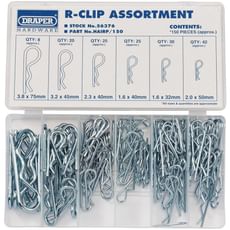
- R Clips and Retaining Rings: Complementary fastening solutions for securing pins and shafts, often used in conjunction with roll pins
- Pin Vice Hand Drills: Small precision drills for creating or enlarging holes to exact specifications for roll pin installation
- Penetrating Oil: Essential maintenance product for loosening corroded pins during disassembly and protecting against future seizure
- Parts Organiser Cases: Storage solutions for keeping assorted roll pins organised by size and readily accessible in workshop environments
- Centre Punches: For accurately marking hole locations before drilling, ensuring proper alignment of fastening points
- Deburring Tools: For removing sharp edges and burrs from drilled holes, ensuring clean pin installation and preventing component damage
Safety Information
Eye Protection: Always wear safety glasses or goggles conforming to BS EN 166 when driving or removing roll pins. The spring action of the pins, combined with hammer strikes, can cause fragments or the pins themselves to become high-velocity projectiles if they slip during installation or removal. This risk increases significantly when working with corroded assemblies or oversized pins.
Hand Protection: Use appropriate work gloves to protect against sharp edges, particularly when handling new pins or working with corroded assemblies. The slotted design of roll pins presents sharp edges capable of causing cuts, whilst the hammering process creates pinch point hazards. However, avoid excessively bulky gloves that reduce dexterity and control when aligning punches.
Proper Tool Selection: Always use correctly sized roll pin punches rather than improvising with drift punches, nails, or screwdrivers. Incorrect tools can slip during hammering, causing hand injuries or damaging the assembly. Ensure punches are in good condition without mushroomed heads, which present fragmentation risks and reduce accuracy.
Secure Workpieces: Clamp or secure assemblies in a bench vice or suitable holding fixture before attempting to install or remove roll pins. Holding components by hand during hammering operations risks serious injury if tools slip or pins eject unexpectedly. Position work at a comfortable height to maintain control and accuracy during fastening operations.
Controlled Force Application: Apply measured hammer blows rather than excessive force, which can cause pins to shoot out unexpectedly, damage surrounding components, or deform the pin itself. Consider using a soft-faced mallet for initial seating before switching to a steel hammer for final driving. Work in a clear area away from other personnel to prevent injury from ejected pins.
Frequently Asked Questions
What's the difference between roll pins and solid dowel pins?
Roll pins are hollow with a longitudinal slot, allowing them to compress during installation and maintain spring tension for retention. Solid dowel pins are precisely machined solid cylinders requiring very accurate hole tolerances. Roll pins tolerate greater hole variations (typically ±0.1-0.2mm) and are easier to install and remove, whilst dowel pins provide more precise alignment and higher load capacity in precision engineering applications. Roll pins are generally preferred for maintenance and repair work, whilst dowel pins suit production assemblies requiring exact positioning.
How do I determine the correct hole size for a roll pin?
The recommended hole diameter is typically 0.1-0.2mm larger than the pin's nominal diameter. For example, a 3mm nominal diameter roll pin requires a 3.1-3.2mm hole for proper interference fit. Consult manufacturer specifications or standards like ISO 8752 for precise recommendations for specific applications. The hole should be clean, burr-free, and drilled perpendicular to the surface for proper pin seating. Chamfer the hole entrance slightly to facilitate pin insertion and prevent damage to the slot.
Can roll pins be reused after removal?
Whilst roll pins can often be reused, their spring tension may be permanently reduced after installation and removal, potentially compromising retention strength. For critical applications, high-stress environments, or safety-related assemblies, it's advisable to use new pins. However, for general workshop repairs and non-critical assemblies, carefully removed pins in good condition without visible deformation can typically be reused successfully, particularly if they've only been installed once previously.
Why won't my roll pin go in fully?
Common causes include incorrect hole size (undersized), burrs or swarf around the hole entrance, pin misalignment with the hole axis, or attempting to drive the pin from the wrong end. Ensure the hole is clean and deburred using a deburring tool or countersink, verify dimensions with digital callipers, and check that you're driving from the chamfered end if present. Sometimes a slightly undersized hole requires reaming to the correct diameter for proper fit. Never force oversized pins, as this can cause component damage or create dangerous spring tension.
What's the best way to remove a stuck or corroded roll pin?
Apply penetrating oil liberally to both ends of the pin and allow it to soak for several hours or overnight for heavily corroded assemblies. Use a correctly sized punch placed squarely against the pin end, then apply firm, controlled hammer blows. If the pin doesn't move after several attempts, apply more penetrating oil and try driving from the opposite end. For severely corroded pins in non-critical components, carefully drill them out using a drill bit approximately 0.5mm smaller than the pin diameter, then finish with a punch to remove remaining fragments. Take care not to enlarge the hole beyond acceptable tolerance for replacement pin installation.