

Rolling Tool Boxes
Pay in 3 interest-free payments on purchases from £30-2000 with  . Learn more.
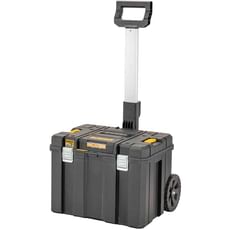
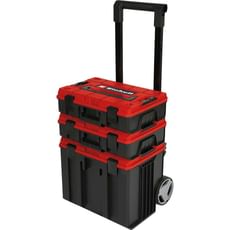
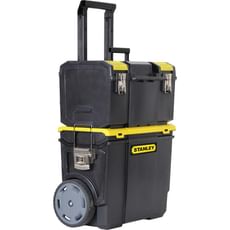
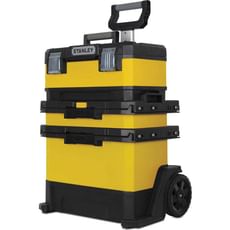
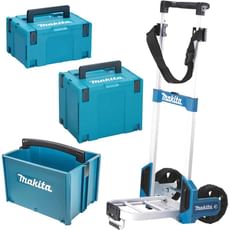
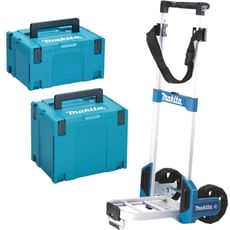
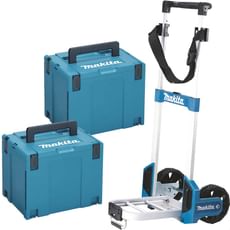
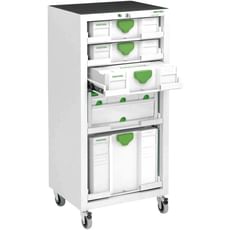
 Loading...
End of content
Error - No more pages to load
About Rolling Tool Boxes
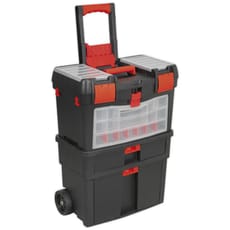
Rolling tool boxes provide mobile storage solutions that combine the organisation of traditional tool storage with the mobility needed on busy job sites and workshops. These wheeled systems feature robust construction, telescopic handles, and heavy-duty wheels designed to transport tools and equipment across uneven surfaces, up kerbs, and through challenging environments. From compact single-unit boxes to comprehensive stackable systems, rolling tool boxes have become essential equipment for professionals who need to move their tools between vehicles, site locations, and workspaces efficiently.
The selection at Tooled-Up.com spans various configurations including standalone wheeled boxes, modular stackable systems, and complete tower sets. Leading manufacturers like DeWalt, Makita, Stanley, and Festool offer distinct system architectures—from DeWalt's TSTAK and Tough System ranges to Makita's MakPac Connector series—each designed with compatibility in mind so components can be added as requirements grow. These systems incorporate features such as metal-reinforced padlock eyes for security, IP-rated weather seals for site protection, and customisable internal dividers to accommodate everything from power tools and hand tools to fixings and consumables.
Modern rolling tool boxes emphasise durability and practicality, with impact-resistant polymer construction, load ratings often exceeding 100kg, and ergonomic handle designs that reduce strain during transport. Many systems feature detachable handles for improved vehicle storage, large-diameter wheels for enhanced manoeuvrability, and side latches that enable secure stacking whilst maintaining quick access to individual units. Whether you're a mobile tradesperson working across multiple sites or a workshop professional organising extensive tool collections, these storage solutions offer the flexibility to adapt your equipment transport to match specific job requirements.
Jargon Buster
- Stackable/Modular System: Tool storage units designed to connect vertically and horizontally, allowing multiple boxes to be secured together and transported as a single unit. Systems like DeWalt TSTAK, Makita MakPac, and Milwaukee PACKOUT use proprietary latching mechanisms to ensure stability.
- IP Rating (Ingress Protection): A standardised classification indicating resistance to dust and water ingress. An IP53 rating, common in premium rolling tool boxes, provides protection against dust and spray water—essential for outdoor site work in British weather conditions.
- Load Capacity: The maximum weight a rolling tool box can safely carry, typically ranging from 25kg to 100kg+ depending on construction quality and wheel design. Always consider the combined weight of tools when selecting systems for heavy equipment.
- Telescopic Handle: An extendable handle mechanism that adjusts to different heights for comfortable transport and collapses for compact storage. Quality handles feature secure locking positions and reinforced mounting points to prevent failure under load.
- Metal Reinforced Padlock Eye: A security feature incorporating metal inserts around padlock attachment points, preventing forced entry by resisting cutting and prying attempts—crucial for site security and vehicle storage.
- Organiser Inserts: Removable compartment dividers and small parts organisers that sit within tool boxes, allowing customisation of internal layouts to suit specific tools, fixings, and accessories.
Who Uses Rolling Tool Boxes?
- Mobile Electricians and Sparks: Transporting cable tools, testing equipment, fixings, and consumables between properties and commercial installations
- Plumbers and Heating Engineers: Moving pipe cutters, wrenches, soldering equipment, and fittings across multiple jobs daily
- Carpenters and Chippies: Carrying hand tools, power tools, fixings, and measuring equipment to site locations
- HVAC Technicians: Organising diagnostic equipment, specialist tools, and replacement components for service calls
- Maintenance Engineers: Managing comprehensive tool sets for facilities management and industrial maintenance work
- Automotive Technicians: Storing diagnostic tools, hand tools, and consumables with easy mobility around workshops and forecourts
- Construction Site Workers: Securing valuable tools during multi-trade projects where equipment security is paramount
- Landscape Gardeners: Transporting power tools, hand tools, and supplies between residential and commercial landscaping projects
- DIY Enthusiasts: Organising home workshop tools with flexibility to move equipment to project locations
How to Choose the Right Rolling Tool Boxes
System Compatibility: Consider whether you'll benefit from a modular stackable system or a standalone unit. Stackable systems from manufacturers like Makita, DeWalt, and Stanley offer expansion flexibility as tool collections grow, whilst standalone boxes suit those with established, stable requirements. Ensure any future purchases match your chosen system's connection mechanism.
Wheel Design and Terrain: Evaluate the environments where you'll use the box. Larger diameter wheels (150mm+) navigate uneven ground, gravel, and kerbs more effectively than smaller wheels suited to smooth warehouse floors. Look for reinforced wheel mountings and bearings designed for jobsite durability rather than light-duty castors that fail under continuous use.
Capacity and Dimensions: Match internal volume to your actual tool requirements—oversized boxes waste vehicle space whilst undersized units require multiple trips. Consider both the depth needed for power tools and the overall footprint that fits your van or vehicle storage area. Tooled-Up stocks capacities ranging from compact 20-litre units to substantial 50-litre+ systems.
Weather Protection: For outdoor site work, prioritise boxes with weather-resistant seals and IP ratings. Rubber gaskets and positive-latch closures prevent dust and moisture ingress that damages tools and corrodes fixings—particularly important in British weather conditions where rain and damp are occupational hazards.
Security Features: Metal-reinforced padlock eyes, robust latching mechanisms, and impact-resistant construction deter opportunistic theft from vehicles and sites. Some systems offer lockable handles or integrated locking bars that secure multiple stacked units simultaneously, reducing setup time whilst maintaining security.
Handle Ergonomics and Adjustability: Telescopic handles should lock securely at multiple heights to accommodate different users and transport situations. Detachable handles, featured on newer DeWalt Tough System designs, allow more flexible vehicle storage by reducing overall height when wheels and handles are removed.
Internal Organisation: Assess whether fixed compartments, removable dividers, or open storage best suits your workflow. Many professionals use a combination—small parts organisers in upper units for consumables and fixings, with open storage below for power tools and larger equipment.
Popular Accessories
- Additional Organiser Cases: Small parts boxes with compartment dividers that stack within the same system, perfect for fixings, drill bits, and consumables
- Foam Inserts: Customisable foam that can be cut to create bespoke tool layouts, protecting valuable equipment during transport
- Shoulder Straps: Detachable carry straps for individual boxes when wheeled transport isn't practical, such as stairs or narrow access
- Mounting Brackets: Vehicle mounting systems that secure tool boxes in vans and trucks, preventing movement and theft
- Padlocks and Security Cables: High-security padlocks and steel cables for securing boxes to fixed points on sites and in vehicles
- Tool Trays and Inserts: Removable top trays that provide immediate access to frequently used items whilst protecting tools stored below
- Expansion Units: Additional shallow or deep boxes that integrate with existing systems as tool collections expand
- Label Holders: Identification panels that allow quick content recognition when multiple boxes are stacked or stored
Frequently Asked Questions
Can I mix different brands of stackable tool boxes together?
Generally no—each manufacturer uses proprietary connection systems that aren't cross-compatible. DeWalt TSTAK won't connect to Makita MakPac or Milwaukee PACKOUT systems. However, some manufacturers offer multiple compatible ranges within their own ecosystem; for example, DeWalt's TSTAK and Tough System V2 ranges use the same connection interface. Choose your preferred system initially and expand within that manufacturer's range for guaranteed compatibility.
What's the typical weight limit for rolling tool boxes?
Individual unit capacities vary considerably, from 25kg for basic models to 100kg+ for heavy-duty systems. However, the practical limit often depends on wheel quality and handle strength rather than box construction. When stacking multiple units, the combined weight can exceed 150kg, so check both individual box ratings and the base unit's wheel capacity. Remember that manoeuvring fully loaded systems requires consideration of manual handling regulations—the HSE recommends risk assessments for loads exceeding 25kg.
Are rolling tool boxes suitable for air travel or courier shipping?
Whilst rolling tool boxes offer robust protection, they're not typically designed as flight cases meeting IATA standards. The wheels and telescopic handles can be vulnerable to baggage handling systems, and many models exceed airline size restrictions. For shipping tools, consider removing handles where possible (some DeWalt models offer this feature), adding additional external protection, and ensuring proper insurance coverage. For regular air travel with tools, purpose-built flight cases provide better protection.
How do I maintain the wheels and handle mechanisms?
Regular maintenance extends service life significantly. Clean wheels and axles after site work to remove debris, mud, and concrete dust that accelerates wear. Apply light lubricant to wheel bearings and telescopic handle mechanisms every few months—avoid heavy grease that attracts dust. Check wheel mounting bolts periodically and tighten if loosened through vibration. Store boxes with handles retracted to reduce stress on extension mechanisms, and avoid overloading beyond stated capacities which damages both wheels and handle mountings.
Can rolling tool boxes withstand being left in cold vans overnight?
Quality rolling tool boxes from brands like Makita, DeWalt, and Stanley use impact-resistant polymers that remain durable across typical UK temperature ranges, including overnight frost conditions. However, extreme cold can make some plastics more brittle temporarily—avoid dropping or impacting boxes in freezing conditions. The greater concern is condensation when bringing cold boxes into warm environments, which can cause moisture problems. Allow boxes to equalise temperature gradually, and consider desiccant packs for moisture-sensitive equipment during winter months.