

Roof Ladders

Pay in 3 interest-free payments on purchases from £20-£3000 with  . Learn more.
 Loading...
End of content
Error - No more pages to load
About Roof Ladders
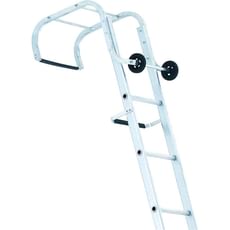
Roof ladders are specialised access equipment designed specifically for safe working on pitched roofs. Unlike conventional extension ladders, roof ladders feature integrated bearer bars and ridge hooks that distribute weight evenly across roof tiles whilst providing secure anchorage at the ridge. The bearer bars hold the ladder away from the roof surface, preventing damage to tiles, slates or other roofing materials, whilst the running wheels at the base allow for easy positioning as the ladder is pushed up the pitch.
Constructed from lightweight yet robust aluminium, these ladders typically feature oval or box-section stiles for enhanced strength and serrated round rungs that provide superior grip, even in wet conditions. The ridge hook mechanism is engineered to grip securely over the apex of a pitched roof, creating a stable platform for tradespeople to carry out inspection, maintenance and repair work. Tooled-Up.com stocks industrial-grade roof ladders from Zarges, a manufacturer renowned for producing professional access equipment that meets stringent safety standards required on UK construction sites and domestic properties alike.
Available in single-section and two-part extending configurations, roof ladders provide versatile solutions for different roof heights and pitches. Two-part models offer additional reach and can be adjusted to suit varying roof dimensions, making them particularly valuable for roofing contractors and building maintenance professionals who work across multiple sites with different specifications.
Jargon Buster
- Bearer Bars: The horizontal bars that run along the underside of a roof ladder, typically spaced at intervals to distribute the user's weight across multiple roof tiles or slates, preventing damage and providing stability.
- Ridge Hook: The curved metal fitting at the top of the ladder that hooks over the apex (ridge) of a pitched roof, anchoring the ladder securely in position during use.
- Running Wheels: Mounted at the base of the ladder, these wheels (typically 100mm diameter) allow the ladder to be rolled smoothly up the roof pitch during positioning, protecting the roof surface from scratches.
- Stiles: The two vertical side rails of the ladder, often manufactured from oval or box-section aluminium to provide structural rigidity whilst keeping weight to a minimum.
- Serrated Rungs: Ladder rungs with grooved or textured surfaces that improve grip and reduce the risk of slipping, particularly important when working on angled surfaces or in damp conditions.
- Pitch: The angle or slope of a roof, measured in degrees from horizontal. Roof ladders must accommodate various pitches whilst maintaining safe working angles.
Who Uses Roof Ladders?
- Roofers and Roofing Contractors: For tile replacement, slate repair, flashing work and complete re-roofing projects
- Chimney Sweeps: Accessing chimneys safely for inspection, sweeping and maintenance work
- Building Surveyors: Conducting roof inspections and structural assessments
- Satellite and Aerial Installers: Installing and maintaining television aerials, satellite dishes and telecommunications equipment
- Solar Panel Installers: Accessing roof surfaces for photovoltaic panel installation and servicing
- Property Maintenance Companies: Carrying out general repairs, gutter clearing and roof inspections across domestic and commercial properties
- Scaffolders: Where full scaffolding isn't economical, roof ladders provide temporary access for preliminary assessments
- Insurance Loss Adjusters: Inspecting storm damage and assessing claims requiring roof access
- DIY Enthusiasts: Homeowners tackling roof repairs, maintenance and improvement projects
How to Choose the Right Roof Ladders
Length and Reach: Measure the vertical height from ground to ridge and the length of the roof pitch. Single-section ladders suit shorter roofs, whilst two-part extending models at Tooled-Up provide greater versatility for taller buildings. Always ensure sufficient overlap on extending models as specified by the manufacturer.
Weight Capacity: Check the maximum working load, which must accommodate the user's weight plus tools and materials. Industrial-grade aluminium ladders typically offer duty ratings suitable for professional tradespeople carrying equipment.
Rung Spacing and Profile: Standard 300mm serrated round rungs provide optimal grip and comfortable climbing. The serrated profile is essential for maintaining traction in wet conditions commonly encountered during roofing work.
Bearer Bar Configuration: Look for bearer bars constructed from substantial aluminium flat bar (typically 10mm x 6mm) with PVC coating. The spacing between bearer bars should distribute weight across multiple tiles without creating pressure points that could cause damage.
Ridge Hook Design: The hook must be robust enough to support the rated load whilst gripping securely over various ridge tile profiles. Some models offer adjustable hooks to accommodate different ridge configurations.
Running Wheel Quality: Wheels should rotate smoothly to allow easy positioning without snagging. A diameter of 100mm provides good rolling performance whilst protecting the roof surface during deployment.
Compliance and Standards: Ensure ladders meet relevant BS EN standards for ladder safety. Professional tradespeople should verify equipment complies with HSE guidance for work at height regulations.
Popular Accessories
- Ladder Stand-Offs: Create clearance from walls and guttering when using conventional extension ladders to access the roof
- Ladder Stabilisers: Improve stability at the base when positioning extension ladders for roof access
- Roof Anchors and Fall Arrest Equipment: Essential PPE for working at height, including harnesses and lanyards
- Ladder Storage Brackets: Wall-mounted or van racking solutions for safe transportation and storage
- Anti-Slip Ladder Feet: Replacement rubber feet to maintain grip on various ground surfaces
- Tool Lanyards and Belt Hooks: Prevent dropped tools when working on pitched roofs
- Ladder Locks and Security Devices: Protect valuable equipment from theft when stored in vehicles or on site
- Roof Edge Protection Systems: Temporary barriers for extended working periods on larger projects
Safety Information
Working at height presents significant risks, and roof ladders must be used in accordance with HSE guidance and the Work at Height Regulations 2005. Always inspect the ladder before use, checking for damage to stiles, rungs, bearer bars and the ridge hook mechanism. Ensure the roof structure is sound enough to support the combined weight of ladder, user and equipment.
The ladder must extend at least 1 metre above the ridge to provide a secure handhold when mounting and dismounting. Position the ladder so bearer bars rest flat against the roof surface, distributing weight evenly. Never overreach whilst working – reposition the ladder instead. Weather conditions are critical; avoid using roof ladders in high winds, ice or heavy rain when surfaces become dangerously slippery.
Wear appropriate PPE including safety boots with good grip, gloves and a hard hat. For extended work at height or steeper pitches, consider fall arrest equipment including harnesses anchored to suitable fixing points. Never work alone on a roof – always have someone at ground level who can summon assistance in an emergency. Regular maintenance is essential; clean the ladder after use, check all fixings are secure, and store in a dry location away from corrosive substances.
Frequently Asked Questions
What's the difference between a roof ladder and an extension ladder?
Roof ladders are specifically designed for use on pitched roof surfaces, featuring bearer bars that spread weight across tiles and a ridge hook for secure anchorage. Extension ladders are for vertical access to heights but lack the specialised features needed for safe working on angled roof surfaces.
Can I use a roof ladder on any type of roofing material?
Roof ladders work effectively on most common UK roofing materials including concrete tiles, clay tiles, natural slate and artificial slate. However, always check the roof's structural integrity first, and take extra care with fragile materials like asbestos cement sheeting or corrugated panels which may require alternative access methods.
How do I determine the correct length roof ladder for my property?
Measure from the eaves (where the roof starts) to the ridge (the peak), following the angle of the pitch. Add at least 1 metre for the required overhang at the ridge. For a two-storey semi-detached house with typical pitch, a 4.5-5 metre ladder usually suffices, though two-part extending models offer greater flexibility.
Do I need special training to use a roof ladder?
Whilst homeowners may use roof ladders for occasional DIY work, professional tradespeople should complete work at height training as required by HSE regulations. This covers risk assessment, ladder selection, safe positioning, correct climbing techniques and emergency procedures. Many contractors require PASMA or similar certification.
How should I maintain my roof ladder?
Inspect before each use for bent stiles, damaged rungs, worn bearer bars or compromised ridge hooks. Clean off debris, dirt and any corrosive substances after use. Check all fixings, rivets and welds remain secure. Store horizontally in a dry location, ideally supported at multiple points to prevent warping. Never paint aluminium ladders as this can hide cracks and damage.