

Roofing Bolts
Pay in 3 interest-free payments on purchases from £30-2000 with  . Learn more.

 Loading...
End of content
Error - No more pages to load
About Roofing Bolts
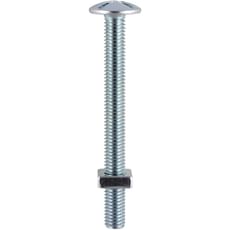
Roofing bolts are specialised fasteners designed specifically for securing roofing materials such as corrugated metal sheets, plastic roofing panels, and timber cladding. Characterised by their distinctive large flat or dome-shaped heads, these bolts distribute loads effectively across the fixing point, preventing damage to thin sheet materials whilst creating a secure, weather-resistant connection. The wide head design is particularly important when working with materials that might otherwise tear or crack under concentrated pressure from standard bolt heads.
Typically manufactured from carbon steel with protective coatings to resist corrosion, roofing bolts are supplied complete with matching nuts and are often fully threaded for maximum adjustability during installation. The combination of a broad bearing surface and robust threading makes them ideal for applications where secure clamping force is essential, particularly on industrial roofing, agricultural buildings, and commercial structures. Tooled-Up.com stocks roofing bolts from trusted brands including Timco and Sirius, offering reliable fixings for both professional tradespeople and serious DIY projects.
These fasteners are engineered to withstand the demanding conditions found on rooftops, including exposure to wind uplift, thermal expansion, and moisture ingress. The large head acts as an integrated washer, eliminating the need for separate components in many applications and simplifying the installation process whilst ensuring consistent clamping pressure across the entire fixing point.
Jargon Buster
- Dome Head: A rounded head profile that sits proud of the material surface, providing excellent load distribution whilst allowing water runoff. This design helps prevent water pooling around the fastener.
- Fully Threaded: Threading that extends along the entire shaft length rather than just a portion, allowing for greater adjustment during installation and providing enhanced grip throughout the bolt's engagement with the material.
- Load Distribution: The way in which fixing forces are spread across the contact area. Roofing bolts' large flat heads distribute clamping loads over a wider area, reducing localised stress on thin materials.
- Carbon Steel: A durable iron-carbon alloy commonly used for fastener manufacture, offering excellent strength and durability. Often treated with protective coatings to enhance corrosion resistance in exposed environments.
- Clamping Effectiveness: The ability of a fastener to securely hold materials together without causing damage. Roofing bolts achieve superior clamping through their specialised head design and threading.
- Sheet Metal Fixing: Fastening method specifically designed for thin metal panels where traditional bolts might cause tearing, distortion, or concentrated stress points.
Who Uses Roofing Bolts?
Roofing bolts are essential fasteners for a diverse range of trades and applications:
- Roofing Contractors: Professionals installing and repairing metal roofing systems on commercial, industrial, and agricultural buildings
- Cladding Specialists: Tradespeople fitting metal and plastic cladding panels to building exteriors
- Agricultural Builders: Contractors constructing and maintaining farm buildings, barns, and storage facilities
- General Builders: Construction professionals working on structural elements requiring secure sheet material fixings
- Maintenance Engineers: Site maintenance personnel repairing roofing and cladding systems
- Industrial Fitters: Tradespeople installing equipment housings and protective enclosures
- Landscape Contractors: Professionals building shelters, pergolas, and outdoor structures with metal roofing
- DIY Enthusiasts: Homeowners undertaking shed construction, garage repairs, and outbuilding projects
- Property Maintenance Teams: Staff responsible for maintaining commercial and residential building exteriors
How to Choose the Right Roofing Bolts
Selecting appropriate roofing bolts requires consideration of several important factors:
Material Thickness: Measure the combined thickness of all materials being fastened, including any insulation or timber battens. Choose bolt lengths that provide adequate thread engagement beyond the materials whilst allowing for the nut to be properly tightened. A general rule is to ensure at least 15-20mm of thread protrudes beyond the assembly.
Material Type: Consider what you're fixing - thin corrugated steel requires different specifications than thicker plastic sheeting or timber. The selection at Tooled-Up includes bolts suitable for various substrate materials, ensuring compatibility with your specific application.
Corrosion Resistance: Roofing applications involve constant exposure to moisture and weathering. For coastal locations or industrial environments with corrosive atmospheres, consider galvanised or stainless steel options. Standard zinc-plated carbon steel suits most general applications.
Head Style: Dome heads provide excellent water shedding and a finished appearance, whilst flat heads may be preferred where a lower profile is required. Consider the aesthetic requirements alongside functional needs.
Thread Type: Fully threaded bolts offer maximum adjustability and are ideal where fixing through multiple layers or when precise positioning is critical. Ensure thread pitch and diameter match your application requirements.
Quantity Requirements: Calculate spacing requirements based on manufacturer recommendations for your roofing material - typically between 300-600mm centres depending on exposure conditions and panel type. Always purchase additional fixings to account for wastage and future repairs.
Popular Accessories
To complete roofing installations and ensure professional results, consider these complementary products:
- Sealing Washers: EPDM or neoprene washers that create watertight seals around bolt penetrations
- Cap Heads: Decorative covers that conceal bolt heads whilst providing additional weather protection
- Socket Sets: Appropriate drive tools for efficient installation, particularly important for high-volume fixing work
- Drill Bits: HSS or carbide-tipped bits sized for pilot hole preparation in various materials
- Spanners and Wrenches: Correctly sized tools for tightening nuts to appropriate torque specifications
- Spirit Levels: Essential for ensuring accurate alignment during sheet positioning and fixing
- Measuring Tapes: For marking accurate fixing centres and ensuring consistent spacing
- Cordless Drills: Power tools from brands like Makita, DeWalt, and Milwaukee for efficient hole preparation
- Safety Equipment: Working-at-height PPE including harnesses, hard hats, and safety boots
Frequently Asked Questions
What spacing should I use for roofing bolts on corrugated sheets?
Standard practice recommends fixing every third corrugation along supporting purlins or rafters, typically creating centres of 450-600mm depending on sheet profile and wind exposure. Always secure fixings through the crown (peak) of the corrugation rather than the trough for maximum strength and weather resistance. Increase fixing density in high-wind areas and around roof perimeters.
Can roofing bolts be used with plastic roofing sheets?
Yes, roofing bolts are excellent for plastic and polycarbonate sheets. The large flat head distributes clamping pressure, preventing cracking or crazing around the fixing point. Always use appropriate sealing washers and avoid overtightening, which can restrict thermal expansion and lead to material stress. Pre-drill holes slightly larger than the bolt diameter to allow for expansion and contraction.
Do I need to use washers with roofing bolts?
The large integral head often eliminates the need for additional washers on the bolt side, though specialised sealing washers are recommended for weatherproofing in exposed applications. Always use a flat washer under the nut to prevent damage to the substrate material and distribute clamping forces effectively. For critical applications or thin materials, consider using both sealing and load-spreading washers.
What's the difference between roofing bolts and coach bolts?
Whilst both feature large heads, roofing bolts have much wider, flatter heads specifically designed for sheet materials, and are typically fully threaded. Coach bolts have square necks beneath the head for timber applications and partial threading. Roofing bolts provide superior load distribution for thin materials, making them purpose-designed for cladding and roofing applications rather than structural timber jointing.
How do I prevent leaks around roofing bolt fixings?
Use appropriate sealing washers manufactured from EPDM or neoprene rubber beneath the bolt head. Ensure holes are drilled perpendicular to the sheet surface, avoid over-tightening which can compress washers excessively, and position fixings through the crown of profiled sheets where water naturally runs away. Some applications benefit from additional sealant applied around the washer perimeter, though quality sealing washers should provide adequate protection when correctly installed.