

Rota-Tip Bits
Pay in 3 interest-free payments on purchases from £30-2000 with  . Learn more.
 Loading...
End of content
Error - No more pages to load
About Rota-Tip Bits
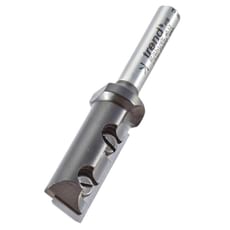
Rota-Tip router bits represent an innovative and cost-effective solution for woodworkers and joiners who demand precision and longevity from their cutting tools. Unlike conventional router cutters that must be discarded or resharpened when dulled, Rota-Tip bits feature replaceable blades that can be rotated 180 degrees to present a fresh cutting edge, effectively doubling the lifespan of each blade. This ingenious design makes them particularly economical for busy workshops and professional tradespeople who rely on consistent cutting performance throughout demanding projects.
The selection available from Tooled-Up.com includes template profilers, bevel trimmers, and straight cutters, all designed to deliver clean, accurate results in timber routing applications. These bearing-guided router bits excel in template work, flush trimming, and edge profiling tasks where precision is paramount. With features such as single and two-flute configurations, standard 1/2-inch shanks compatible with most professional routers, and hardwearing carbide blades, these cutters are engineered to withstand the rigours of both site work and workshop environments.
Trend dominates this specialist category, having pioneered the replaceable blade concept that has become synonymous with the Rota-Tip name. Their commitment to quality manufacturing ensures that replacement blades are readily available, making these tools a sustainable choice that reduces waste whilst maintaining the highest standards of cutting performance. Whether you're running template work on solid hardwoods or trimming laminates and veneers, Rota-Tip technology delivers professional results with exceptional blade economy.
Jargon Buster
- Rota-Tip: A proprietary router bit design featuring replaceable cutting blades that can be rotated 180 degrees when one edge becomes dull, extending tool life and reducing replacement costs.
- Bearing-Guided: Router bits fitted with a precision bearing that runs along a template or workpiece edge, ensuring consistent cutting depth and accurate profile following without the need for a fence.
- Template Profiler: A router cutter specifically designed for following templates or patterns to reproduce identical shapes and profiles across multiple workpieces.
- Flute: The cutting channel or chip clearance groove on a router bit. Single-flute cutters provide aggressive material removal, whilst two-flute designs offer smoother finishes and better balance at higher speeds.
- Shank Diameter: The cylindrical portion of the bit that fits into the router collet. The 1/2-inch shank is the professional standard, offering superior rigidity and reduced vibration compared to smaller shanks.
- Bevel Trimmer: A specialist router cutter designed to create angled or chamfered edges, commonly used for decorative edging or preparing surfaces for joinery applications.
Who Uses Rota-Tip Bits?
- Joiners and Cabinet Makers: For template work, flush trimming, and creating consistent profiles across multiple components in furniture and cabinetry projects.
- Kitchen Fitters: When trimming worktop edges, following templates for hob cutouts, and achieving professional edge finishes on laminated surfaces.
- Shopfitters: For rapid, accurate reproduction of decorative profiles and template-guided cutting in retail and commercial fit-out work.
- Timber Frame Builders: When precision routing is required for joints, housings, and repetitive cuts in structural timber work.
- Furniture Restorers: For matching existing profiles and recreating period mouldings where accuracy and fine detail are essential.
- Serious DIY Enthusiasts: Home woodworkers undertaking ambitious projects who require professional-quality results and appreciate the economy of replaceable blade systems.
- Joinery Workshops: Production environments where the cost savings of rotatable blades and quick blade changes significantly impact running costs.
How to Choose the Right Rota-Tip Bits
Profile Type: Consider the specific cutting task at hand. Template profilers are ideal for pattern following and reproduction work, straight cutters excel at flush trimming and edge work, whilst bevel trimmers create angled finishes. Match the cutter profile to your intended application for optimal results.
Flute Configuration: Single-flute cutters remove material quickly and are excellent for template work in softer timbers, whilst two-flute designs provide smoother finishes and better performance in harder woods and laminated materials. The choice depends on your material type and desired finish quality.
Bearing Size: Check that the bearing diameter suits your template thickness and workpiece requirements. The bearing diameter determines the offset between the template edge and the cutting circle, affecting the final dimension of your work.
Shank Compatibility: Verify that your router accepts 1/2-inch shanks, which is the standard for Rota-Tip bits stocked at Tooled-Up. This professional shank size provides superior rigidity and reduces deflection during cutting operations.
Replacement Blade Availability: Ensure that replacement blades are readily available for your chosen cutter. Trend's comprehensive spares programme means that replacement blades remain in production, protecting your investment over the long term.
Cutter Diameter and Depth: Match the cutter dimensions to your router's power rating and the material thickness you typically work with. Larger diameter cutters require more powerful routers to maintain safe operating speeds.
Popular Accessories
- Replacement Blades: Keep spare Rota-Tip blades in stock to minimise downtime when cutting edges become dulled during intensive work.
- Router Guide Bushes: Essential for template work, allowing precise offset distances when using templates with your router and Rota-Tip cutters.
- Template Material: MDF or plywood sheets for creating accurate routing templates that work perfectly with bearing-guided Rota-Tip bits.
- Collet Extensions: Useful for accessing deeper areas or when additional reach is required beyond standard router base capacity.
- Router Speed Controllers: For fine-tuning your router's RPM to match material type and cutter diameter, ensuring optimal cutting performance and blade longevity.
- Extraction Hoses: Connect your router to a dust extraction system to maintain clear sight lines and protect respiratory health during routing operations.
- Bearing Cleaning Solutions: Specialist cleaners to remove pitch and resin build-up from router bit bearings, maintaining smooth operation.
Safety Information
Always disconnect routers from the 240v mains supply before changing or adjusting Rota-Tip bits. Ensure cutters are securely tightened in the collet and that the correct spanner size is used to prevent slippage. Wear appropriate PPE including safety glasses, hearing protection, and a dust mask when routing, as timber dust presents serious respiratory hazards covered by COSHH regulations.
Check that router speed settings are appropriate for the cutter diameter being used—larger diameter bits require slower speeds to maintain safe peripheral velocities. Never exceed the maximum speed rating marked on the cutter or specified by the manufacturer. Inspect Rota-Tip blades regularly for chips, cracks, or excessive wear, and rotate or replace them promptly to maintain cutting performance and prevent dangerous breakage.
Secure workpieces firmly before routing and always feed the router against the cutter rotation direction to maintain control. Keep hands well clear of the cutting area and use push sticks or guides where appropriate. Follow HSE guidance on workshop safety and ensure adequate ventilation when routing treated timbers or manufactured boards that may release harmful substances.
Frequently Asked Questions
How do I know when to rotate the Rota-Tip blade?
You'll notice increased burning marks on the workpiece, excessive feed resistance, or a rougher finish quality when the cutting edge becomes dull. Simply remove the blade, rotate it 180 degrees to present the fresh edge, and secure it back in position. This takes just minutes and immediately restores cutting performance.
Can Rota-Tip bits be used in any router?
Rota-Tip bits feature standard 1/2-inch shanks that fit any router equipped with a corresponding collet. Ensure your router has sufficient power for the cutter diameter you're using—typically a minimum of 1200W for professional routing applications. Always check your router's manual for maximum recommended cutter sizes.
Are replacement blades expensive compared to buying new bits?
Replacement Rota-Tip blades cost considerably less than purchasing entirely new router cutters, making them highly economical for busy workshops. Since each blade offers two cutting edges through rotation, you effectively get four cutting lives from each cutter body and two blades—a significant saving over conventional bits.
What's the difference between single-flute and two-flute Rota-Tip cutters?
Single-flute cutters remove material more aggressively and provide better chip clearance, making them ideal for template work in softer timbers. Two-flute designs offer smoother finishes, better balance at high speeds, and improved performance in harder materials and laminates. Choose based on your typical workpiece materials and finish requirements.
How should I store Rota-Tip bits to protect the blades?
Store Rota-Tip cutters in a dedicated router bit case or wall-mounted rack where the cutting edges won't contact other tools or surfaces. Keep them clean and dry to prevent corrosion, and apply a light coating of tool oil if storing for extended periods. Proper storage significantly extends blade life and maintains cutting precision.