

Rotary Cup Brushes
Pay in 3 interest-free payments on purchases from £30-2000 with  . Learn more.
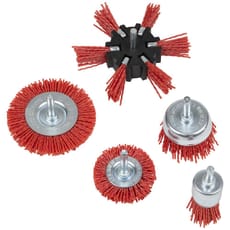
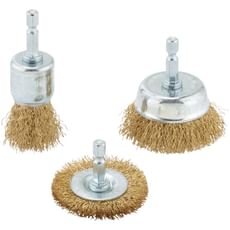
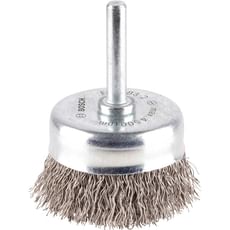
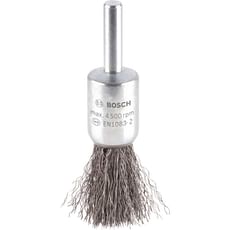
 Loading...
End of content
Error - No more pages to load
About Rotary Cup Brushes
Rotary cup brushes are essential abrasive tools designed for use with power drills, angle grinders, and bench grinders. These cylindrical brushes feature bristles arranged around a central arbor or mounting shaft, creating a cup-shaped profile that's ideal for aggressive surface preparation, rust removal, paint stripping, and deburring applications. The cup design allows for effective material removal across flat and curved surfaces whilst maintaining consistent contact with the workpiece.
Available in two primary configurations at Tooled-Up.com, rotary cup brushes come as either wire cup brushes or nylon cup brushes, each suited to different materials and applications. Wire cup brushes feature steel, stainless steel, or brass bristles for heavy-duty cleaning and surface preparation on metal substrates, whilst nylon variants offer a gentler approach for finishing work, composite materials, and applications where metal contamination must be avoided. Both types are available with various arbor sizes and thread configurations to fit standard power tools from leading manufacturers including Makita, DeWalt, Bosch, and Milwaukee.
The versatility of rotary cup brushes makes them indispensable across metalworking, fabrication, automotive repair, and general maintenance applications. Their rotating action combined with the cup profile delivers superior coverage compared to end brushes, making them particularly effective for preparing large surface areas, cleaning welds, removing scale, and creating uniform surface finishes before coating or painting.
Jargon Buster
- Arbor
- The central shaft or spindle that connects the cup brush to the power tool. Common arbor sizes include 6mm and 1/4-inch shafts for drills, whilst threaded arbors (typically M10, M14, or 5/8-inch BSF) suit angle grinders.
- Crimped Wire
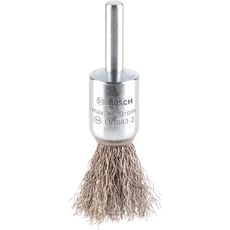
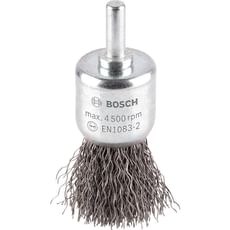
- Wire bristles with a wavy, zigzag pattern that provides flexibility and reduces surface gouging. Crimped wire brushes are ideal for general cleaning and rust removal where a less aggressive action is required.
- Knotted Wire
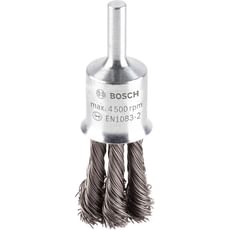
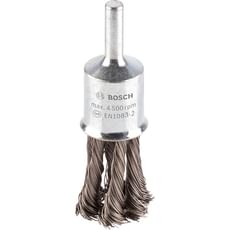
- Twisted wire strands formed into knots that create an extremely aggressive brushing action. Knotted cup brushes remove heavy rust, weld scale, and stubborn coatings but may mark softer materials.
- Maximum Safe Speed (RPM)
- The highest rotational speed at which the brush can be safely operated, typically marked on the brush body or packaging. Exceeding this speed can cause bristle failure and present serious safety hazards.
- Filament Material
- The material from which the bristles are manufactured. Common options include carbon steel wire for general use, stainless steel wire for non-ferrous metals, brass wire for softer materials, and abrasive nylon for non-metallic applications.
- Trim Length
- The exposed length of the bristles from the cup base to the tips. Longer trim lengths provide greater flexibility and reach, whilst shorter trims deliver more aggressive cutting action.
Who Uses Rotary Cup Brushes?
- Welders and Fabricators – for cleaning welds, removing spatter, and preparing metal surfaces before welding
- Automotive Technicians – for removing rust, paint, and corrosion from vehicle bodywork and chassis components
- Metal Finishers – for deburring, edge blending, and creating uniform surface textures on fabricated components
- Maintenance Engineers – for cleaning machinery, removing scale, and preparing equipment for repair or repainting
- Construction Workers – for site preparation, cleaning structural steelwork, and removing concrete residue from tools
- Painters and Decorators – for stripping old paint and preparing surfaces for new coatings
- Boat Builders and Marine Engineers – for antifoul removal and preparing marine-grade metals using stainless steel brushes
- DIY Enthusiasts – for restoration projects, rust removal, and general surface preparation tasks
How to Choose the Right Rotary Cup Brushes
Bristle Material: Select wire cup brushes with carbon steel bristles for general-purpose ferrous metal work, stainless steel variants for aluminium, stainless steel, and non-ferrous applications to prevent contamination, or brass wire options for softer metals where scratching must be minimised. Nylon cup brushes are ideal for composite materials, wood, and applications requiring a non-sparking tool.
Wire Configuration: Crimped wire brushes offer flexibility and are suited to light to medium cleaning, rust removal, and paint stripping. Knotted wire brushes provide aggressive material removal for heavy rust, mill scale, and weld preparation but will mark the substrate more readily. Consider the condition of your workpiece when selecting between these options.
Mounting Type: Match the arbor configuration to your power tool. Drills typically require 6mm or 1/4-inch shank arbors with locking mechanisms, whilst angle grinders use threaded arbors—M14 is standard across most 115mm and 125mm grinders, though M10 and 5/8-inch BSF threads are also encountered. Always verify compatibility before purchase.
Brush Diameter: Common sizes range from 50mm to 100mm for drill-mounted brushes and 65mm to 150mm for angle grinder applications. Larger diameters cover more surface area but require more powerful tools and careful speed management to stay within safe operating limits.
Maximum Speed Rating: Critical for safety—always check that your power tool's operating speed doesn't exceed the brush's maximum rated RPM. Angle grinders typically operate at 10,000-12,000 RPM, whilst drills may run at variable speeds up to 3,000 RPM. The extensive selection at Tooled-Up includes brushes rated for various speed ranges to suit different applications.
Application Intensity: Consider how frequently you'll use the brush and the severity of the work. Professional tradespeople undertaking daily heavy-duty applications should invest in premium brushes from manufacturers like Bosch or Makita, which offer superior bristle retention and extended service life compared to economy options suitable for occasional DIY use.
Popular Accessories
- Angle Grinders – 115mm and 125mm models from DeWalt, Makita, and Milwaukee provide the power needed for demanding cup brush applications
- Cordless Drills and Drill Drivers – for operating smaller diameter cup brushes on lighter cleaning tasks
- Safety Goggles and Face Shields – essential eye protection from flying debris and dislodged bristles
- Work Gloves – heavy-duty leather or reinforced gloves from Portwest or DeWalt protect against sharp bristles and hot workpieces
- Dust Extraction Equipment – reduces airborne particles when brushing generates significant dust or debris
- Wire Wheels and End Brushes – complementary rotary brushes for reaching tight spaces and edges where cup brushes cannot access
- Bench Grinders – for stationary applications where workpieces can be brought to the tool
- Spindle Adapters and Arbor Extensions – allow cup brushes to be fitted to tools with non-standard mounting configurations
Safety Information
Personal Protective Equipment: Always wear appropriate PPE when operating rotary cup brushes. Safety goggles or a full face shield are essential as bristles can break free at high speeds, creating projectile hazards. Heavy-duty work gloves protect hands from sharp wire ends, whilst long sleeves prevent arm injuries from contact with rotating bristles. In dusty applications, wear a dust mask or respirator rated for the material being removed, particularly when stripping lead-based paints or working with materials generating hazardous dust.
Speed Compliance: Never exceed the maximum safe speed printed on the brush or packaging. Operating above the rated RPM can cause catastrophic bristle failure, centrifugal breakup, and serious injury. If using variable-speed tools, set them appropriately—angle grinders may need speed controllers to safely operate certain cup brushes.
Tool Security: Ensure the cup brush is correctly mounted and securely tightened before use. Check that threaded brushes are wound fully onto the grinder spindle and that shank-mounted brushes are properly inserted into drill chucks. Loose brushes can detach during operation with dangerous consequences.
Work Positioning: Position yourself to the side of the rotating brush path, never directly in line with it. Maintain firm control of the power tool using both hands where possible, and ensure you have stable footing. The brush should rotate away from sharp edges that could snag bristles and cause tool kickback.
Inspection and Maintenance: Examine cup brushes before each use for damaged, bent, or missing bristles, and replace worn brushes promptly. Bristles become more prone to breakage as they wear down. Store brushes in their original packaging or protective containers to prevent bristle damage and contamination.
HSE Compliance: Users should be aware of relevant Health and Safety Executive guidance regarding abrasive wheels and rotating tools, particularly the Provision and Use of Work Equipment Regulations (PUWER). In commercial settings, operators may require specific training in the safe use of powered abrasive tools.
Frequently Asked Questions
What's the difference between crimped and knotted wire cup brushes?
Crimped wire brushes feature individual wires with a wavy pattern, providing flexibility and a less aggressive brushing action ideal for general cleaning, light rust removal, and paint stripping without heavily marking the substrate. Knotted wire brushes consist of twisted wire strands formed into knots, delivering a much more aggressive cutting action suited to removing heavy rust, mill scale, and stubborn coatings. Knotted brushes remove material faster but will mark softer metals and may gouge surfaces if used carelessly.
Can I use a wire cup brush on aluminium or stainless steel?
Standard carbon steel wire brushes should not be used on aluminium or stainless steel as they can cause ferrous contamination, leading to corrosion issues. Always use stainless steel wire cup brushes for these materials—they're specifically designed to prevent cross-contamination whilst still providing effective cleaning and surface preparation. For softer metals like aluminium where scratching is a concern, brass wire or nylon abrasive cup brushes offer gentler alternatives.
Why do rotary cup brushes have maximum speed ratings?
Cup brushes are subject to significant centrifugal forces when rotating at high speeds. Exceeding the maximum rated RPM can cause bristles to break free and become dangerous projectiles, or in extreme cases, cause the entire brush body to fail. Different brush sizes, construction methods, and bristle materials have different strength characteristics, which is why maximum speed ratings vary. Always check your power tool's operating speed doesn't exceed the brush rating—this is particularly important with angle grinders, which typically operate at 10,000-12,000 RPM.
How long should a rotary cup brush last?
Service life varies considerably depending on application intensity, material being worked, operating speed, and brush quality. Professional-grade brushes used for heavy-duty applications may last several hours of continuous use, whilst economy brushes on demanding tasks might wear out more quickly. Signs of excessive wear include bristles worn down to less than half their original length, uneven bristle distribution, or bent and broken wires. Replace brushes once bristle length is significantly reduced, as short bristles become stiffer and more prone to breakage.
What size cup brush do I need for my angle grinder?
The appropriate brush size depends on your grinder's disc capacity and spindle thread. For 115mm (4.5-inch) angle grinders, cup brushes between 65mm and 75mm diameter are typical, whilst 125mm (5-inch) grinders can accommodate brushes up to 100mm diameter. Most UK angle grinders feature M14 threaded spindles, though some smaller models use M10 threads. Always verify both the thread size and maximum brush diameter for your specific grinder model, and ensure the brush's maximum speed rating exceeds your grinder's operating speed.