

Round Wire Nails
Pay in 3 interest-free payments on purchases from £30-2000 with  . Learn more.
 Loading...
End of content
Error - No more pages to load
About Round Wire Nails
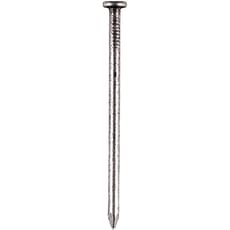
Round wire nails are amongst the most versatile and commonly used fasteners in construction, carpentry, and general joinery work. Characterised by their circular wire shank and full round head, these nails provide reliable clamping force and are designed for a wide range of fixing applications. The round head design offers superior holding power compared to other nail types, making them ideal for applications where pullout resistance is important. Bright finish round wire nails are self-coloured steel without any protective coating or plating, making them most suitable for interior applications where moisture exposure is minimal.
Tooled-Up.com stocks round wire nails from trusted brands like Timco, offering professional-grade fasteners that conform to Eurocode 5 standards and service class 1 requirements. These nails are manufactured to precise specifications, ensuring consistent quality and performance across various fixing tasks. The bright finish provides a clean appearance for visible fixings whilst maintaining the structural integrity required for demanding applications.
Available in various lengths and gauges, round wire bright nails are essential stock items for any professional tradesperson or serious DIY enthusiast. Their versatility makes them suitable for tasks ranging from basic carpentry and framework construction to more specialised joinery applications where a secure, permanent fixing is required indoors.
Jargon Buster
- Bright Finish
- A self-coloured steel finish without any plating or coating. Bright nails are cost-effective and suitable for indoor use where corrosion resistance is not required.
- Round Wire
- Refers to the circular cross-section of the nail shank, manufactured from drawn wire. This provides consistent diameter and strength throughout the length of the nail.
- Round Head
- A full circular head that sits proud of the surface, providing maximum clamping force and resistance to pullout. The larger head diameter prevents the nail pulling through softer materials.
- Gauge
- The diameter measurement of the nail shank, typically expressed in millimetres or standard wire gauge (SWG). Heavier gauges provide greater strength but require more driving force.
- Eurocode 5
- The European standard (BS EN 1995) for the design of timber structures, which specifies requirements for fasteners including load-bearing capacities and material specifications.
- Service Class 1
- Classification under Eurocode 5 indicating suitability for environments where moisture content in timber remains below 12%, typically heated interior spaces.
Who Uses Round Wire Nails?
- Carpenters and Joiners - for framework construction, studwork, and general carpentry projects
- Cabinet Makers - for assembling carcasses and internal framework where fixings won't be visible
- Construction Workers - for first fix carpentry, formwork, and temporary structures
- Shopfitters - for retail unit construction and fixture installation
- Furniture Makers - for internal frame construction and structural components
- Maintenance Teams - for general repairs and refurbishment work in commercial and residential properties
- DIY Enthusiasts - for home improvement projects, garden structures, and general repairs
- Fencing Contractors - for internal framework and non-exposed timber connections
- Theatre Set Builders - for constructing temporary sets and staging platforms
How to Choose the Right Round Wire Nails
Selecting the appropriate round wire nails depends on several key factors. The length of the nail should typically be approximately three times the thickness of the timber being fixed, ensuring sufficient penetration into the base material for adequate holding power. For structural applications, consult Eurocode 5 guidelines for specific load-bearing requirements.
Consider the gauge or diameter in relation to your application. Heavier gauge nails provide greater strength and pullout resistance but may split thinner timber sections. Lighter gauges are suitable for delicate work or when fixing near edges where splitting is a concern. Always pre-drill holes in hardwoods or near timber edges to prevent splitting.
The finish and coating must match the environment. Bright finish nails available at Tooled-Up are ideal for interior applications where aesthetics aren't paramount and moisture exposure is minimal. For outdoor or damp environments, galvanised or stainless steel alternatives should be considered instead.
Application method also influences your choice. Round wire nails can be hand-driven using a claw hammer or installed with pneumatic nailers for higher-volume work. Ensure compatibility between nail specifications and any power tool being used. The round head design requires sufficient clearance if using a nail gun.
Finally, consider quantity requirements for your project. Professional tradespeople benefit from purchasing in bulk, whilst DIY users may prefer smaller packs. Calculate your needs based on fixing centres and coverage area to avoid material shortages mid-project.
Popular Accessories
- Claw Hammers - essential for driving nails and removing mistakes, available from brands like Stanley and Bahco
- Nail Punches - for setting nail heads below the surface when required
- Pneumatic Nail Guns - for high-volume applications, increasing productivity significantly
- Air Compressors - to power pneumatic nailers on site
- Pilot Drill Bits - for pre-drilling holes in hardwood or near timber edges
- Magnetic Nail Holders - for one-handed nail starting in awkward positions
- Tool Belts and Pouches - from brands like Snickers for convenient fastener storage
- Work Gloves - to protect hands during installation work
- Safety Glasses - essential PPE when driving nails to protect against flying debris
Safety Information
When using round wire nails, always wear appropriate personal protective equipment including safety glasses or goggles to protect against metal fragments and timber splinters. Flying debris when driving nails poses a genuine risk to eyesight, particularly when working overhead or in confined spaces.
Ensure proper grip and stance when using hammers to avoid repetitive strain injuries. Take regular breaks during extended nailing sessions to prevent fatigue, which can lead to missed strikes and potential hand injuries. Keep fingers clear of the strike zone and use nail holders for starting fixings in difficult positions.
Be aware of hidden services when nailing into existing structures. Check for electrical cables, plumbing pipes, and gas lines before driving nails into walls, floors, or ceilings. Use a cable and pipe detector where services may be present. When working on site, follow HSE guidelines for manual handling and maintain good housekeeping to prevent trip hazards from discarded materials.
Store nails securely in appropriate containers to prevent injury from loose fasteners. When using pneumatic nailers, follow manufacturer guidelines and ensure proper training before operation. Never bypass safety mechanisms on power tools and always disconnect air supply or power when performing maintenance.
Frequently Asked Questions
Can bright finish round wire nails be used outdoors?
Bright finish nails are not recommended for outdoor applications as they have no protective coating and will rust when exposed to moisture. For exterior work, choose galvanised or stainless steel alternatives which offer corrosion resistance suitable for damp or exposed environments.
What's the difference between round wire nails and oval wire nails?
Round wire nails have a circular cross-section and full round head providing maximum clamping force, whilst oval wire nails have an elliptical shank and smaller head. Oval nails are less likely to split timber when driven parallel to the grain and can be punched below the surface more easily, but round wire nails offer superior holding power for structural applications.
Do I need to pre-drill holes before using round wire nails?
Pre-drilling is recommended when working with hardwoods, fixing near timber edges, or when using larger gauge nails. The pilot hole should be slightly smaller than the nail diameter. In softwoods and away from edges, round wire nails can typically be driven directly without pre-drilling, though this depends on timber density and nail size.
What does Eurocode 5 service class 1 mean for nail selection?
Service class 1 designation under Eurocode 5 indicates the nails are suitable for interior environments where timber moisture content remains below 12%, typically in heated buildings. This classification ensures the fasteners meet appropriate standards for load-bearing capacity and durability in these conditions. For damp or exterior locations, higher service class ratings would be required.
How many nails do I need for my project?
Calculate requirements based on your fixing centres and coverage area. As a general guide for framework, space nails every 300-400mm along timber members. For sheet materials, use 150mm centres around perimeters and 300mm centres across intermediate supports. Always purchase 10-15% extra to account for wastage and mistakes.