

Rulers
Pay in 3 interest-free payments on purchases from £30-2000 with  . Learn more.
 Loading...
End of content
Error - No more pages to load
About Rulers
Precision measurement forms the foundation of quality workmanship across all trades, and a dependable ruler remains one of the most fundamental tools in any professional's kit. From traditional folding wooden rules to modern stainless steel precision instruments, the selection at Tooled-Up.com encompasses measuring tools crafted from aluminium, fibreglass, plastic, and steel to suit different applications and working environments. Whether you're marking out timber on site, checking tolerances in a machine shop, or interpreting scaled architectural drawings, having the right ruler ensures accuracy and efficiency in your work.
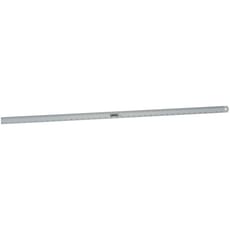
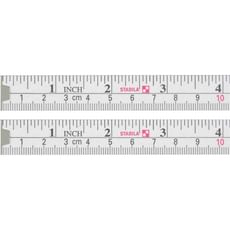
The range includes straight rules for general measurement tasks, tri-scale rules designed specifically for working with scaled plans, and folding rules that combine portability with the rigidity needed for accurate marking. Available lengths span from compact 150mm pocket rules that slip easily into tool pouches to extended measuring instruments reaching two metres when fully deployed. Most rules feature graduations in metric measurements, with many offering imperial markings on the reverse side, providing the versatility required across different trades and project specifications.
Tooled-Up stocks trusted brands including Faithfull, Draper, Stanley, Stabila, Wiha, Hultafors, and Facom, ensuring professional-grade accuracy and durability. From budget-friendly options suitable for occasional DIY use to premium precision instruments manufactured to exacting tolerances for engineering applications, these measuring tools deliver reliable performance whether you're working in a workshop, on a construction site, or in a design studio. Hardened steel rules with etched graduations, lightweight aluminium options, corrosion-resistant stainless steel variants, and traditional wooden folding rules all serve specific purposes within the modern tradesperson's toolkit.
Jargon Buster
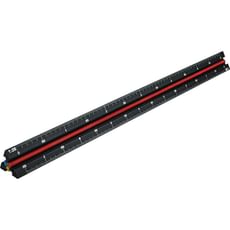
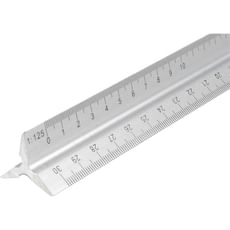
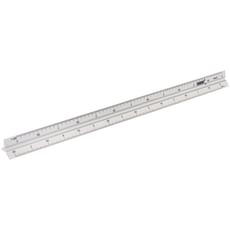
- Tri-Scale Rule: A triangular-section ruler featuring three different scale ratios along its edges, predominantly used by architects and engineers for reading scaled drawings. Engineer rules typically display ratios such as 1:100, 1:200, and 1:250, whilst architect rules show building scales like 1:20, 1:25, and 1:50, allowing direct conversion from drawing to real-world dimensions.
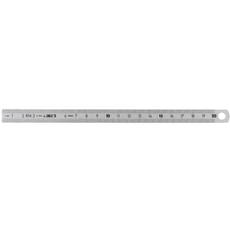
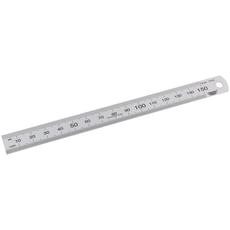
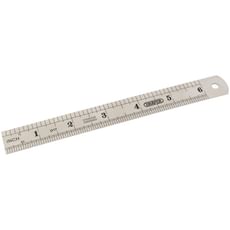
- Precision Steel Rule: A high-accuracy measuring instrument manufactured from hardened steel with finely etched or engraved graduations, offering superior accuracy compared to standard rules. Often manufactured to EC Class 1 standards, these rules are essential for engineering and metalworking applications where tolerances of 0.5mm or finer matter significantly.
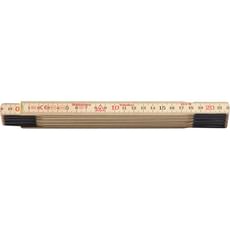
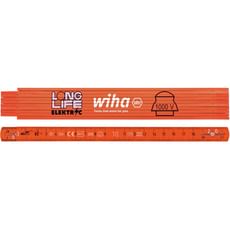
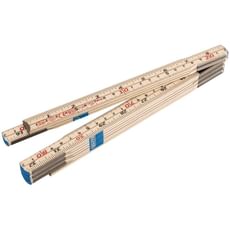
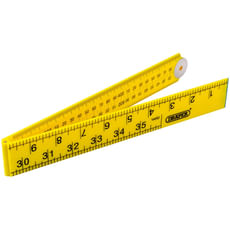
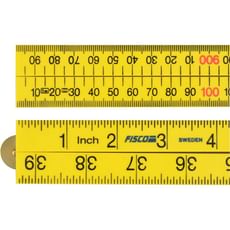
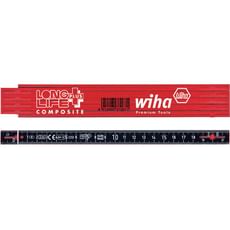
- Folding Rule: A traditional measuring tool featuring multiple hinged sections that fold together compactly for storage and transport, typically manufactured from wood or plastic. Popular with carpenters and joiners for measuring longer distances without the spring-back or sagging issues associated with tape measures, they remain rigid when extended for accurate marking.
- Etched Graduations: Measurement markings chemically or mechanically engraved into the rule surface rather than printed or painted, ensuring they won't wear off with heavy use or exposure to solvents, cutting fluids, and workshop chemicals. This permanence is crucial for tools subject to constant abrasion and cleaning.
- Double-Sided Graduations: Measurement markings on both sides of the rule, frequently featuring different units (metric on one side, imperial on the reverse) or different starting points for inside and outside measurements. Some precision rules feature offset scales for measuring internal dimensions accurately.
- Stainless Steel Rule: A corrosion-resistant measuring instrument ideal for workshop environments, outdoor site work, or applications where moisture, coolants, or chemicals are present. The non-rusting properties ensure longevity and maintain accuracy over time, particularly valuable in marine, food production, or wet trade environments.
Who Uses Rulers?
Rulers are indispensable measuring tools across numerous trades and professional applications:
- Carpenters and Joiners: For measuring timber dimensions, marking cut lines, checking assembly dimensions during furniture making, and site carpentry tasks requiring rigid straight edges
- Engineers and Machinists: Requiring precision steel rules for accurate measurement of components, checking tolerances, machine setup, and quality control inspections
- Architects and Designers: Using tri-scale rules to interpret scaled drawings accurately and create precise plans at various scales
- Metalworkers and Fabricators: For precise measurement and marking of steel, aluminium, and other metals before cutting, drilling, or welding operations
- Electricians: Measuring cable runs, marking mounting positions for accessories and consumer units, and planning installation layouts
- Plumbers: Measuring pipe lengths, marking cutting points, checking fitting dimensions, and setting out bathroom and kitchen installations
- Bricklayers and Stonemasons: Checking coursing heights, measuring joint widths, setting out bond patterns, and verifying dimensions during construction
- Pattern Makers and Model Makers: Requiring precision rules for accurate scaling and detailed measurement work
- Sheet Metal Workers: For marking fold lines, measuring bends, and checking flat pattern developments
- DIY Enthusiasts: For home improvement projects, crafting, woodworking hobbies, and general household measurements
- Students and Apprentices: Learning fundamental measurement techniques across construction, engineering, and design disciplines
How to Choose the Right Rulers
Material Selection: Steel rules offer maximum durability and precision for workshop use, maintaining their accuracy under heavy use and resisting wear. Aluminium provides a lighter alternative with good accuracy, ideal for site work where weight matters. Stainless steel suits environments with moisture, cutting fluids, or chemicals, preventing corrosion that could affect accuracy. Wooden folding rules suit traditional carpentry and provide excellent rigidity, whilst plastic options offer affordability for light-duty applications and improved safety around electrical work where metal tools pose risks.
Length Requirements: Consider the typical measurements you'll be taking regularly. Pocket rules of 150-300mm suit general use and fit conveniently in tool pouches for quick reference checks. Rules of 600mm handle most bench work and medium-sized components, whilst 1000mm rules accommodate larger assemblies and sheet materials. Folding rules extend to one or two metres whilst remaining compact when closed, making them excellent for site carpentry and situations requiring portability combined with rigidity.
Graduation Type and Accuracy: Standard rules feature metric graduations in millimetres, with many including imperial measurements (inches and fractions) on the reverse for versatility. Precision rules often display 0.5mm or even 0.25mm graduations for fine engineering work. Tri-scale rules show multiple scaled ratios for plan reading rather than direct measurement. For critical applications, look for rules manufactured to BS or EC Class 1 standards, which guarantee specified accuracy tolerances.
Durability Features: Etched or engraved graduations won't wear off like printed markings, essential for rules subject to constant abrasion, chemical exposure, or frequent cleaning. Hardened steel rules resist scratching and maintain their straight edge longer. Consider protective coatings or anodising for additional corrosion resistance in harsh environments. Bevelled edges on steel rules allow you to mark closer to the measurement line for improved accuracy.
Application-Specific Features: Some rules include mounting holes for permanent workshop wall installation, keeping them readily accessible. Double-sided graduations offer versatility without carrying multiple tools. Non-slip cork or rubber backing prevents movement during marking operations. Conversion tables printed on the rule save time calculating between metric and imperial units on site. For architectural and engineering work, ensure tri-scale rules display the specific scales you work with regularly.
Popular Accessories
- Marking Knives: Used alongside rules to score precise lines on timber and other materials, providing greater accuracy than pencils for fine joinery and achieving cleaner saw cuts
- Engineers' Scribers: Metal marking tools for scratching measurement lines onto steel and aluminium when used with steel rules, creating permanent reference marks
- Set Squares: Complement rulers for checking and marking right angles, particularly useful with tri-scale rules for technical drawing and ensuring square assembly
- Protractors and Angle Finders: Work alongside straight rules for measuring and transferring angles accurately in joinery and fabrication work
- Tape Measures: Provide flexibility for longer measurements, curved surfaces, and situations where rigid rules aren't practical
- Vernier Callipers and Micrometers: Offer even greater precision than rules for measuring small components, checking tolerances, and quality control inspections
- Carpenter's Pencils and Markers: Essential for marking measurements taken with rules, with carpenter's pencils ideal for timber and permanent markers for metal surfaces
- Centre Punches: Used with steel rules to mark precise drilling positions on metal, creating an indentation that prevents drill bit wandering
- Spirit Levels: Often used in conjunction with rules for ensuring measurements are taken on level surfaces
Frequently Asked Questions
What's the difference between a ruler and a rule?
The terms are often used interchangeably, though "rule" is the traditional trade term, particularly in Britain. Rules typically refer to measuring tools used in trades and engineering, whilst "ruler" is more commonly used in educational and office contexts. Professional measuring instruments are generally marketed as rules rather than rulers. In practical terms, they serve the same function, but rules are usually built to higher accuracy standards and greater durability for professional use.
How do I read a tri-scale rule correctly?
Tri-scale rules have three faces, each marked with different scale ratios. First, identify which scale matches your drawing (for example, 1:50 means 1 unit on the rule equals 50 units in reality). Align the appropriate edge with the dimension on your drawing and read the measurement directly—the rule automatically converts the scaled dimension to the real-world measurement. Always verify which scale you're using before measuring, as using the wrong face will give incorrect dimensions. Many professionals mark their most-used scale with a small piece of tape for quick identification.
Why choose a folding rule over a tape measure?
Folding rules don't suffer from the spring-back, bending, or sagging issues common with tape measures, making them more accurate for internal measurements and marking straight lines over distances up to two metres. They're particularly favoured by carpenters and joiners for their rigidity when extended and their traditional feel. They also don't require the button control of a tape measure, leaving both hands free for marking operations. Additionally, folding rules won't snap back and cause injury if accidentally released, making them safer in certain situations.
How should I care for precision steel rules?
Store precision rules flat or hanging vertically to prevent bending or warping. Wipe clean after use to remove swarf, dust, and moisture that could cause corrosion. Apply a light coating of oil or protective spray to prevent rust if storing long-term, particularly in damp workshop environments. Never use steel rules as scrapers, pry bars, or straightedges for cutting operations, as this damages the edges and affects accuracy. Keep them separate from other tools in dedicated storage to avoid scratching the graduations, and avoid dropping them on concrete floors which can cause permanent bends.
What length rule do I need for general carpentry work?
A 600mm (24-inch) steel or aluminium rule handles most bench and site carpentry tasks, fitting comfortably in most tool bags whilst offering sufficient length for common measurements. A one-metre or two-metre folding rule is invaluable for measuring longer timber, checking door frames, and verifying larger assemblies. Many professional carpenters carry both—a pocket rule of 150-300mm for quick checks and reference, and a longer rule or folding rule for primary measurements. This combination covers virtually all situations encountered in typical carpentry work without the bulk of carrying multiple measuring tools.