

Safety Detectors

Pay in 3 interest-free payments on purchases from £20-£3000 with  . Learn more.

 Loading...
End of content
Error - No more pages to load
About Safety Detectors
Safety detectors are essential life-saving devices designed to provide early warning of dangerous gases and smoke in domestic, commercial, and industrial environments. These critical safety instruments continuously monitor the air for hazardous substances such as carbon monoxide and smoke particles, sounding an alarm when dangerous levels are detected. Whether specified for new build properties, retrofit installations, or workplace safety compliance, quality safety detectors form the first line of defence against fire and gas-related incidents.
Modern safety detectors incorporate sophisticated sensor technology that delivers reliable detection whilst minimising false alarms. Carbon monoxide detectors use electrochemical sensors to identify this odourless, colourless killer gas produced by faulty or poorly ventilated combustion appliances. Smoke alarms employ either ionisation or optical (photoelectric) sensors to detect different types of fires – ionisation sensors excel at detecting fast-flaming fires, whilst optical sensors respond more quickly to slow-smouldering fires that produce larger smoke particles.
Tooled-Up.com stocks both battery-powered and 240v mains-powered safety detectors, with many mains units featuring battery backup for continuous protection during power cuts. Interconnected systems allow multiple detectors throughout a property to communicate wirelessly or via hardwiring, ensuring that when one detector activates, all alarms sound simultaneously – a critical feature for larger properties where a single alarm might not be heard throughout the building.
Jargon Buster
- Electrochemical Sensor: A detection technology used in carbon monoxide detectors that measures CO concentration through a chemical reaction, providing accurate readings with minimal false alarms and typically lasting 7-10 years before requiring replacement.
- Ionisation Sensor: A smoke detection method using a small amount of radioactive material to ionise air between two electrodes. When smoke particles enter the chamber, they disrupt the ion flow, triggering the alarm. Particularly effective for detecting fast-flaming fires.
- Optical Sensor (Photoelectric): A smoke detection technology using a light beam and sensor positioned at an angle. When smoke particles scatter the light beam onto the sensor, the alarm activates. More responsive to slow-smouldering fires than ionisation sensors.
- Interconnection: The ability for multiple detectors to communicate with each other, either wirelessly via radio frequency (RF) or through hardwired connections, so that activation of one unit triggers all alarms simultaneously throughout the property.
- BS EN 14604: The British and European standard specification for smoke alarms, ensuring minimum performance requirements for sensitivity, alarm volume (minimum 85dB at 3 metres), and reliability testing.
- End-of-Life Warning: An audible or visual indication that the detector has reached the end of its operational lifespan (typically 10 years for smoke alarms, 7 years for CO detectors) and requires replacement to maintain protection.
Who Uses Safety Detectors?
Safety detectors are essential for a wide range of users and applications:
- Electricians and Sparkies: Installing hardwired 240v mains-powered detectors in new builds and rewiring projects, ensuring compliance with Building Regulations Part B and BS 5839-6 standards
- Landlords and Property Managers: Meeting legal obligations under the Smoke and Carbon Monoxide Alarm Regulations 2015 for rental properties
- Gas Safe Engineers: Recommending and installing carbon monoxide detectors alongside boiler servicing and gas appliance installations
- General Builders and Contractors: Incorporating safety detectors into renovation and extension projects to meet current building control requirements
- Facilities Managers: Maintaining safety detector systems in commercial premises, schools, care homes, and HMOs (Houses in Multiple Occupation)
- Housing Associations and Local Authorities: Specifying and retrofitting detectors across social housing stock
- DIY Enthusiasts and Homeowners: Installing additional protection beyond minimum requirements or replacing expired units
- Fire Safety Consultants: Specifying appropriate detector types and positioning as part of comprehensive fire risk assessments
How to Choose the Right Safety Detectors
Selecting appropriate safety detectors requires careful consideration of several factors to ensure comprehensive protection:
Power Source: Battery-powered units offer simple installation without electrical work, ideal for retrofit applications and rented accommodation. Sealed lithium battery models eliminate the need for battery changes throughout their 10-year lifespan. Mains-powered 240v detectors with battery backup provide continuous protection even during power cuts and are typically required for new build properties under current Building Regulations.
Sensor Technology: For smoke detection, optical sensors suit most domestic applications, particularly kitchens and areas prone to smouldering fires. Ionisation sensors respond faster to fast-flaming fires. Multi-sensor alarms combining both technologies offer comprehensive fire detection. For carbon monoxide detection, electrochemical sensors are the professional standard, offering accurate measurement and longevity.
Interconnection Capability: Larger properties, multiple-storey homes, and HMOs benefit significantly from interconnected systems available at Tooled-Up. Wireless RF interconnection avoids the need for additional cabling in existing properties, whilst hardwired interconnection suits new installations where cabling can be incorporated during construction.
Standards Compliance: Ensure smoke alarms meet BS EN 14604 and carbon monoxide detectors comply with BS EN 50291. Look for third-party certification marks such as BSI Kitemark or CE marking, indicating independent testing and verification.
Installation Location Requirements: Different areas require specific detector types. Install smoke alarms in hallways, landings, and circulation spaces as a minimum, with additional coverage in living rooms and bedrooms for enhanced protection. Carbon monoxide detectors are essential in any room containing a combustion appliance or adjacent to such rooms, positioned at head height rather than ceiling-mounted.
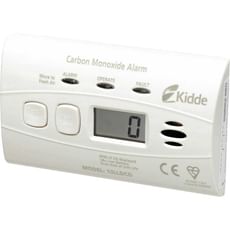
Special Features: Consider detectors with digital displays showing CO levels, voice alerts identifying the hazard type, silence/pause buttons for nuisance alarm management, and automatic self-testing functions that verify sensor operation regularly.
Popular Accessories
- Mounting Brackets and Bases: Quick-release mounting plates for easy detector removal during decorating or battery replacement
- Replacement Batteries: 9V alkaline or lithium batteries for non-sealed units requiring periodic battery changes
- Heat Alarms: Complementary detection for kitchens and garages where smoke alarms may cause false alarms due to cooking fumes or vehicle exhaust
- Alarm Testing Sprays: Aerosol test sprays specifically formulated to verify smoke alarm functionality without using real smoke
- Long Extension Poles: Testing and maintenance tools for reaching ceiling-mounted detectors without ladders, particularly useful in properties with high ceilings
- Interconnection Modules: Wireless relay units for adding interconnection capability to existing standalone detectors
- Signage and Labels: Fire safety information signs and detector location labels for commercial installations
Safety Information
Proper installation, maintenance, and operation of safety detectors are critical for ensuring reliable protection:
Installation Requirements: Mains-powered 240v detectors must be installed by a qualified electrician in compliance with BS 7671 (IET Wiring Regulations) and Part P Building Regulations. Position smoke alarms on ceilings at least 300mm from walls and light fittings, avoiding locations near bathrooms, windows, or air vents where steam, drafts, or condensation may cause false alarms. Carbon monoxide detectors should be positioned 1-3 metres horizontally from potential CO sources and at head height – not on ceilings, as CO disperses evenly through room air rather than rising like smoke.
Regular Testing and Maintenance: Test all safety detectors weekly using the integral test button to verify alarm functionality. Vacuum detector vents every six months to prevent dust accumulation affecting sensor performance. Replace batteries annually in non-sealed units, or immediately when the low battery warning sounds. Never paint over detectors or obstruct ventilation openings.
Replacement Schedule: Safety detectors have finite lifespans due to sensor degradation over time. Replace smoke alarms every 10 years and carbon monoxide detectors every 7 years, or sooner if the end-of-life warning activates. Record installation dates on the detector body to track replacement schedules. Never rely on detectors of unknown age or history.
Response to Alarms: If a carbon monoxide detector sounds, immediately evacuate all occupants to fresh air, ventilate the property, turn off combustion appliances, and contact a Gas Safe registered engineer. Never ignore alarm activations, even if no obvious source is apparent – carbon monoxide is undetectable by human senses. For smoke alarm activation, implement your fire evacuation plan, only investigating the source after ensuring all occupants are safe.
Frequently Asked Questions
Q: Where should smoke alarms be installed as a minimum requirement?
A: Current Building Regulations (Part B) and BS 5839-6 guidance recommend smoke alarms on every storey of a dwelling, positioned in circulation spaces such as hallways and landings. For properties built or modified after June 2022, Building Regulations also require alarms inside all rooms used for living or sleeping. All alarms should be ceiling-mounted and, in new builds, interconnected and mains-powered with battery backup.
Q: What's the difference between ionisation and optical smoke alarms?
A: Ionisation alarms respond more quickly to fast-flaming fires with smaller smoke particles, whilst optical (photoelectric) alarms are more sensitive to slow-smouldering fires producing larger smoke particles and dense smoke. Optical alarms are generally recommended for most domestic locations as they're less prone to false alarms from cooking and provide adequate protection for the most common residential fire types. Multi-sensor alarms combining both technologies offer the most comprehensive detection.
Q: Do carbon monoxide detectors need to be hardwired like smoke alarms?
A: Unlike smoke alarms in new builds, carbon monoxide detectors are not required to be mains-powered under current regulations – battery-powered units are acceptable. However, sealed battery models with 7-10 year lifespans eliminate maintenance concerns. Position CO detectors in any room containing a fixed combustion appliance (gas boiler, wood burner, open fire) or in rooms adjacent to such appliances.
Q: How often should safety detectors be replaced?
A: Smoke alarms should be replaced every 10 years, whilst carbon monoxide detectors require replacement every 7 years, as sensor degradation reduces reliability over time. Many modern detectors include end-of-life warnings that activate when replacement is due. Always replace detectors immediately if the end-of-life alert sounds, and never rely on detectors of unknown age – when in doubt, replace them.
Q: Can I install interconnected detectors in an existing property without rewiring?
A: Yes, wireless radio-frequency (RF) interconnected detectors allow you to create a linked alarm system without additional cabling, making them ideal for retrofit applications. When one detector in the wireless network activates, all interconnected units sound their alarms simultaneously. This provides the safety benefits of interconnection without the cost and disruption of running cables through existing walls and ceilings, whilst still meeting Building Regulations requirements for many applications.