
Safety Goggles

Pay in 3 interest-free payments on purchases from £20-£3000 with  . Learn more.
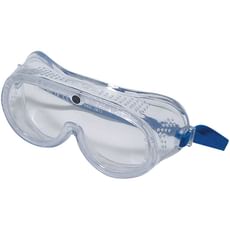
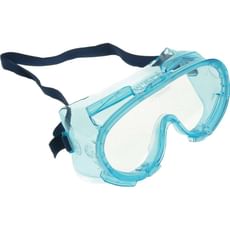
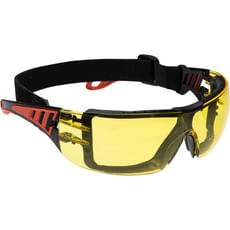
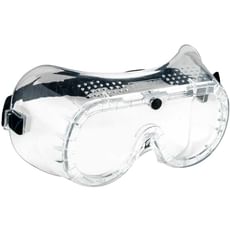
Loading...
End of content
Error - No more pages to load
About Safety Goggles
Safety goggles provide essential eye protection for a wide range of professional and DIY applications where standard safety glasses may not offer sufficient coverage. Unlike conventional safety spectacles, goggles create a protective seal around the eyes, shielding them from impact hazards, airborne particles, dust, chemical splashes and other workplace dangers. The comprehensive range at Tooled-Up.com includes direct vented, indirect vented and non-vented models from trusted brands including Portwest, DeWalt, Bolle, Uvex and Draper, ensuring compliance with EN166 European safety standards.
Modern safety goggles feature impact-resistant polycarbonate lenses that protect against direct strikes from projectiles whilst the sealed or vented frame designs prevent hazardous materials from reaching the eyes from any angle. Many models are designed to fit comfortably over prescription glasses, making them suitable for all workers regardless of vision requirements. Advanced features such as anti-fog coatings, adjustable straps, indirect ventilation systems and overflow channels for liquid drainage make today's safety goggles far more practical and comfortable for extended wear than earlier designs.
Choosing between vented and non-vented goggles depends entirely on the specific hazards present in your working environment. Direct vented models offer excellent airflow to minimise fogging during physically demanding tasks, whilst completely sealed non-vented goggles provide maximum protection when working with chemicals, fine dust or liquid splashes. Tooled-Up stocks safety goggles suitable for construction, manufacturing, woodworking, metalworking, chemical handling and numerous other applications where comprehensive eye protection is mandated by HSE regulations.
Jargon Buster
- EN166 - The European standard specifying requirements for personal eye protection. All safety goggles sold in the UK must meet this standard, with additional markings indicating specific protection levels against mechanical, chemical and optical hazards.
- Polycarbonate Lens - A lightweight, impact-resistant plastic material used in safety goggles that offers excellent optical clarity whilst protecting against high-velocity impacts. Polycarbonate lenses are significantly stronger than standard plastic or glass.
- Anti-Fog Coating - A chemical treatment applied to goggle lenses that prevents condensation build-up caused by temperature differences and perspiration. Essential for non-vented and indirect vented models to maintain clear vision during use.
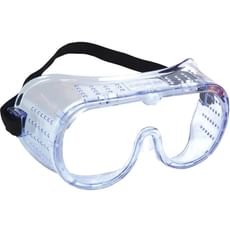
- Direct Ventilation - Small perforations in the goggle frame that allow air circulation to reduce fogging. Suitable for impact protection but not recommended when working with fine dust, grinding particles or liquid chemicals.
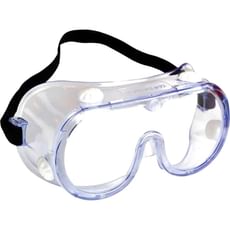
- Indirect Ventilation - Covered or baffled vents that allow air exchange whilst blocking the direct entry of particles and liquids. These provide a balance between ventilation and protection against splashes and dust.
- TPR Frame - Thermo Plastic Rubber frames that provide a comfortable, flexible seal around the face whilst remaining durable. TPR material adapts to different face shapes and remains pliable in varying temperatures.
Who Uses Safety Goggles?
- Construction Workers - For protection against dust, debris and impact hazards on building sites
- Carpenters and Joiners - When using power saws, routers and other woodworking machinery that generates airborne particles
- Metalworkers and Fabricators - Protection from grinding sparks, metal fragments and cutting fluids
- Plumbers and Heating Engineers - When soldering, cutting pipes or working with chemical cleaners and sealants
- Laboratory Technicians - Essential PPE when handling chemicals, biological materials or conducting experiments
- Painters and Decorators - Protection from spray mist, solvents and overhead debris when preparing surfaces
- Manufacturing Operatives - Required PPE in factory environments with machinery, chemicals or airborne contaminants
- Maintenance Engineers - For general workshop tasks involving grinding, drilling, chemical use and mechanical repairs
- DIY Enthusiasts - Home improvement projects involving power tools, chemicals, sanding or overhead work
- Agricultural Workers - Protection from dust, pesticide spray and debris during farming operations
How to Choose the Right Safety Goggles
Assess Your Hazards: Identify the specific risks in your workplace. Impact-only environments may suit direct vented goggles, whilst chemical handling requires completely sealed non-vented models. Grinding and metalworking operations benefit from indirect vented goggles that block sparks and metal particles whilst allowing some airflow.
Ventilation Requirements: Direct vented goggles offer maximum airflow and minimal fogging for impact protection in dry environments. Indirect vented models provide better protection against dust and liquids with reduced fogging compared to non-vented options. Non-vented goggles offer complete sealing for chemical work but require anti-fog treatment for practical extended wear.
Prescription Eyewear Compatibility: If you wear glasses, select goggles specifically designed to fit over spectacles without compromising the seal or comfort. Models with deeper frames and wider internal dimensions accommodate prescription eyewear whilst maintaining EN166 compliance.
Anti-Fog Features: For physically demanding work or environments with temperature variations, anti-fog coatings or built-in anti-mist technology are essential. Without these features, condensation can obscure vision and create safety hazards by forcing workers to remove goggles to clear the lenses.
Comfort and Fit: Adjustable elastic straps, soft TPR seals and lightweight designs reduce fatigue during extended wear. Poor-fitting goggles may be removed frequently, defeating their protective purpose. Consider models with replaceable foam seals for improved comfort and hygiene in shared equipment scenarios.
Lens Options: Clear lenses suit most indoor applications, whilst tinted or UV-protective lenses are appropriate for outdoor work. Some manufacturers offer interchangeable lenses or additional visors that attach to goggles for enhanced face protection during specific tasks.
Popular Accessories
- Replacement Lenses - Spare clear or tinted lenses to maintain optical clarity when originals become scratched
- Anti-Fog Spray and Wipes - Cleaning solutions specifically formulated to maintain anti-fog performance
- Goggle Storage Cases - Protective cases prevent lens damage when goggles are not in use
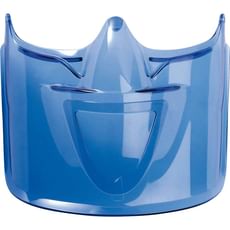
- Face Shields and Visors - Additional protection that attaches to certain goggle models for comprehensive face coverage
- Replacement Straps - Elastic straps that wear over time and may require periodic replacement
- Safety Glasses - Lower-profile eye protection suitable for situations where full goggles are unnecessary
- Lens Cleaning Cloths - Microfibre cloths designed for polycarbonate lenses that won't scratch protective coatings
- Safety Helmets with Face Protection - Integrated head and eye protection systems for high-hazard environments
Safety Information
All safety goggles must comply with EN166 standards and display appropriate markings indicating their protection classification. Employers have legal responsibilities under HSE regulations and the Personal Protective Equipment at Work Regulations 1992 to provide suitable eye protection and ensure workers are trained in its correct use. Risk assessments conducted under COSHH guidelines may mandate specific goggle types depending on identified hazards.
Inspect goggles before each use for cracks, scratches or damage that could compromise protection. Scratched lenses should be replaced rather than polished, as abrasive cleaning can weaken the polycarbonate material. Store goggles in protective cases away from direct sunlight, chemicals and extreme temperatures that may degrade materials over time.
Replace goggles according to manufacturer recommendations or when damage occurs. Elastic straps lose tension with repeated use, and frame seals can deteriorate, compromising the protective seal around the eyes. Never modify safety goggles or remove ventilation covers, as this invalidates EN166 certification and may expose the wearer to hazards.
Frequently Asked Questions
Can I wear safety goggles over my prescription glasses?
Yes, many safety goggles are specifically designed to fit over prescription spectacles. Look for models described as "over-glasses" or "OTG" compatible, which feature deeper frames and wider internal dimensions. These maintain the required seal around the eyes whilst accommodating eyewear underneath without causing discomfort or compromising protection levels.
Why do my safety goggles fog up and how can I prevent it?
Fogging occurs when warm, moist air from your face meets the cooler lens surface, causing condensation. Choose goggles with anti-fog coatings or built-in anti-mist technology for best results. Indirect or direct vented models allow better airflow than sealed goggles, reducing fogging in appropriate applications. Anti-fog sprays and proper fit also help minimise condensation issues during extended wear.
What's the difference between direct and indirect vented goggles?
Direct vented goggles have open perforations allowing maximum airflow, making them suitable for impact protection in dry environments but vulnerable to dust and liquids. Indirect vented goggles feature covered or baffled vents that permit air exchange whilst blocking particles and splash entry, offering better all-round protection with only slightly increased fogging compared to direct vented models.
How often should safety goggles be replaced?
Replace goggles when lenses become scratched enough to impair vision, when frame seals crack or degrade, or when elastic straps lose tension. In demanding industrial environments, annual replacement may be appropriate even without visible damage. Always replace goggles immediately after significant impact, as structural damage may not be visible but could compromise future protection.
Are safety goggles required by law on UK construction sites?
The HSE requires employers to provide appropriate eye protection where risk assessments identify hazards that could cause eye injury. On most construction sites, this means safety glasses or goggles must be worn in designated areas. Specific tasks involving grinding, overhead work, chemical use or significant dust generation typically mandate goggles rather than standard safety glasses due to their superior all-round protection.