

Safety Grip Tape
Pay in 3 interest-free payments on purchases from £30-2000 with  . Learn more.
 Loading...
End of content
Error - No more pages to load
About Safety Grip Tape
Safety grip tape, also known as anti-slip tape, is an essential safety product designed to prevent slips, trips and falls on smooth or potentially hazardous surfaces. Featuring an abrasive surface bonded to a self-adhesive backing, these tapes create high-traction zones on stairs, ramps, walkways, vehicle loading areas and any location where grip is compromised by water, oil, dust or general wear. Available in various widths, colours and grit levels, safety grip tape offers a cost-effective solution for improving workplace safety and meeting Health and Safety Executive (HSE) requirements across commercial, industrial and domestic environments.
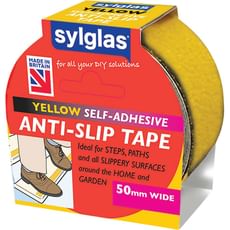
The range at Tooled-Up.com includes products from trusted manufacturers such as Faithfull, Sealey, Sirius and Sylglas, all designed with durable, weather-resistant constructions suitable for both indoor and outdoor applications. Most safety grip tapes feature a waterproof PVC or similar backing material that bonds securely to clean, dry surfaces including wood, metal, concrete, fibreglass and painted finishes. The abrasive top surface typically incorporates aluminium oxide, silicon carbide or similar hard-wearing particles that maintain their slip-resistant properties even in wet conditions, making them ideal for marine environments, industrial settings and high-traffic areas.
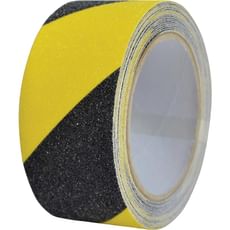
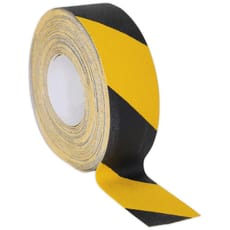
Beyond accident prevention, safety grip tape serves an important visual function in hazard marking and way-finding. Yellow and black chevron patterns, for instance, clearly delineate dangerous zones, step edges and changes in floor level, whilst different colours can be used to mark traffic routes, designated areas or emergency exits. This dual functionality makes anti-slip tape an invaluable tool for facilities managers, health and safety officers and tradespeople responsible for site safety compliance.
Jargon Buster
- Grit Rating: A measurement of the abrasive particle size and surface roughness, typically ranging from coarse (60-80 grit) for heavy-duty industrial use to fine (120+ grit) for barefoot areas. Higher numbers indicate finer, less aggressive surfaces.
- Coefficient of Friction (CoF): A numerical value indicating slip resistance, with higher numbers representing better grip. UK HSE guidance suggests a minimum CoF of 0.4 for safe walking surfaces, though many quality tapes exceed 0.6.
- Conformable Tape: Anti-slip tape designed to flex and adapt to curved, irregular or textured surfaces such as diamond plate, non-skid decking or rounded steps, maintaining adhesion without lifting at edges.
- Photoluminescent: Tape that absorbs ambient light and glows in darkness, providing visibility during power failures or in low-light conditions—particularly valuable for emergency egress routes and stairwells.
- Solvent-Based Adhesive: A heavy-duty bonding system offering superior performance on contaminated or slightly porous surfaces, and improved resistance to temperature extremes compared to standard acrylic adhesives.
- Carrier Film: The backing material (typically PVC, polyester or aluminium) to which both the adhesive and abrasive layers are bonded, determining the tape's durability, flexibility and environmental suitability.
Who Uses Safety Grip Tape?
- Facilities Managers: Maintaining safe environments in commercial buildings, schools, hospitals and public venues
- Health and Safety Officers: Implementing slip prevention measures and ensuring workplace compliance with HSE regulations
- Building Contractors and Shopfitters: Installing permanent or temporary safety measures during construction and fit-out projects
- Marine Engineers and Boat Owners: Preventing deck slips on vessels where wet conditions are constant
- Warehouse and Logistics Managers: Securing loading bays, forklift routes and high-traffic walkways in distribution centres
- Maintenance Teams: Retrofitting anti-slip solutions to existing infrastructure in industrial and commercial properties
- Leisure Centre and Gym Operators: Protecting pool surrounds, changing areas and equipment zones
- Transport and Fleet Managers: Applying grip tape to vehicle steps, trailer floors and loading ramps
- DIY Enthusiasts and Homeowners: Improving safety on domestic stairs, decking, garden steps and garage floors
How to Choose the Right Safety Grip Tape
Surface Type and Condition: Consider what material you're applying to—smooth surfaces like painted metal or sealed concrete offer ideal bonding conditions, whilst porous or textured substrates may require tapes with more aggressive adhesives or mechanical fixings. Ensure surfaces are clean, dry and free from oil, dust or loose paint before application.
Environmental Conditions: Indoor applications allow for standard acrylic adhesive tapes, whilst outdoor, marine or chemically exposed environments demand waterproof constructions with UV-resistant properties and solvent-based adhesives. Temperature extremes also influence adhesive performance—verify the operating range matches your application.
Foot Traffic and Wear Expectations: High-traffic industrial areas require coarse-grit, heavy-duty tapes with thick carrier films, whereas domestic stairs or occasional-use ramps can utilise medium-grit options. Consider whether users will be wearing safety boots, trainers or going barefoot, as this affects appropriate grit selection.
Width and Coverage: Measure the areas requiring treatment—standard widths range from 25mm for step edges to 150mm or wider for full tread coverage. Calculate total linear metres needed, allowing extra for overlaps, waste and future repairs. Pre-cut strips suit regular step dimensions, whilst rolls offer flexibility for custom applications.
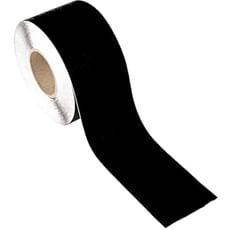
Visibility and Hazard Marking: Where visibility is paramount, choose high-contrast colours like yellow and black chevrons or photoluminescent options for emergency routes. Black or grey tapes blend discreetly into industrial settings, whilst transparent options preserve underlying aesthetics on decorative surfaces.
Installation Method: Most products available from Tooled-Up.com feature peel-and-stick application requiring no special tools, though some heavy-duty versions benefit from primer application or mechanical edge fixing for maximum longevity in demanding environments.
Popular Accessories
- Surface Cleaners and Degreasers: Ensure optimal adhesion by thoroughly preparing application surfaces
- Adhesive Primers: Improve bonding on porous or challenging substrates like rough concrete or weathered timber
- Edge Sealers: Prevent moisture ingress and edge lifting in outdoor or wet environments
- Application Rollers: Ensure complete adhesive contact and eliminate air bubbles during installation
- Measuring Tapes and Straight Edges: Achieve precise, professional-looking installations with accurate marking and cutting
- Utility Knives and Blades: Sharp cutting tools for trimming tape to exact dimensions and creating clean edges
- Hazard Warning Signs: Complement physical slip prevention with clear visual warnings
- Floor Marking Tape: Coordinate safety grip tape with broader floor marking and demarcation schemes
Safety Information
Whilst safety grip tape itself is designed to prevent accidents, proper installation is crucial for effectiveness. Always apply tape to clean, dry surfaces following manufacturer instructions—contaminated or damp substrates compromise adhesion and create false security. Allow adhesive to cure fully (typically 24-72 hours) before exposing to heavy traffic or wet conditions, and consider temporary barriers during this period.
The abrasive surface can cause skin grazes if handled carelessly during installation—wear work gloves when cutting and applying tape. Keep rolls away from children and store in cool, dry conditions to preserve adhesive properties. When removing old tape, use appropriate solvents in well-ventilated areas and dispose of worn anti-slip tape responsibly, as the abrasive particles may be considered mild irritants.
Remember that anti-slip tape is one component of a comprehensive slip prevention strategy. Regular inspection and replacement of worn sections is essential—abraded or lifting tape loses effectiveness and may itself become a trip hazard. Complement physical measures with appropriate footwear policies, housekeeping procedures and staff training to meet HSE duty of care obligations.
Frequently Asked Questions
How long does safety grip tape last?
Lifespan varies considerably depending on traffic levels, environmental exposure and surface type. Indoor applications with moderate foot traffic typically last 2-3 years, whilst heavy industrial use or outdoor exposure may require replacement after 6-18 months. Regular inspection helps identify wear before effectiveness is compromised.
Can I apply anti-slip tape to curved or irregular surfaces?
Conformable tapes are specifically designed for curved surfaces, steps with rounded nosings and textured substrates. Standard tapes work on gentle curves but may lift at edges on tight radii. For complex shapes, consider narrower widths that flex more readily or products specifically marketed as conformable.
Will safety grip tape damage the surface when removed?
Quality tapes bond firmly but should remove cleanly from sound, properly prepared surfaces when pulled back slowly at a low angle. Painted or varnished surfaces may experience some finish removal if the underlying coating wasn't fully cured or is already failing. Test on an inconspicuous area first if concerned.
Is anti-slip tape suitable for use with underfloor heating?
Most standard tapes tolerate temperatures up to 60-80°C, which typically exceeds underfloor heating outputs. However, verify the specific product's temperature rating and consider that heat cycling may affect adhesive longevity. For consistently heated surfaces, choose tapes explicitly rated for elevated temperature applications.
Can safety grip tape be painted over or does it need replacing?
The abrasive surface cannot be effectively painted—coating the grit particles eliminates slip resistance. If appearance deteriorates but the abrasive remains effective, consider whether functionality outweighs aesthetics. For areas requiring both slip resistance and specific colour schemes, choose pre-coloured tapes or photoluminescent options that maintain visibility throughout their service life.