

Safety Harnesses & Fall Arrest
Pay in 3 interest-free payments on purchases from £30-2000 with  . Learn more.
 Loading...
End of content
Error - No more pages to load
About Safety Harnesses & Fall Arrest
Working at height remains one of the most hazardous activities across construction, maintenance, and industrial sectors, making proper fall protection equipment essential for anyone operating above ground level. Safety harnesses and fall arrest systems provide critical protection against potentially fatal falls, combining engineered restraint with shock-absorbing technology to safeguard workers in elevated environments. From simple single-point harnesses for basic access work to comprehensive fall arrest kits complete with energy absorbers and adjustable lanyards, this equipment is designed to comply with stringent HSE regulations whilst providing the comfort and mobility tradespeople need to work efficiently.
The fall arrest equipment available from Tooled-Up.com encompasses full-body harnesses, lanyards, karabiners, rope grabs, and anchorage systems from trusted manufacturers including Portwest, Draper, and Scan. Modern safety harnesses feature multiple attachment points—typically ranging from one to four points—allowing users to select appropriate configurations for different working scenarios. Two-point harnesses suit basic ladder and scaffold work, whilst three and four-point systems provide enhanced stability and weight distribution for prolonged use or challenging positions. Comfort-enhanced versions incorporate additional padding and ergonomic adjustments to reduce fatigue during extended wear.
Beyond the harnesses themselves, fall arrest systems require compatible components including energy-absorbing lanyards that extend under load to reduce impact forces, robust karabiners manufactured to EN362 specifications with screwgate fixings, and anchorage solutions such as cable slings and adjustable rope restraint lanyards. Rope grabs and ascending-descending kits enable controlled movement along vertical lifelines, essential for industrial rope access work and maintenance tasks. All equipment must be regularly inspected, properly maintained, and replaced according to manufacturer guidelines to ensure continued compliance with UK safety standards.
Jargon Buster
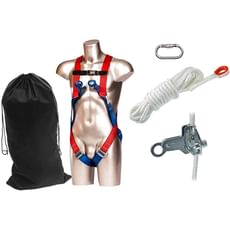
- Fall Arrest System: A complete assembly of interconnected components including harness, lanyard, energy absorber, and anchorage point designed to safely arrest a fall and minimise injury.
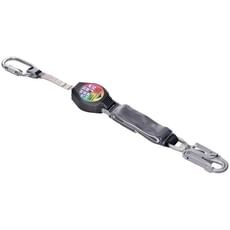
- Energy Absorber: A critical component—often a tear-web mechanism within a protective sleeve—that deploys during a fall to dissipate kinetic energy and reduce the impact force transmitted to the user's body.
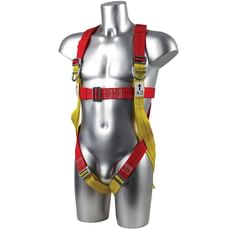
- Dorsal D-Ring: The attachment point positioned between the shoulder blades on a full-body harness, providing the primary connection point for fall arrest lanyards to ensure proper load distribution during a fall.
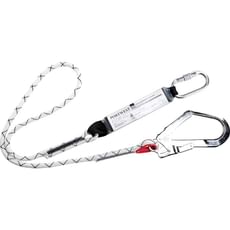
- Lanyard: The connecting element between the harness and anchorage point, available in fixed-length or adjustable configurations, typically incorporating an energy absorber and fitted with karabiners or scaffold hooks at each end.
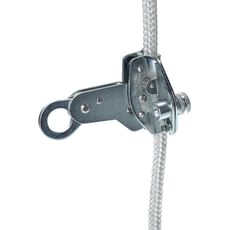
- Rope Grab: A mobile fall arrester that travels freely along a vertical lifeline during normal movement but locks instantly when subjected to sudden force, allowing the user to work at variable heights whilst remaining continuously protected.
- EN361/EN362 Standards: European safety specifications governing the manufacture and testing of full-body harnesses (EN361) and connectors such as karabiners (EN362), ensuring equipment meets minimum strength and performance requirements.
Who Uses Safety Harnesses & Fall Arrest?
- Scaffolders – assembling and dismantling elevated working platforms where fall risks are constant
- Roofers and cladding specialists – working on pitched roofs, flat roofs, and building facades
- Telecoms engineers – installing and maintaining masts, towers, and aerial equipment
- Industrial maintenance technicians – servicing machinery, ventilation systems, and factory infrastructure at height
- Window cleaners and building maintenance – operating cradles, platforms, and rope access systems
- Electrical contractors – installing overhead cabling, lighting, and electrical infrastructure
- Steelwork erectors – constructing structural frameworks for buildings and bridges
- Arborists and tree surgeons – climbing and working within tree canopies
- Wind turbine technicians – accessing and maintaining renewable energy installations
- Warehouse and logistics staff – working on elevated storage systems and loading platforms
How to Choose the Right Safety Harnesses & Fall Arrest
Assess your working environment: Consider the height, access methods, and anchor point availability at your worksite. Simple scaffold work may require only a basic two-point harness and restraint lanyard, whilst complex industrial rope access demands comprehensive fall arrest kits with adjustable components and multiple attachment options.
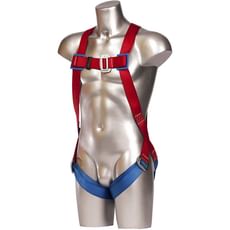
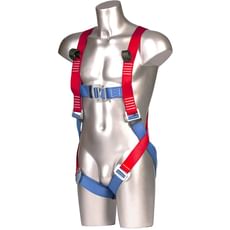
Determine attachment point requirements: One-point harnesses suit occasional, low-level work with minimal fall risk. Two-point systems provide dorsal and sternal attachments for basic fall arrest and work positioning. Three and four-point harnesses add lateral D-rings for enhanced stability and are preferable for prolonged use, confined spaces, or situations requiring rescue capability.
Prioritise comfort for extended wear: The Tooled-Up range includes both standard and comfort-enhanced harnesses. If wearing your harness throughout an entire shift, invest in padded shoulder straps, breathable back panels, and ergonomic leg loops. The Portwest Comfort Plus range specifically addresses these needs with superior padding and weight distribution.
Select appropriate lanyards: Fixed-length lanyards work well where consistent working height is maintained. Adjustable rope restraint lanyards provide flexibility for varied tasks. Ensure your lanyard incorporates an energy absorber and matches your working application—shock-absorbing lanyards for fall arrest, restraint lanyards to prevent reaching fall edges.
Verify standards compliance: All components must display CE marking and conform to relevant EN standards—EN361 for harnesses, EN362 for karabiners, EN355 for energy absorbers. Check that complete systems are compatible and collectively meet HSE requirements for your specific working scenario.
Consider additional components: Depending on your setup, you may require karabiners with screwgate fixings for secure connections, anchorage slings to create attachment points on structural elements, or rope grabs for vertical line work. Ensure all components are compatible and rated for the loads they'll encounter.
Popular Accessories
- Replacement lanyards – energy-absorbing and restraint types in various lengths
- Additional karabiners – screwgate and snap-hook varieties for versatile connections
- Anchorage devices – beam anchors, roof anchors, and temporary anchorage slings
- Tool lanyards and tethers – preventing dropped objects from height
- Vertical lifelines – temporary and permanent systems for rope grab attachment
- Harness storage bags – protecting equipment when not in use and facilitating transport
- Inspection and maintenance kits – cleaning solutions and record-keeping systems
- Rescue equipment – descent devices and evacuation systems for emergency situations
Safety Information
Mandatory inspection requirements: Before each use, conduct a thorough visual inspection of your harness and all fall arrest components, checking for frayed webbing, damaged stitching, corroded metalwork, or deformed connectors. Any equipment showing signs of deterioration, previous loading, or damage must be immediately withdrawn from service. Additionally, competent persons must perform detailed periodic inspections at intervals specified by the manufacturer—typically every six months—with findings recorded in inspection logs.
Understanding fall clearance: Calculate the total fall distance including lanyard length, energy absorber deployment (typically 1.2 to 1.75 metres), user height, and safety margin. Ensure adequate clearance exists below your working position to prevent ground impact or collision with lower structures during a fall event. This critical calculation often requires professional assessment.
Training and competence: Users must receive appropriate training in harness fitting, equipment inspection, anchorage selection, and rescue procedures before working at height. The HSE requires employers to ensure workers are competent and understand the limitations of their equipment. Never use fall arrest equipment without proper instruction.
Anchorage point strength: Anchor points must withstand a minimum force of 12kN (approximately 1,200kg) per person attached, or meet the specific requirements stated in your fall arrest system documentation. Never assume structural elements are suitable without verification—inadequate anchorage is a primary cause of fall protection system failure.
Post-fall protocol: Any harness or fall arrest component that has arrested an actual fall must be immediately removed from service and either destroyed or returned to the manufacturer for inspection. The forces generated during fall arrest can cause internal damage not visible during normal inspection, compromising future performance.
Frequently Asked Questions
What's the difference between fall arrest and fall restraint?
Fall restraint systems prevent the user from reaching a position where a fall could occur, using a short lanyard that physically restricts movement to a safe zone. Fall arrest systems allow greater freedom of movement but are designed to safely stop a fall that has already begun, using energy absorbers to reduce impact forces. Both approaches are valid depending on the risk assessment—restraint is preferable where practicable as it prevents the fall entirely.
How often should safety harnesses be replaced?
Manufacturer guidelines vary, but most harnesses have a maximum lifespan of five years from first use, regardless of condition, due to material degradation over time. However, replacement may be necessary much sooner if the harness shows wear, has arrested a fall, or fails inspection. Storage conditions, usage frequency, and environmental exposure all affect longevity. Always prioritise manufacturer recommendations and inspection findings over arbitrary timescales.
Can I use a two-point harness for all working at height situations?
Two-point harnesses suit many common scenarios including scaffold work, ladder access, and mobile elevated working platforms. However, confined space entry, suspension positioning work, and situations requiring prolonged hanging may necessitate three or four-point harnesses for improved weight distribution and rescue capability. Your risk assessment should determine appropriate harness configuration—when in doubt, consult a competent person or height safety specialist.
Do I need different equipment for working on roofs compared to scaffolding?
The fundamental components remain similar—full-body harness, appropriate lanyard, and secure anchorage—but the specific configuration varies. Roof work often requires specialist anchorage solutions such as ridge anchors or temporary roof anchor points, plus potentially longer adjustable lanyards to accommodate movement across pitched surfaces. Scaffolding typically uses shorter restraint lanyards and benefits from readily available tie-off points on the structure itself. Always conduct a site-specific risk assessment.
Are karabiners with screwgate fixings better than snap-hook connectors?
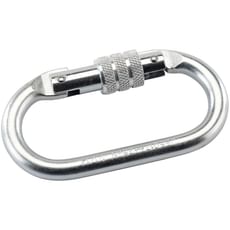
Screwgate karabiners manufactured to EN362 specifications provide superior security against accidental disconnection, as the threaded sleeve must be deliberately unscrewed before the gate can open. Snap-hooks offer faster connection but carry greater risk of unintentional release if snagged or improperly positioned. For critical fall arrest applications, particularly where the connection remains in place throughout the working period, screwgate karabiners represent best practice and are often mandated by site safety protocols.