

Safety Mirrors

Pay in 3 interest-free payments on purchases from £20-£3000 with  . Learn more.
 Loading...
End of content
Error - No more pages to load
About Safety Mirrors
Safety mirrors are essential tools designed to improve visibility and enhance security in environments where blind spots, concealed areas, or difficult-to-monitor spaces present potential hazards. These convex mirrors provide a wide-angle view that allows users to see around corners, monitor multiple areas simultaneously, and identify potential risks before they become accidents. Commonly manufactured from impact-resistant materials with shatterproof or acrylic construction, safety mirrors are built to withstand demanding environments whilst maintaining clear visibility in all conditions.
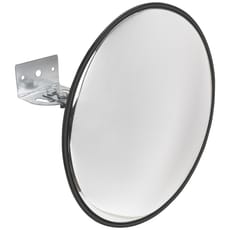
The primary function of a safety mirror is to eliminate dangerous blind spots in workshops, warehouses, car parks, retail environments, and industrial settings. Convex mirrors create a wider field of view than standard flat mirrors, allowing a single strategically-placed unit to monitor large areas or multiple approach angles. Tooled-Up.com supplies professional-grade safety mirrors with robust mounting systems, including wall brackets with adjustable swivel joints that enable precise positioning to achieve optimal viewing angles for specific applications.
Beyond workplace safety applications, these mirrors serve security purposes by deterring theft, monitoring customer movement in retail environments, and providing visual surveillance of vulnerable entry points. The versatility of safety mirrors makes them valuable additions to both commercial premises and domestic properties where improved visibility contributes to accident prevention and security enhancement.
Jargon Buster
- Convex Mirror: A curved mirror that bulges outward, creating a wider field of view than flat mirrors. The convex surface allows users to see a larger area, though objects appear smaller and further away than they actually are.
- Field of View: The extent of the observable area that can be seen through the mirror at any given moment. Convex safety mirrors typically offer viewing angles between 90 and 180 degrees depending on their curvature and positioning.
- Swivel Joint: An adjustable mounting mechanism that allows the mirror to be tilted and rotated after installation, enabling precise directional adjustment without remounting the entire unit.
- Shatterproof Construction: Mirrors manufactured from impact-resistant acrylic or polycarbonate materials rather than glass, designed to withstand knocks and impacts without breaking into dangerous shards.
- Blind Spot: An area that cannot be directly observed due to physical obstructions, building layout, or equipment placement. Safety mirrors are specifically designed to eliminate these hazardous zones.
- Viewing Distance: The optimal distance between the mirror and the observer for effective use. Most safety mirrors are designed for viewing distances between 3 and 15 metres depending on their diameter.
Who Uses Safety Mirrors?
Safety mirrors are utilised across numerous trades, industries, and environments where visibility and security are paramount:
- Warehouse Managers and Logistics Coordinators who need to monitor forklift traffic and prevent collisions at busy intersections and loading bays
- Facilities Managers responsible for workplace health and safety compliance in commercial and industrial premises
- Retail Shop Owners using mirrors to deter shoplifting and monitor customer movement throughout the premises
- Car Park Operators improving visibility at exit points, tight corners, and areas with restricted sightlines
- Manufacturing Plant Supervisors enhancing safety in production areas with multiple approach routes and potential collision points
- Workshop and Garage Owners monitoring vehicle movements and improving spatial awareness in confined working areas
- Security Personnel supplementing CCTV systems with cost-effective visual monitoring solutions
- Health and Safety Officers implementing risk reduction measures in compliance with HSE guidelines
- Property Managers installing mirrors in apartment buildings, office complexes, and multi-occupancy premises
- DIY Enthusiasts improving driveway visibility and home security around their properties
How to Choose the Right Safety Mirrors
Selecting an appropriate safety mirror requires careful consideration of several practical factors:
Mirror Diameter: Choose a size proportionate to the viewing distance and area to be monitored. Common diameters range from 300mm to 600mm, with larger mirrors suitable for greater distances or wider coverage areas. Consider that larger mirrors provide clearer images at distance but require more robust mounting.
Mounting Location: Assess whether you require indoor or outdoor installation. Outdoor mirrors need weather-resistant construction with UV-stable materials that won't degrade in sunlight or become brittle in cold temperatures. Indoor applications may prioritise aesthetics alongside functionality.
Adjustment Capability: Look for mirrors with swivel joints or multi-directional brackets that allow angle adjustment after installation. This flexibility ensures you can fine-tune the viewing angle without drilling additional mounting holes if your initial positioning requires modification.
Material Construction: Acrylic mirrors offer excellent shatterproof properties and lightweight handling, making them ideal for busy environments where impacts might occur. Glass mirrors provide superior optical clarity but present safety concerns if broken. The range at Tooled-Up includes impact-resistant options suitable for demanding professional environments.
Fixing Method: Consider the mounting surface material and choose appropriate fixings. Wall-mounted mirrors typically include bracket systems with multiple fixing points for secure attachment to brick, concrete, or timber surfaces. Ensure the supplied fixings are suitable for your substrate or purchase appropriate alternatives.
Regulatory Compliance: For workplace installations, ensure your chosen mirror meets relevant health and safety requirements and contributes to your duty of care obligations under HSE regulations.
Popular Accessories
- Wall Plugs and Fixings: Heavy-duty fixings suitable for securing mirror brackets to various substrates including masonry, concrete, and structural timber
- Cleaning Solutions: Specialist acrylic cleaners that won't scratch or damage mirror surfaces whilst removing dirt, dust, and weather residue
- Anti-Vibration Mounts: Supplementary mounting hardware to reduce mirror movement in locations subject to vibration from machinery or vehicle traffic
- Security Fixings: Tamper-resistant bolts and one-way screws preventing unauthorised removal in public areas
- Post-Mounting Kits: Alternative fixing systems for locations where wall mounting isn't practical, allowing mirrors to be attached to free-standing posts
- Protective Covers: Temporary protection during construction or maintenance work to prevent surface damage
- Warning Signage: Complementary safety signs drawing attention to blind spots and hazardous areas
Safety Information
When installing and using safety mirrors, observe these important safety considerations:
Secure Installation: Ensure mirrors are firmly attached using all supplied fixing points and appropriate fixings for your mounting surface. Inadequately secured mirrors may fall, causing injury or property damage. Always verify that the substrate can support the mirror's weight.
Correct Positioning: Position mirrors to eliminate blind spots without creating new hazards. Avoid locations where the mirror itself might obstruct movement or create head-strike risks, particularly in areas with vehicle or pedestrian traffic.
Optical Distortion Awareness: Convex mirrors make objects appear smaller and further away than they actually are. Ensure all users understand this distortion effect to prevent misjudgement of distances and speeds, particularly in traffic management applications.
Regular Maintenance: Inspect mounting brackets periodically for loosening, corrosion, or damage. Clean mirror surfaces regularly as accumulated dirt significantly reduces visibility and defeats the mirror's safety purpose.
Height Considerations: When working at height to install mirrors, follow proper ladder safety procedures or use appropriate access equipment. Never overreach or work from unstable platforms.
Frequently Asked Questions
What size safety mirror do I need for my application?
Mirror size depends on viewing distance and the area requiring coverage. As a general guide, 300mm diameter mirrors suit viewing distances up to 5 metres, whilst 450-600mm mirrors are appropriate for distances up to 15 metres. Consider the field of view required and whether a single large mirror or multiple smaller units best suit your layout.
Can safety mirrors be used outdoors?
Yes, provided they're manufactured from weather-resistant materials. Look for mirrors with UV-stabilised acrylic construction and corrosion-resistant mounting brackets suitable for exterior use. These withstand temperature fluctuations, moisture, and sunlight exposure without degrading or discolouring.
How do I clean a safety mirror without scratching it?
Use a soft, lint-free cloth with warm water and a small amount of mild detergent or specialist acrylic cleaner. Avoid abrasive materials, paper towels, or harsh chemicals that may scratch or cloud the surface. Rinse thoroughly and dry with a clean microfibre cloth to prevent water spots.
Are safety mirrors a legal requirement in workplaces?
Whilst not specifically mandated by legislation, employers have a duty under the Health and Safety at Work Act 1974 to provide a safe working environment. Where blind spots present foreseeable risks, safety mirrors represent a reasonable and cost-effective control measure that demonstrates compliance with risk assessment obligations under HSE regulations.
Can I adjust the mirror angle after installation?
Most quality safety mirrors, including those available from Tooled-Up.com, feature adjustable swivel joints allowing angle modification after mounting. This adjustment capability ensures optimal positioning can be achieved and refined as needed without remounting the bracket assembly.